katexic clippings logo

katexic clippings

Archives
Subscribe

katexic clippings katexic clippings

Archive

|k| clippings: 2014-10-16 — they feed the(y) lion(s)

Thanks to a snail-mail correspondent, I recently (and serendipitously) learned of Thomas Lynch, undertaker and essayist, whose splendid prose regularly reveals his own poet’s heart.

WORK

#111
October 16, 2014
Read more

|k| clippings: 2014-10-15 — wooden souls

WORK

“Inscription”

Stinking bird no nightingale sitting on my grave fly up sing listen to my hurt voice I tried to make lovesongs that would turn heaven into earth I tried by suffering well that was my own stupidity now that I’m dead now that I’m you maybe God will make me happy I doubt it but God can’t wait bird come back perch on my stone weep make up a new song the one I couldn’t sing leave one of your tiny innocent shits on the silent marble.

#110
October 15, 2014
Read more

|k| clippings: 2014-10-14 — i see them as they are to is

WORK

“Gilding the Lily”

To keep anxiety at bay, my friend called chemo . Those insects—christened, in places, the devil’s darning needles—hover as they contort their joined bodies into a heart, the male with pincers. Finger cutter, horse killer, ear stick, eye pisser. . As a slow drip through an IV. As a pill. Through a port into a vein. She called nausea . Just the same, we name our storms to lessen them—not a tropical cyclone, but , with ballet shoes and bun. Tumors, too, were , waiting at the bus stop with backpacks in the morning. Cindy French braids Carrie’s hair, yanking at the scalp to form the tight crisscross. Not hair loss, but . She gave us the new lexicon on stationery embossed with a red rose speckled by raindrops. The stem still had its thorns. Ring-around-the-rosy, red rover, red rover, send her right over. She called death the : the dragon courting its damsel, catheter tubing in the wastebin, video of a toddler biting his brother, pas de deux, full-sugar ice cream, Crimson Queen, Trumpeter, Red Knockout, Tuscany Superb…I knew her as Rose Shapiro. At the funeral I learned she was born : to cross the river, to pass a glass of water.

#109
October 14, 2014
Read more

|k| clippings: 2014-10-13 — skeptics, fools and flourishes

RIP, Carolyn Kizer. I associate her with two things more personal than poems: hearing Peggy Shumaker read a now-forgotten poem in a class years ago (which may have confused things, Peggy could make any poem sound good) and her funny-because-it’s-true (at least for me) observation that “poets are primarily concerned with death and commas.”

WORK

#108
October 13, 2014
Read more

|k| clippings: 2014-10-10 — fear of/or forever

It’s obvious from John Darnielle’s songs with The Mountain Goats that he’s a poet who happens to use music as a vehicle for his poems. It turns out he’s a talented novelist as well. Darnielle's debut, Wolf in White Van (rightfully shortlisted for the National Book Award), tells the intertwined stories of a snail-mail game designer whose game is taken tragically literally and, in reverse, the story of his life leading inexorably back to his disfigurement at 17. Heartbreaking, poetic and occasionally terrifying.

WORK

Nurses and doctors come and go, and family. It’s like they’re visiting a person at his lonely outpost on the space station, miles above the earth. How do they get there—just coming in through the door like that? In the brief moment between infinite communion with the ceiling and the beginning of whatever conversation they’ve come to strike up, it seems like the deepest mystery in the world. And then they break the spell, and the world contracts, palpably shifts from one reality into a new and much more unpleasant one, in which there is pain, and suffering, and people who when they are hurt stay hurt for a long time or sometimes forever, if there is such a thing as forever. Forever is a question you start asking when you look at the ceiling. It becomes a word you hear in the same way that people who associate sound with color might hear a flat sky-blue. The open sky through which forgotten satellites travel. Forever.

—John Darnielle
—from Wolf in White Van

Bonus: the title of Darnielle’s novel comes from what Larry Norman’s 70’s Christian folk-track “Six Sixty Six” seems to say when played backward. Hear this—and many more examples–on the music reversals database page.

WORD(S)

impavid. adjective. Fearless, brave. From Latin im (not) + pavidus (fearful).

“…by holding the smouldering feather of a vulture under a baby’s nose you render the child valiant and brave like a vulture, and if you do the same with a peacock’s feather, your offspring will be, like a peacock, impavid and never dismayed by thunder or other terrible noises.” (James Frazer)

“…Impavid as the Horatian model-man.” (G. A. Lawerence)

“Thou art beautiful, thou art strong, an impavid colossus…” (Brazilian National Anthem)

WEB

  1. “50 Cultural Icons on Their Favorite Books”. A few of these made me love harder. Hat-tip: Reader C.

  2. “Whose soul is stamped on a work of art? On a tool? On a scientific specimen? What does it mean if we conflate realness with human essence?” → “Museum 2.0: Is it Real? Artwork, Authenticity…and Cognitive Science”

  3. The In Vitro Meat Cookbook: Recipes as Design Fiction. The recipe for this book: start with an ingredient that doesn’t exist.

  4. Browse most of the Slim Gaillard Vout-O-Reenee Dictionary of Gaillard’s invented “Vout” language. Which comes in handy when ►listening to this talented pianist, singer and showman.

  5. October 10 is the National Day of the Republic of China (Taiwan), AKA Double Ten Day, commemorating the start of the 1911 Wuchang Uprising which led to the collapse of the Qing Dynasty and establishment of the Republic of China. Given recent events in Hong Kong and the much higher likelihood of government concessions to Taiwan’s pro-democracy activists, this year’s celebrations should be interesting…and tense.

REPRISES/RESPONSES/REJOINDERS/RIPOSTES

  • Reader B. writes about yesterday’s issue: “Nabokov, Poe, an intro to Jade Bos, all wrapped in a Pink Floyd bow. Another winner!”

  • Reader T. expands on yesterday’s WORD: “Your word of the day reminds me of another use of ‘azure’ related to Lolita by way of Stanley Kubrick: Alex’s response to Mr. Deltoid in A Clockwork Orange: ”As an unmuddied lake, sir. As clear as an azure sky of deepest summer."

  • Reader M., hookers and cake: “I bought the Kindle version of Hookers or Cake. I’ve included a screenshot of one page for your perusal. Enjoy. Book is weird.”
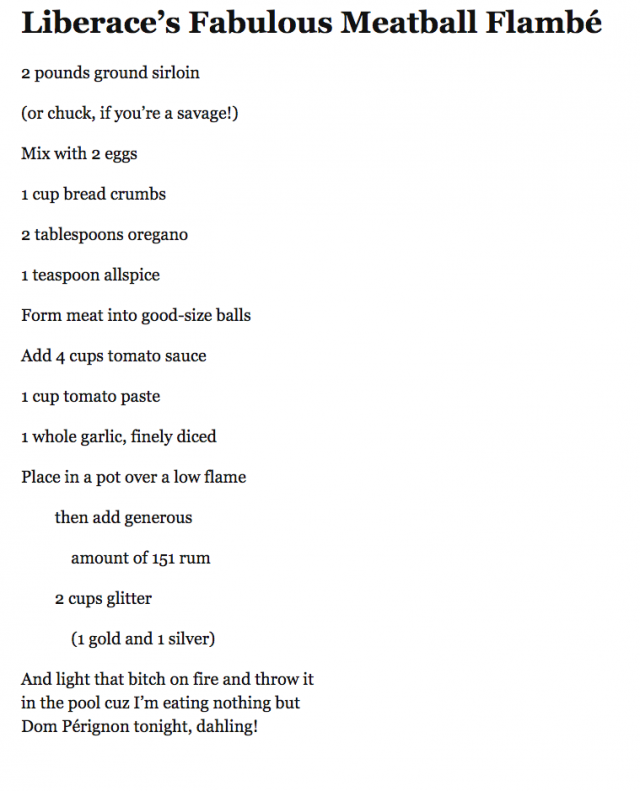

I welcome comments, suggestions, thoughts, feedback and all manner of what-have-you. Just press ‘Reply’ or email to: clippings@katexic.com.

And please feel free to share anything here as far and wide as you want! If you want to give a shout-out, please link to: http://katexic.com/clippings/.

#107
October 10, 2014
Read more

|k| clippings: 2014-10-09 — blues skies and pain

I’ve been working on “blackout poems” using Nabokov’s Lolita as a source text…so the serendipity of today’s connection was impossible to pass up. If you haven’t read Lolita, need I say you should? It’s an insanely beautiful grotesque full of wordplay by one of the greatest writers ever.

#106
October 9, 2014
Read more

|k| clippings: 2014-10-08 — force and flames

I wanted to share something from the surprisingly gripping novel The Queen’s Gambit by Walter Tevis (author of The Hustler and ), but the story of a young, orphaned, female chess prodigy (who is equally prodigious at self-medication) is written in a style as plain as it is enthralling…not the makings of a good excerpt. I highly recommend it. You don’t need to know anything about chess but if you do, you will be surprised at the accuracy of the details.

#105
October 8, 2014
Read more

|k| clippings: 2014-10-07 — heavy weather

WORK

Thomas stood up and walked away. He wouldn’t even try to tell us any stories again for a few years. We had never been very good to him, even as boys, but he had always been kind to us. When he stopped even looking at me, I was hurt. How do you explain that?

Before he left for good, though, he turned back to Junior and me and yelled at us. I couldn’t really understand what he was saying, but Junior swore he told us not to slow dance with our skeletons.

#104
October 7, 2014
Read more

|k| clippings: 2014-10-06 — snail mail of doom

WORK

Is letter writing, in the artistic sense, a lost accomplishment? There are plenty of people who would not linger long over a reply. It is often asserted that Rowland Hill and the penny post killed the old-fashioned style of letter. That is not true, however, for it survived in old-fashioned hands into the mid-Victorian era, when it received its by the invention of what our fathers, when in a superior mood, called that “modern abomination,” the ubiquitous post-card. Correspondence has since its advent grown pithy, brisk, prosaic. The majority of men have not the time in this cast-iron, express-paced age, with its telegraphs and telephones, and constant business and social demands, for the old elaborate letter of genial gossip and kindly compliment. Sentiment, some would even say, is at a discount, and whatever may be the cause, imagination and fancy, to say nothing of wit and humor, have grown curiously rare under a penny stamp. The world is too much with us now. Our interests are too many, our work too insistent, our mental indolence perhaps too great, for that expansive style of correspondence which has vanished for the most part with quill pens and sealing wax.

#103
October 6, 2014
Read more

|k| clippings: 2014-10-05 — 9 primes in time

Today clippings turns 100 (issues)! Toddlery milestones to look forward to over the next 100 include little katexic taking its first wobbly steps, picking up new words, obeying two-step directions, increased defiance and interest in using the toilet.

#102
October 5, 2014
Read more

|k| clippings: 2014-10-04 — exercising the little grey cells

My apologies for the cryptic subject line of yesterday’s edition. Unfortunately it was an as-yet-undiagnosed technical problem, not a secret code. The investigation continues (it’s all geek CSI up in here).

WORK

“Vienna”

#101
October 4, 2014
Read more

|k| clippings: 2014-10-03 — i roam around

A classic WORK today…one of the first poems I memorized and recite to myself like a mantra. The unanswered—and unanswerable—questions still fascinate me.

And a WORD that is ripe for (secular) rehabilitation, describing so well where I find myself in creative life and career.

WORK

#100
October 3, 2014
Read more

|k| clippings: 2014-10-02 — take an angel and call me in the morning

WORK

“Angels”

They have little use. They are best as objects of torment.

#99
October 2, 2014
Read more

|k| clippings: 2014-10-01 — look out below

WORK

“Chromatic”

#98
October 1, 2014
Read more

|k| clippings: 2014-09-30 — fool's gold

WORK

“Elegy”

Who would I show it to

#97
September 30, 2014
Read more

|k| clippings: 2014-09-29 — human dust in the wind

Friends don’t let friends endure terrible typography. I often link to long articles and other works. If you are reading online, I strongly recommend the application of some design magic. The Readability bookmarklets make this a one-click option, as does Clippable and Evernote’s . does this automatically along with a jillion other things for readers on the web or Kindle, as does .

#96
September 29, 2014
Read more

|k| clippings: 2014-09-27 — i can tolerate anything (but not that)

I’ve been a fan of Terrance Hayes for a long time and I’m stoked he won a MacArthur Fellowship (AKA a “genius grant”). You don’t need to know the Stevens poem (how many of us can really claim to know many of Stevens’ poems?) to appreciate this one, though you can read it here, keeping in mind, as Reginald Shepherd said of Stevens racism, “I don’t think his is a case that lends itself to easy condemnation or exoneration. I wonder if such terms are even appropriate.”

#95
September 27, 2014
Read more

|k| clippings: 2014-09-26 — shouting fire in a crowded library

WORK

It was a pleasure to burn.

#94
September 26, 2014
Read more

|k| clippings: 2014-09-25 — flitches are a constant

WORK

“Audit”

Up to now echoes are not       the first things said. Up to now if I’ve called for help       my rescuers haven’t heard me. Up to now the present is discernible       only as the past, and Up to now it’s not clear       what love entitles me to. Up to now there is no real evidence       that anyone’s out to get me. Up to now the misery of thin children       happens in remote places. Up to now I have lived no day as if       it reduced my remaining days. Up to now I’ve not looked around       to see if I’m alone. Up to now the death of one season starts another. Up to now the poem I haven’t written       is as good as it will be when I write it. Up to now the moonlight has revealed       nothing but continued expectation. Up to now it always ends up raining.

#93
September 25, 2014
Read more

|k| clippings: 2014-09-24 — not about the Benjamins

Sneaking in a date-book double. Happy birthday, F. Scott Fitzgerald!

WORK

“She’s got an indiscreet voice,” I remarked. “It’s full of—” I hesitated.

“Her voice is full of money,” he said suddenly.

That was it. I’d never understood before. It was full of money—that was the inexhaustible charm that rose and fell in it, the jingle of it, the cymbals’ song of it…

—F. Scott Fitzgerald
—from The Great Gatsby

WORD(S)

genizah. noun. A store-room or other repository in a synagogue or cemetery for damaged, discarded or heretical books, documents and relics—anything with God’s name written or inscribed one it—before they are properly buried. For example, Cambridge University has digitized many such items in their Taylor-Schechter Genizah Collection. In Hebrew, literally, “hiding place.” Hat-Tip: Reader B.

“Among the Hebrew manuscripts recovered in 1896 from the Genizah of an old synagogue at Fostat, near Cairo…” (George Moore)

“In medieval Cairo, this custom was extended to anything written in Hebrew, but instead of being buried, such items were stored in a genizah in the Ben Ezra Synagogue in Fostat (Old Cairo), where most of the Jews lived; the arid conditions preserved them.” (Sara Reguer)

“Besides these sacred and semi-sacred books, the Genizah proved a refuge to a class of writing that never aspired to the dignity of real books but, are, for all of that, of the greatest importance for Jewish history.” (The Friend)

WEB

  1. Mindell Dubansky publishes a detailed blog about “blooks” or book-shaped objects made to emulate books, such as book boxes, lamps, flasks, lighters, baking molds, pop-out snake toys and many, many more. Fascinating (the New York Times agrees). See also, an informative little article on blooks at Book Patrol and their associated blooks Pinterest board.

  2. A moving, eye-opening article about the drought and farmers in California: “Scenes from the New American Dustbowl”

  3. First Laura Mersini-Houghton proves that our universe is just one among many…then she proves that black holes cannot, mathematically, exist. I’m going to hope the first result stands and the second is reversed.

  4. When the rent for his commercial space quadrupled, ►Michael Seidenberg moved his bookstore, Brazenhead Books to his apartment, creating a (not-so) secret shop.

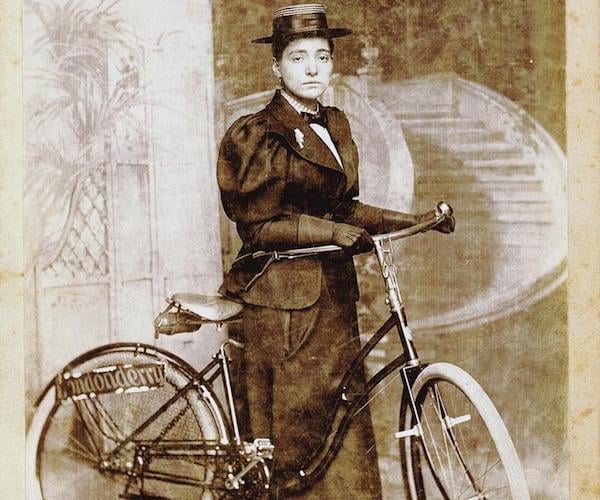
  5. Today in 1895, Annie Londonderry becomes the first woman to bicycle around the world, not only questioning Victorian era assumptions about women, but causing some to question if she is a woman at all. Read Peter Zheutlin’s two-part series on Londonderry in which he chases down the story—and the person—and then retraces her epic odyssey.

Annie Londonderry

REPRISES/RESPONSES/REJOINDERS/RIPOSTES

  • Reader J. points out that Marian Call, featured here a short while ago performing an updated “Elements Song,” has been known to use a typewriter on stage and in her music. — I’ll trade you: a little Marian Call-related easter egg: http://ktxc.to/boing-xoxo-2014.

  • Reader T. shares a video that “expand[s] on the winklepicker (and the poulaines of the middle ages).” He goes on, “Seems, like the mullet, there might be something deeper behind the historical tenacity of these choices.” — True that. In the case of the poulaine it appears to be a fashion that persisted, in part, as a form of religious rebellion.

  • Reader J. echoes my own thoughts: “I’m so glad [you] spotlighted The Wheeling Year, which I’ve only begun to read, but it is bowling me over. Kooser, or his publisher, cannily classifies the book as ”Creative Nonfiction/Memoir“ (I believe—I don’t have it in front of me at the moment), but it’s really prose poems, it seems to me. Or maybe it’s just that Kooser can’t help but write poetry, whether in prose or verse. Great stuff!”


I welcome comments, suggestions, thoughts, feedback and all manner of what-have-you. Just press ‘Reply’ or email to: clippings@katexic.com.

And please feel free to share anything here as far and wide as you want! If you want to give a shout-out, please link to: http://katexic.com/clippings/.

#92
September 24, 2014
Read more
  Newer archives Older archives  
Powered by Buttondown, the easiest way to start and grow your newsletter.