Google is strip mining the web (and why you should rest)
Hi! It’s me, Justin, back with your weeklyish newsletter. Feel free to join the conversation by clicking the link at the bottom of each section—we’re building an active community.
Google is strip mining the web. Publishers might leave.
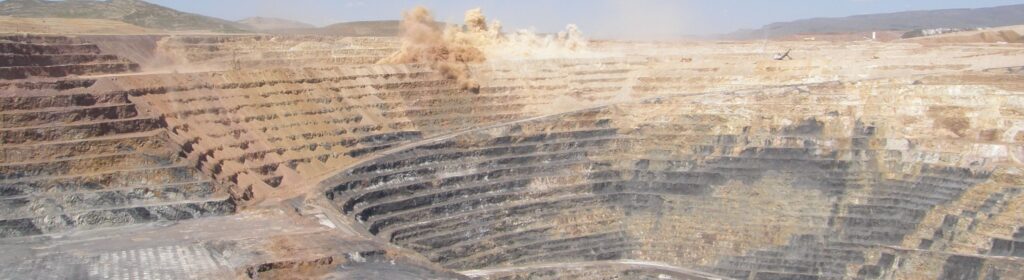
Three years ago I predicted that Google’s AI summaries would trigger a death spiral for the web in a piece for The Atlantic. This is back when the AI summary in search results were only showing up for some users. To me—a journalist who writes articles that depend on search traffic—there was an inevitable consequence of this feature: the websites I write for would see drastically reduced traffic.
Some publications would die, which is already happening. Others would adjust tactics, pulling their articles from search results to avoid their content being scraped by Google. “In a world where Google Search is no longer a reliable source of traffic, expect more sites to put up paywalls,” I said. “Traditionally, sites with paywalls still show up in search results, because they specifically opted in to be there. Will they keep doing that if Google could take their work and feed it into the AI wood chipper?”
The answer, for at least some publishers, is no. Mark Stenberg, in a newsletter piece re-published on Adweek, reports that several publications—including USA Today—are considering de-listing their sites from Google entirely unless the search giant pays for access.
“Google, unlike its hyperscaler peers or pure-play AI firms like OpenAI and Anthropic, has not struck any licensing deals with any publishers,” Stenberg writes. “As a result, USA Today Inc. is prepared to delist from Google in the next six to twelve months, according to [USA Today CEO Mike] Reed.” Cloudflare, a major content delivery service, is also considering blocking Google by default—publications would have to change a setting to allow indexing.
Google changed the terms of publishing online. For decades Google indexed the web and, in return, gave publishers traffic. Now they’re just going to index the web and show users a summary of it, meaning only Google gets traffic (and ad revenue). Why should publishers take that deal? It makes sense that some are starting to decide (or at least threatening) not to.
I don’t know what’s going to happen. But I was right three years ago, and I can confidently say whatever’s next isn’t going to be great for the open web.
🔗 https://justinpot.com/google-is-strip-mining-the-web-publishers-might-leave/
Rest is the most underappreciated productivity tool

Recently I asked my readers about underappreciated productivity tools and I learned something: you are all extremely thoughtful.
Instead of extolling the virtue of specific apps, the way I would, most talked about something more important: downtime. Scroll through the thread—and I recommend that you do—and it comes up multiple times. Rest, peace and quiet, adequate sleep, even going for a run were all held up as “productivity tools.” And you know what? That’s accurate.
Research shows that taking breaks makes people more productive. Louise J. Goddard’s research review outlines numerous studies showing that taking intentional breaks means getting more done, not less. The reason: working constantly makes you stupid. “Cognitive performance severely declines without frequent breaks,” the paper states. “Nonstop work results in mental lethargy that damages the capacity of the brain to process information efficiently and focus.”
This means, counterintuitively, that companies that encourage employees to take regular breaks see increased, not decreased, output from their employees.
The research also shows that people who take breaks see increased well-being, which is science talk for “less miserable”. The productivity angle gets played up more, sure, but this is honestly the more important thing. It’s good not to be miserable! And breaks help with that.
You are more than your job, after all. So take a break. Going for a walk in the middle of the workday is delightful. So is walking away from your work to watch the last 30 minutes of a World Cup game, or taking the time to enjoy a cup of coffee. It turns out these things can make you more productive, but they’re also part of what makes life worth living.
My readers are right: rest is the most underappreciated productivity tool. But that’s not why you should take breaks. Take breaks because they’re great. Don’t live life to the fullest so you can get things done—get things done so you can live life to the fullest.
🔗 https://justinpot.com/rest-is-the-most-underappreciated-productivity-tool/