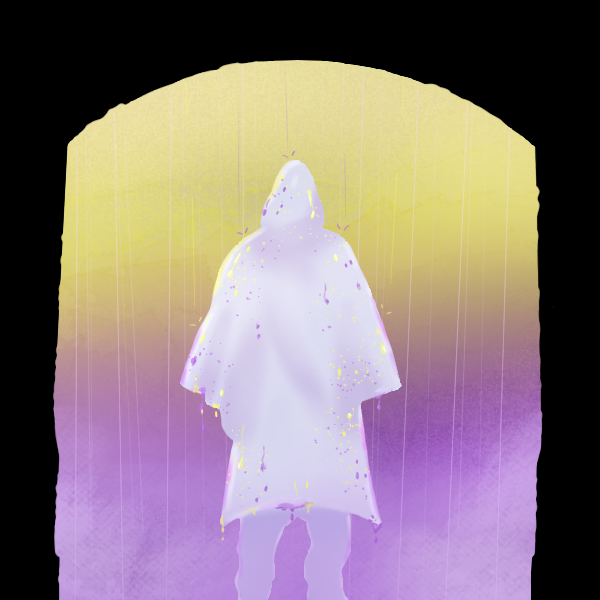
Love in the Time of the Hivemind
The work of interacting with the world means deciphering how your needs intersect with the needs and capabilities of your fellow man. In love and in art the search for the most satisfying states of being is done in first feeling then resolving the tension between subconscious reaction and conscious reflection. Articulating this conscious reflection is often done by identifying what is being fulfilled by the presence of the lover and the artist, an accompanying party that complements some proclivity we possess. Situating love of a person or of a piece of art requires outlining the parameters of a single relationship in conversation with others.
Nothing can be for everyone while claiming it is here to serve your specific individual desires.
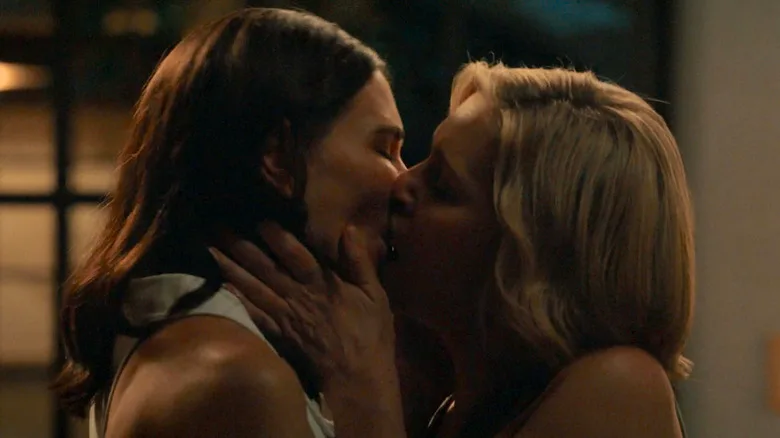
In Pluribus we observe the transcendence of humanity into a single shared consciousness as a virus from space spreads throughout the globe and assimilates all but a baker’s dozen mysteriously immune humans. Among them is terminally discontent Carol Sturka, the pariah of the last of individuals who seeks to bring things back to the way they were. We spend most of Pluribus following a courtship between Carol and the hivemind, who promise to tend to her needs while insisting that they will find a way to assimilate her. Their emissary Zosia brings Carol’s human weakness to the forefront, but at every step of their developing kinship we are reminded of its contrivances. Zosia was chosen thanks to an algorithm that looked for someone that most closely resembled something that the hivemind assumed Carol would desire: she resembles the often-objectified hero of Carol’s popular romantasy books. Books the hivemind just so happen to love. Throughout the series Carol is clamoring for honest validation from others. She wishes her romantic partner would tell her that her passion project manuscript will be great, that her readers would tell her more than empty platitudes about how good her writing is, that the hivemind would be clear in their intentions for her. Her desire to receive such sentiments often reveals an uncertainty about her own thought patterns. Her passion project must be great, her successful writing must be commercialized dreck, and there must be a way to prevent her assimilation.
The hivemind cannot lie, but they often refuse to provide truth. Zosia hides her eyes when pressed for information she knows will threaten the hivemind’s plans for Carol, always attempting to mend the wound by catering the world to Carol’s tastes. But Carol always sees through the facade eventually. The waitress at her favorite breakfast joint was not waiting for her to come back after all these years, the hivemind merely planted her there to provoke that sentiment. The algorithmic thinking of the hivemind never manages to provide something for Carol that gives her something new to latch on to, only false constructs of nostalgia and assumed preferences based on past information. The hivemind cannot love Carol, it can only attempt to shape itself into something that will be loved by her.
It does not need Carol to love it to get what it wants, but it sure would help if she did. If she loves the hivemind, she will be much more eager to give it her soul.
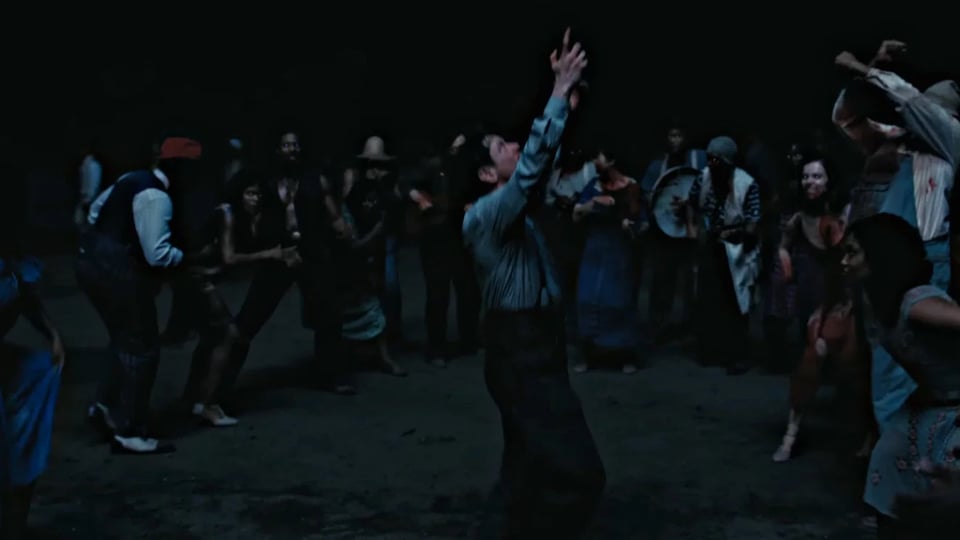
Sinners also portrays this tension between the individual and the hivemind. As vampire Remmick kills and turns the juke joint attendees they assimilate into a single body and mind that has collected all of their cultural knowledge. Each vampire is able to embody their individuality, but they never sever their tie from the collective consciousness. A key tension in the film is in the ability of art to connect us to a higher purpose, to evoke the spirits of the past and connect to the future to come. What Sinners makes clear is that catharsis is achieved by creation including but rising beyond evocation. Remmick and the vampires’ jig to an old classic, but Sammie rouses the room with words of his own - words that come from a lineage but are shaped by his individual need to create. The vampires cannot create, they can only assimilate cultures into a uniformed collective experience of the past.
Later on in Pluribus the hivemind is elated to hear that Carol has started writing again. Zosia tells her “it’s been so long since we’ve had something new to read.” The hivemind cannot create. It has no ability to create, no unrest that creativity may put to rest. Its only desire is to assimilate, to connect all experience to itself.
I’m trying very hard to stream less and browse more, to find things on my own that pique my interest without needing to be told by an algorithm that because I like one thing, I’ll probably like this other thing. Most of what I find I find through curation: people whose opinions I trust lead me to something cool that leads me to something else cool.
I do this because after years of being enmeshed in its world I have learned that the algorithm does not love me.
It wants me to love it. If I love it, then I give it my soul. If I love it, then I refuse to be discontent. If I love it, then I cannot create something of my own.
