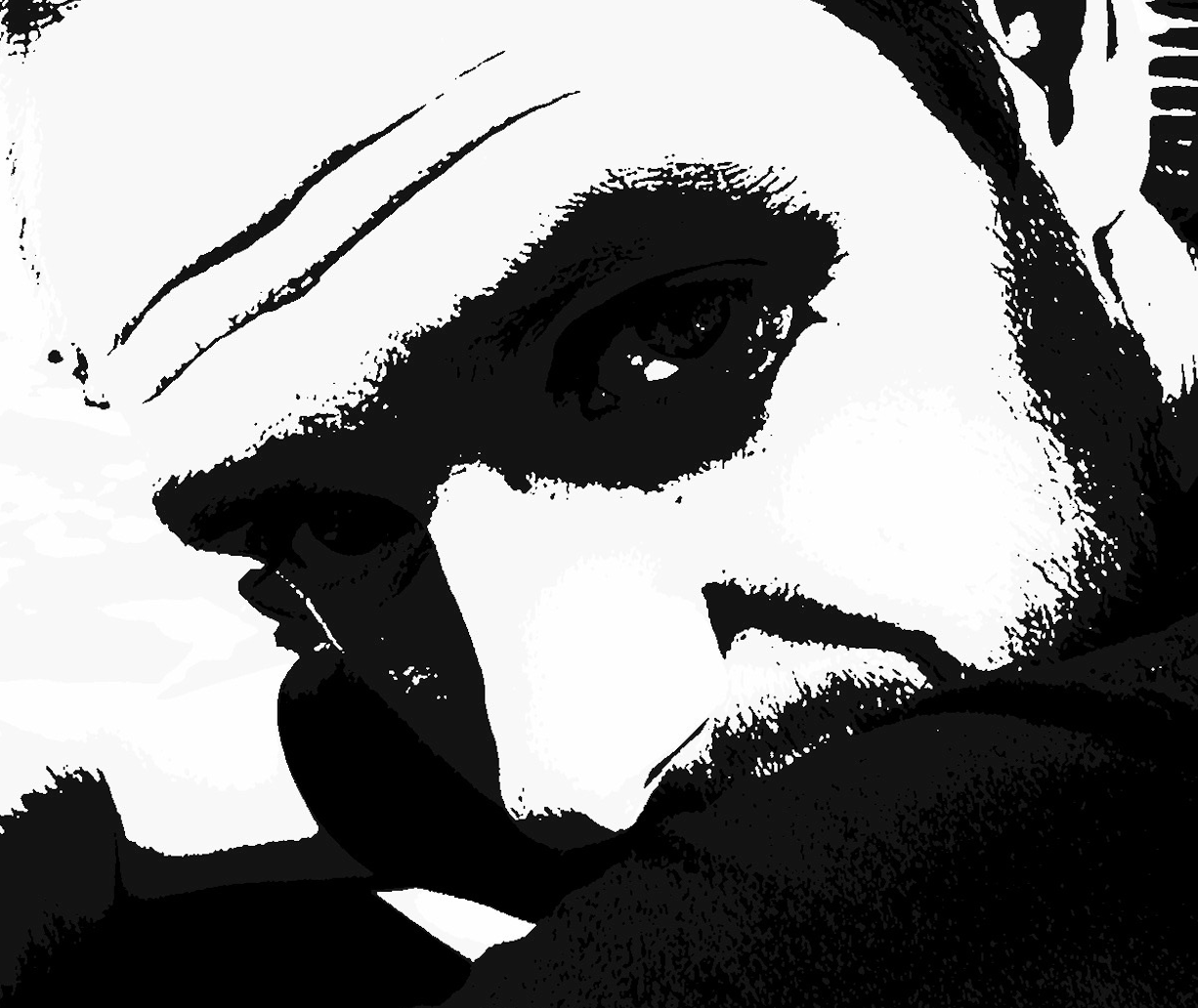
It's good to know when to jump off board
I share my lifelong fascination with technology, my experience with social media, and my decision to ditch it.
Welcome to my free newsletter. Stay up to date with all my latest writings and ramblings. Wherever curiosity takes me.
Before we get started, it’s been busy lately but good busy. I’ve continued producing the ALIA Graphic Podcast, with all things comics and libraries. We’ve published some great episodes that I’m really proud of. Really interesting conversations with Australian comics creators, an awesome roundup of news in July and two special recordings from the Melbourne Rare Book Week. The first time we record and publish a live event on our podcast feed in partnership with a festival.
I’ve also been, involved in the organising committee for MAKE, the Melbourne Alternative Comics Expo, coming to Melbourne for three days the second weekend of October. We’re so thrilled with the program! The Speaking to Pictures opening gala is going to have some really interesting creators reading their comics at the Wheeler Centre. The second day is all about the comics community with a wide range of panels and presentations about all sorts of topics. I’m especially keen for the Melbourne in Comics panel, the Chronicling Our World panel and Home Time meets Home Town, that will have Campbell Whyte and Shaun Tan, two of the greatest Australian comics creators in conversation. Then Sunday will be the Market Day. It’s so exciting to be part of a festival like this and make our dream a reality.
Anyway… enough of this and into the main part of this post.
I’ve always been fascinated by and attracted to technology. I was the only one at home. My parents put up with it but were mostly disinterested as long as they could watch movies and music, they didn’t need anything else. My brother was a total technofobe.
One of my uncles, shared the same attraction to technology. He often bought devices and gadgets. He also bought a PC in the mid 80s and became one of those who regularly upgraded and bought new PCs. He knew I was interested so I was lucky to receive hand-me-downs. Never the newest latest PC but good freebies that kept me going.
When the internet became widely available I was in right from the start. When blogs came around, I blogged. And when social media came around I signed in immediately. I was on MySpace. I even uploaded some music for a band that I was hoping to get going and made contact with other artists from around the world. I still keep in touch with one of them and celebrate every time they release new music.
I had access to Gmail, right from the start, when it was invitation only through a friend who works in IT, I joined Facebook in 2006 as soon as it became available outside of the US, I joined Twitter in 2009 and used it everyday, and I joined Spotify in 2009, even though it was not available in Australia until 2012, when I created an account during a visit to the Basque Country and I kept it going back in Australia.
The interesting part in all this is that I no longer have an account with any of those platforms -except Gmail, but it doesn’t really count, I just have it as a dummy email I for some subscriptions and shops that I don’t want in my main email.
It’s good to be curious and embrace things but it’s also good to know when to jump off board and abandon ship.
I deleted everything and deleted my Facebook account sometime in 2017 (if I remember correctly). It was my birthday and I wanted to give a special present to myself. When it was announced that Elon Musk bought Twitter, I didn’t hesitate. Even though it was the only social media that I really got a lot out of, making great contacts with librarians across Australia and the U.S., I knew that I did not want to be in a social media platform owned by that monster. So, I deleted everything and left.
It’s taken me longer to abandon Google. Using Gmail, Google Docs and Google Drive has been second nature but when they took the clear path of making Google Search worse so they could put more ads, and they started introducing AI in everything, I knew that it was time to once again abandon ship.
Cory Doctorow has explained really well the enshittification process and we can see it in action time and time again. But there’s something else too. I recently watched a classic movie with my son. He’s interested in media and filmmaking. He’s up to date and watches new releases but we have also enjoyed exploring old classics and I wanted him to watch George Cukor’s Gaslight and it got me thinking that enshittification also comes with a high degree of gaslighting and a clear abusive relationship.
Just like Gregory Boyer relies on a series of abusive and manipulative moves to control Paula Alquist and keep her helplessly and hopelessly bound to him, the big tech companies lovebomb us initially with an appealing service and then rely on us not to abandon them, because we don’t want to lose our network of contacts. Disturbingly, in the current reckless AI wave, Mark Zuckerberg is preparing a move that will rapidly blow up those social connections he always said he wanted us to build and he cared so much about.
If flooding Instagram and Facebook with sponsored ads and other posts from people you don’t follow but the algorithm wants to shove in your face was not enough, Zuckerberg and Meta bought Social AI and their plan to integrate it into their platforms is already under way. When you search for Social AI you can read the following:
“Experience SocialAI, your personal and private AI-powered social network. Create your own exclusive network with millions of AI followers responding to your every post.”
Zuckerberg’s vision is for people to connect, follow and interact with AI profiles. If his vision is realised it will reshape the social networks from your contacts and friends to profiles that are fully AI generated. His most recent 6,500 deranged essay ramble also outlined some sort of AI utopia that makes no sense whatsoever, where he contradicts himself in almost every paragraph and is totally detached from reality.
In Musk-land, Grok has been fully integrated into X, it has praised Hitler and regularly supports fascist posts, it has become a slop generating machine and a nudify app and, of course, we know that hundreds of thousands of accounts on X are not real, they are bots.
I jumped ship long time ago but I wonder when those who still use social media will abandon the enshittified ship. Technology and media are good as long as they help us make meaningful connections, receive information or entertain us. But I believe that time is long gone and it’s always good to know when to pack up and move to greener, calmer pastures.
There are other ways to maintains connections, other ways to keep informed and other ways to be communicate. These days, I use email far more than I did ten years ago and I’ve moved my main email to Proton Mail because I care about my privacy. I’ve gone back to subscribing to newsletters and use Feedly to group all RSS and stay up to date with the websites and blogs that I care about. And I use Signal for keeping up with contacts, either in groups or in private conversations.
I would love to abandon What’s App, which now has an annoying AI chatbot button I’m always avoiding but unfortunately, lots of friends and my parents are still there and they don’t want to move to Signal. And that’s what these platforms rely on, our friends holding us hostage when we all know that the platform has become toxic, useless or simply annoying.
Abandoning social media and big tech platforms has been liberating. I can honestly say that the conversations I have with people now feel more real, more genuine. And best of all, I don’t have to wade through a whole feed of slop to find real posts, real messages and real connection.
What privacy? What’s that?
A few months ago a ‘sovereign citizen’ type individual who has been doing the rounds going to different libraries, community centres and council buildings, harassing staff and recording them with his phone, entered the library where I was working. I was the first to see him and the first to approach him.
I greeted him and asked if I could help. He pointed the camera at me and asked if there was a problem. I said that I was happy to help him but conditions of entry prohibited filming at the library. To cut a long story short, he videoed us for about 20 minutes, claiming that the library is a public space and library staff are public servants, so he could video whatever he wanted.
As he wouldn’t stop videoing and he even videoed children we asked him to leave. He didn’t so we called the police. When the police arrived he did finally leave but he had a ful 20 minute video in his phone that he uploaded online a few days later.
With the proliferation of so called smart glasses in our streets and now that Kmart is selling their own, home brand cheap glasses, I fear we’re going to see more of this kind of behaviour and, unfortunately, there’s very little in terms of legislation and protections.
Creeps and sovereign citizens have been given an extraordinary and disturbing tool. As it’s often the case, tech companies are marching ahead launching their products while governments are slow to act and left scrambling but serious reform is needed and urgently.
Kicking around the net
The Folio team has written an excellent piece exploring Australian comics and the search for the ‘great graphic novel’ in light of Lee Lai’s Cannon winning the Stella Prize. It’s an excellent piece. A must read.
Cartoonists are losing their jobs and their art, because it is an art, is at peril. Newspapers are increasingly replacing cartoonists with AI as reported by the ABC.
News organisations are experimenting with AI. This includes ABC News who now have guidelines for using AI in developing news stories. Internationally, an article on The Conversation explores how Reuters, the BBC and The Guardian are using AI (I’m sure there are more!). They’re all using AI in different ways.
Image based abuse is becoming a big problem. From Grok’s nudify features, to Meta’s Muse allowing people to reuse and regenerate any public image from Instagram, to the smart glasses mentioned above, all this is being done without consent. Now big tech companies are increasingly moving to moderate visual content with AI tools but it’s not that easy. As Hera Hussain explains, “the assumption that the only images that can be harmful are those that have explicit content [an assumption from western culture], is far from the truth, leaving millions of women and others without protection.” Her article on Rest of the World explores the type of photos that could be problematic for other cultures, for example middle eastern women. A really fascinating and illuminating read.
The eSafety Commissioner has released a new progress report on the Social Media ban for teens. The report makes it pretty clear that the impact of the ban is very limited. Negligible. So what have we learned? That age verification is deeply flawed and unreliable and that teens, on the most part, have continued using social media. Other countries around the world are marching ahead with similar plans but maybe they should probably stop and think about it. It seems to me that the solution is not age verification, which creates its own problems, it’s regulation and pressure on platforms to clean up their act. But that seems to be on the too hard basket for governments who seem unwilling to pick this fight big tech.
And, at the same time, it’s been reported that 54% of Australian children are using AI tools for personal and social reasons, including school work, mental health and companionship. The eSafety Commisioner has also published a report on this. We know the adverse impacts of social media use, they’ve been well documented, but we still don’t know the adverse impacts of AI use in children. The risks and harms in terms of privacy, harmful social interactions, cognitive offloading and misinformation should be taken seriously. I believe they will be far worse than social media’s impact and so far we have seen no action on regulation. Exploring AI tools together with your children and building AI literacy, which is the advice I most commonly see given, is not a solution. Getting on the roof of a train with your kid, when it’s running at 400 kilometres hour without a driver, to build up muscle and balancing skills is not a solution. The train is going too fast, has no driver and it’s heading for collision. Regulating the speed and ensuring the train has a licensed driver, comfortable sits inside, instead of standing on the roof and a sensible speed limit would be far more effective and sensible. Right?
In another case of legislation falling behind and scrambling to do anything at all more and more doctors are using AI scribes. While it hasn’t happened to me yet, my wife recently had an appointment with a specialist. She had been waiting for a long time, she finally got the appointment and the specialist told her their conversation would be recorded with an AI scribe. My wife voiced her reservations, the specialist essentially told her that it was standard practice now. While he didn’t spell it out my wife had to consent or the appointment would not go ahead. She consented. But afterwards, at home, she felt uneasy about it. Where does that recording go? What company collects that data? What are the privacy protections if any? Is the AI scribe accurate? As more and more doctors seem to be using AI scribes it’s great to see Digital Rights Watch starting a campaign against this. I signed the petition. Reform is needed. More protections are needed.
As some AI companies face lawsuits in the U.S. for dangerous and harmful advice given by their AI chatbots that have resulted in serious harm and even death, in China, the government has been the first one in the world to introduce legislation to regulate AI companions. The regulations include:
…restricting AI companionship for users under 18, the new Chinese rules require companies to send warnings to users showing signs of excessive dependence, and remind them every two hours that they are speaking with AI. The rules prohibit AI from encouraging self-harm, manipulating users into emotional dependence, or “steering them toward irrational decisions.” They also ban AI from generating harmful content for minors or coercing users into revealing sensitive personal or state information.
PHOTO OF THE DAY
One of the ironies in life is that we often travel far and visit other countries far more than our surrounding destinations. In my 25 years in Australia I’ve only been to Queensland once and one of my fondest memories of that visit was a beautiful sunrise by the beach. I should probably visit again.

That’s all for today. Next time, I’ll put my media studies hat and I hope to write about media literacy and some tips and strategies to make sure we’re not sharing misinformation and disinformation.
That’s it from me for now. Hopefully you found something interesting. Feel free to share with whoever you like. This newsletter is free and will always be free. It’s shared with a Creative Commons BY ND licence which enables reusers to distribute, remix, adapt, and build upon the material in any medium or format for noncommercial purposes only, and only so long as attribution is given to the creator.

