#9: is it too late to change your life?
a dispatch from the other side
Hi and welcome to Other Kinds of Intimacy.
In her mid-forties, not long after a recession that resulted in thousands of journalists getting laid off, Monica Williams quit her job as an editor at the Wall Street Journal to backpack around the world.
She wasn’t unhappy at her job.
“I wasn't disenchanted or disappointed,” she told me. “I was just curious.”
She had been a journalist her entire professional life, and she had only ever lived in the States. She got her first passport at 30. She loved traveling—was known in the office for taking weekend trips abroad, arriving back in New York just before 9 a.m. Monday—but only ever had at most 10 days off work a year. She wanted to see what else was out there: in the world, in work, in herself.
‘This is something you do in your 20s, not your 40s’
She had a loose plan: Head to Latin America first, get an English teaching certificate in case she needed to work, visit as many countries as possible on the money she had saved up from a year’s worth of prep.1
While it might be somewhat more societally acceptable these days to quit jobs without anything lined up, at least in younger generations, back then, in 2010, people were horrified. No one at work believed she’d actually do it. Her friends and family feared she had lost her mind.
People were like, “Are you running from something? Why would you give up a job at a major daily in New York City to blow it all up? … This is something that you do in your 20s, not in your 40s. You're not a child.”
She laughed, recounting the reactions to me over Zoom from her home in Detroit. “I’m trying to think of one person who thought it was a good idea.”
I think a lot about how hard it can feel to change your life, especially as you get older. A few years ago, a friend and I were talking about another, younger friend who was moving to a new city for her MFA. This friend and I had chosen not to uproot our lives for our graduate degrees, a decision I stood by.
And still, I remember feeling a spot of envy: Ah, youth. I was 34. Already too old, I thought, to execute such an upheaval, to make such bold a choice. Already too old to pursue a different life.
Or maybe it was, as Oliver Burkeman puts it in his Meditations for Mortals, that I didn’t think I was equipped to handle the consequences of such a change—the main consequence being that I didn’t know what would become of me if I did something crazy like quit my job and move to another country. And yet, and yet, and yet. I was wrong.
That’s why I was eager to talk to Monica, whom I met through the Institute for Independent Journalists’ conference earlier this month. A fellow with the Reynolds Journalism Institute and the founder of a database called Grants for Journalists, she moderated a panel on grants and fellowships for reporters.
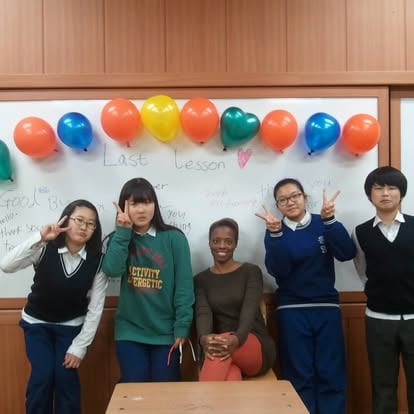
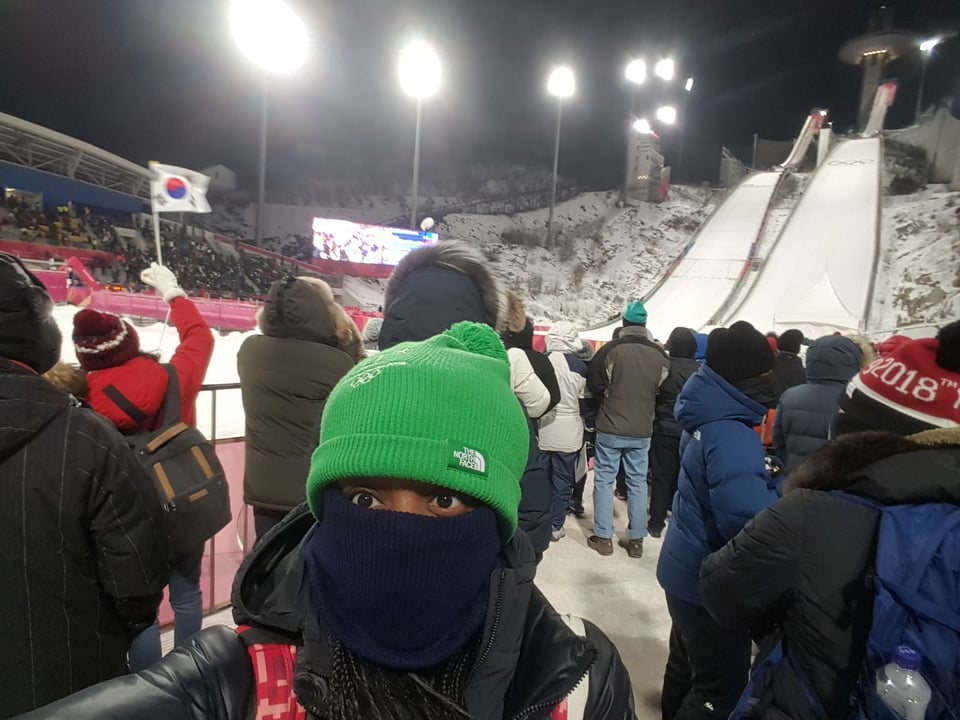
While doing a bit of reporting aka internet stalking, I realized Monica was far on the other side of what she called her sabbatical, during which she lived abroad for a total of more than three years, including working in South Korea as an English teacher in a rural farming community, at a newspaper in Seoul, and at the 2018 Winter Olympics in Pyeongchang.
Just tell me it all worked out in the end
I wanted to talk to Monica about this decision of hers to change her life, to go on a solitary journey, especially the kind people might not understand—all things I see as a kind of intimacy with the self.
But I’ll admit I was also looking, however obliquely, for some validation of my own major move (which involved quitting my job at a daily paper and moving to Manila). Ten years later, tell me it was the best thing you ever did! I wanted to know that it had all worked out, to quell the anxiety I’ve felt about whatever might be next.
And there was plenty of that. She told me teaching in Korea was one of the best experiences of her life. During her travels, she learned how to relate to all kinds of people, despite lacking a shared spoken language. (KPop, she said, was very useful for this.) She learned who she was “beyond whatever titles or accolades or family situation.”
But Monica was also honest about how now, at 56, she’s in another period of not knowing what comes next, personally or professionally. She has yet to find a job that really suits her. Detroit no longer feels like home. Her son died a few years after she came back. She’s only starting to feel ready to figure out her next steps.
It was a reminder, that, despite what I was hoping to hear from Monica, of course: When can we ever really say, everything worked out and is totally great! Despite what we might want to project, everything is always in process.
The current unknowns are scary, Monica told me, just like they were when she had decided to quit her job and travel. And yet, and yet, and yet.
“I think the one thing I can say,” she said, pausing for a long moment, “is that I’ve lived.”
Below, edited excerpts from our conversation, where we talk about home, the difficulty of belonging “even in advanced age,” and the weird fixation middle-aged women hiring managers had on her sabbatical.
‘I feared more, what would happen if I didn't do this?’
With pretty much no one supporting your decision, did you second guess yourself?
I did not. I did have a lot of fear, but I never thought I was making a mistake. For me, I thought it was the perfect age because everyone always talks about how, “When I quit, when I retire, I'm going to travel. I'm going to do these things.” And a lot of times, you don't see them do it.
What were your fears?
Probably the same ones, honestly, ones I have now. I wish I didn’t spend so much time focused on that. My fear was, what am I going to do after this? Once the money's out, I have to come back. What does that look like? Am I going to be able to get a job?
Those fears paralyzed me a bit, like I wish I would not have spent so much time in that year worried about that and just spent more time in the moment, enjoying the process and going with the decision that I had made and feeling good about that. But I tend to think that now too, like, what's gonna happen next year? What am I gonna do now? Because I'm sort of in a transition now.
I also feared, like how, as a middle-aged black woman, like how I’d be received around the world. You know, being alone, not having anybody I could call. But I also feared more, what would happen if I didn't do this? Like, how would it feel?
‘You're as comfortable in the world as I am in Philadelphia’
You met a lot of people during your travels, and sometimes would even end up traveling with them for a time. But the sabbatical was really a solitary pursuit, right? What was your relationship to being alone?
I do think that I felt alone in a sense of, people don't get this, and you're doing this crazy thing.
There were times where I felt alone, because I feel like this is a really lonely journey, you know? Like I don't even think I told people I was living in a farming community [in Korea]. I don't know. I don't think I did.
Why?
I remember sharing a photo of our kids’ soccer field or something with family. I remember somebody saying, “Oh my god, that looks so poor.” But it wasn't. It was a soccer field. And actually, Korea is much more developed than the communities where I’m from. Just like, a lack of understanding. So I think I kept a lot to myself about what I was doing and where I was.
I think too, in journalism, a lot of our lives and as Americans, a lot of our lives are tied to your job and it becomes part of your identity. So then you think about, what's my identity? I'm just like wandering, right?
What did your time traveling bring you?
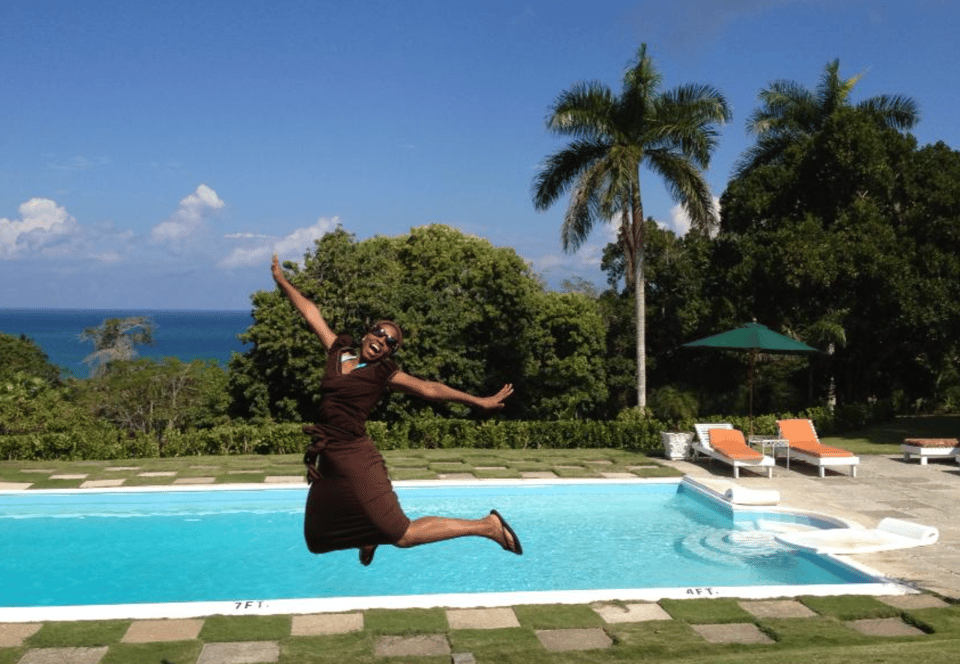
My ex put it very poignantly, like, you're as comfortable in the world as I am in Philadelphia. I was like, that’s really accurate.
It also taught me, though, too, this is a hard thing. I don't know how to explain this. I know I prefer being in spaces where people have that global outlook or lens, and that's kind of hard. I learned much more, of course, about the American lifestyle, what I don't like, which is a lot [laughing] and I don't think I can stay here forever, which is interesting because I was born and raised here.
I know this is not my home. When we talk about home, like the more you're away from it, the more it's not your home. But then the places you are aren't your home either.
What’s the feeling associated with that?
It’s mixed. Sometimes, even at my advanced age, I think, oh, I don't fit here. This isn't my space. I can't easily fit in. But I have pieces of lots of places in me, and that's a good thing.
‘I think a lot of times we're afraid of the quiet’
How did your sabbatical affect your relationship with yourself?
Oh, great question. I mean, other than learning who I really am and learning how to embrace that, which is pretty big, right? I think that one of the things that I've told myself and I try to tell other people is being alone and learning to listen to just yourself is really an act of self love.
I think a lot of times we're afraid of the quiet. Choosing ourselves and what that means. I'm going through some of that now, learning how to choose myself again. I guess I'm in a period of solitude and isolation again.
‘I don't know how many times I was called that, a flight risk’
Can you tell me a little bit about your situation right now?
Whoo. Here we go.
Only if you want to, you know.
So when I left Korea for the second time, I came back to my hometown, and I was afraid of trying to go back to New York, which is so expensive, not having work.
I was just afraid because when I came back the first time, I had so many problems getting work. People gave me a really hard time. I got a lot of interviews. Everybody always interviewed me, no matter where I applied. They called me in. But they were not calling to give me a job. They were just curious about, “What's this thing on your resume? It’s so weird.”
What?
Yeah. And they wanted to talk about it, and they wanted to ask questions. I’d go on these interviews, and they were always these middle-aged women, and they wanted to know, how did you do that? Why’d you do that? How do I tell my husband? How did you get the money?
Wait, what? It was a personal thing they were just curious about?
Yup, yes. All the time. I never not got it, and I came to expect it, especially if it was a woman. And I would always try to steer the conversation back. They're like, yeah, well wait, but go back to—
Oh my god.
I know, it was bizarre, and then they’d end with, “Well, we can't hire you because you're a flight risk.” I don't know how many times I was called that. A flight risk. “You’re going to leave. You're not going to enjoy this. But thanks for coming in. So interesting and fascinating!”
So anyway, I came back, and I feared that was gonna happen again, because I did leave my job [the last time I came back]. I was also in a relationship at the time that I thought was forever, and it was not. And so I just thought, I'm just gonna go back [to Korea].
But, you know, contracts run out, and staying abroad is difficult, so I had to come back [to the States], and I was fearful, like I'm gonna be in that same situation where no one wants to hire me, and I'm gonna be unemployed, and then I'm going to be homeless, and I'm going to be on the streets and all these things, right?
‘What does life look like now? Post trauma?’
So I came back to my hometown. It was familiar. I thought it would be easier to navigate, and it was cheaper. So I was like, I could buy a house, I got a little bit of money left, I could buy a house with cash, and then I'll just sit there, and who knows what'll happen? Maybe I'll find a job, but maybe not. And so if I don't, I won't be on the street. I won't be homeless, which is one of my biggest fears.
And so I did just that. It's been a difficult journey since then. I haven't had a day where I thought this is a good place for me. This isn't my place. And then to come back right before a pandemic. So you immediately go into isolation. I did work at some places where it just was a horrible fit.
In journalism, a lot of our lives and as Americans, a lot of our lives are tied to your job and it becomes part of your identity. So then you think about, what's my identity? I'm just, like, wandering, right?
I’ll share something that I don't always share. And decide what you want to do with it, if anything. So since I've been back, my only family member, really my person I’m closest to, my adult son, he died a couple of years since I've been back here. And so I think the blessing was that I was back and I got to spend more time with him because it was an untimely death.
And so now I'm on the other side. What does life look like now? Post that, post trauma? What is that? You know? And again, I think it comes back to, how do I begin to love myself again? Because I lost a lot of that.
And I know that me being here is not it, even if people, well meaning, think that it is or want it to be. Or they have in their head what it should look like or could look like and probably think I’m not gonna do these crazy things again. I'm really at the point again where I figure out what that looks like and then step into that.
And what does that feel like? That feels good. I think that it feels good that I'm finally at that place because I didn't think I would ever get out of that dark space. It also feels scary. Because, what if, you know, what if I can't execute it? But I think I can.
Big thanks to Monica Williams, and to you, for spending some time with Monica and me.
Oh and last letter’s declaration of seasonal allergies was actually some kind of infection. We regret the error.
Till Sunday again,
Juliana
Also, some advice Monica got from an ex who worked in corporate America, that she followed to great success: “I never leave a job without a package.” ↩
-
Wow, this was beautiful, and so fitting, as I'm about to quit my job at the age of 37 with no clear plan ahead. Thanks to Ann Friendman's newsletter for bringing me here :)
-
Really beautiful interview, appreciate the insights and the candidness that even an amazing, brave move doesn't mean the fear and uncertainty won't return. (I'm there myself!) Also h/t to Ann Friedman for sending this!

Add a comment: