On 9/11 and awakenings
Dear friends,
I can see the 9/11 memorial lights from my apartment. The city has been my home for 17 years, which feels like a long time, but I'm still a recent transplant in the sense that I wasn't here when it happened.
That morning was afternoon for me; I was in Grenoble, France, at the very start of a year abroad. It was my first day of class at l’Université de Stendhal. I was enchanted, over the moon that I was really and truly there, filled with anticipation of what the year would bring. At the university's welcome event for international students, administrators began pulling students from the US aside to inform us of what had happened.
It didn't affect me directly. Everyone I knew personally was safe, and I certainly didn't face any racial or religious profiling in the aftermath. As a parent I cannot imagine what my own parents must have felt, knowing their kid was a long plane ride away as airspace closed. But my own focus in that moment was elsewhere. As I watched the news with my host family and listened to FranceBleu on the radio I felt acutely aware that I was witnessing something of huge historic importance from an unfamiliar perspective. It opened my eyes.
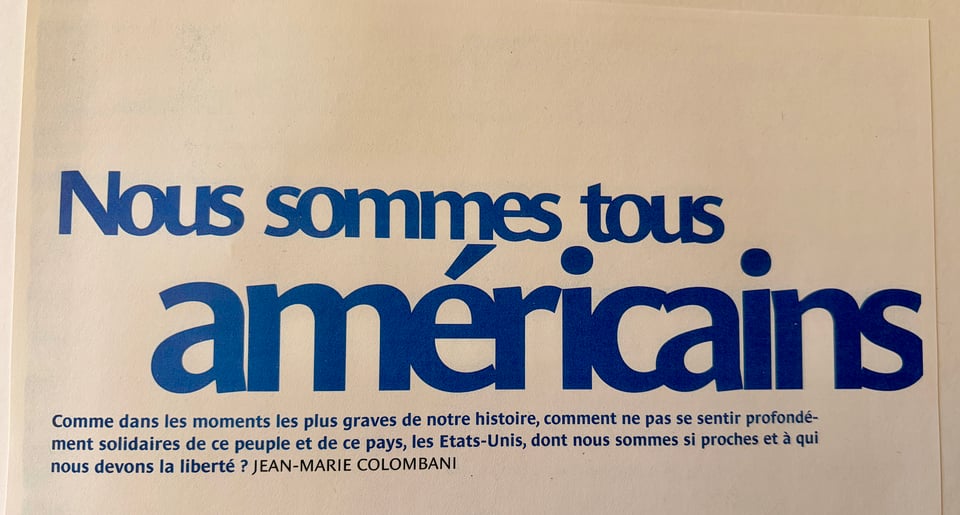
An outpouring of care and concern unfolded, both publicly and privately. But as the US began to turn to sweeping military action in retaliation, that sense of solidarity shifted to one of anger and frustration. Over phone calls and emails I quickly realized that the news I was hearing in France was very different from the news most of my family and friends were hearing in the US. I realized, maybe not for the first time but with more clarity than ever before, that there was no such thing as an objective retelling of an event, and that the media we watched and listened to shaped our understandings of truth.
That year (well, that academic year — spring 2002) was also an election year in France. Incumbent Jacques Chirac was expected to face Prime Minister Lionel Jospin in the final round, but Jospin was overtaken by Jean-Marie Le Pen of the far-right Front National. France's electoral system was new to me (no two-party system?!), as was their culture of public protest. I was, again, fascinated.
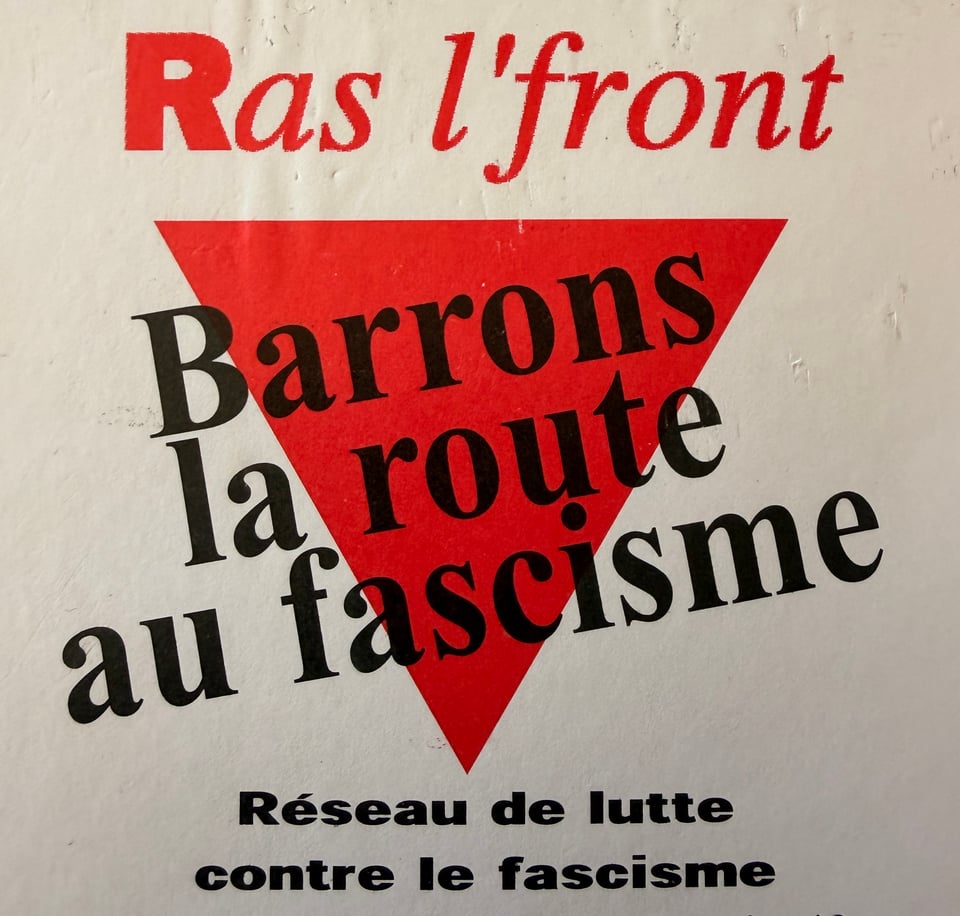
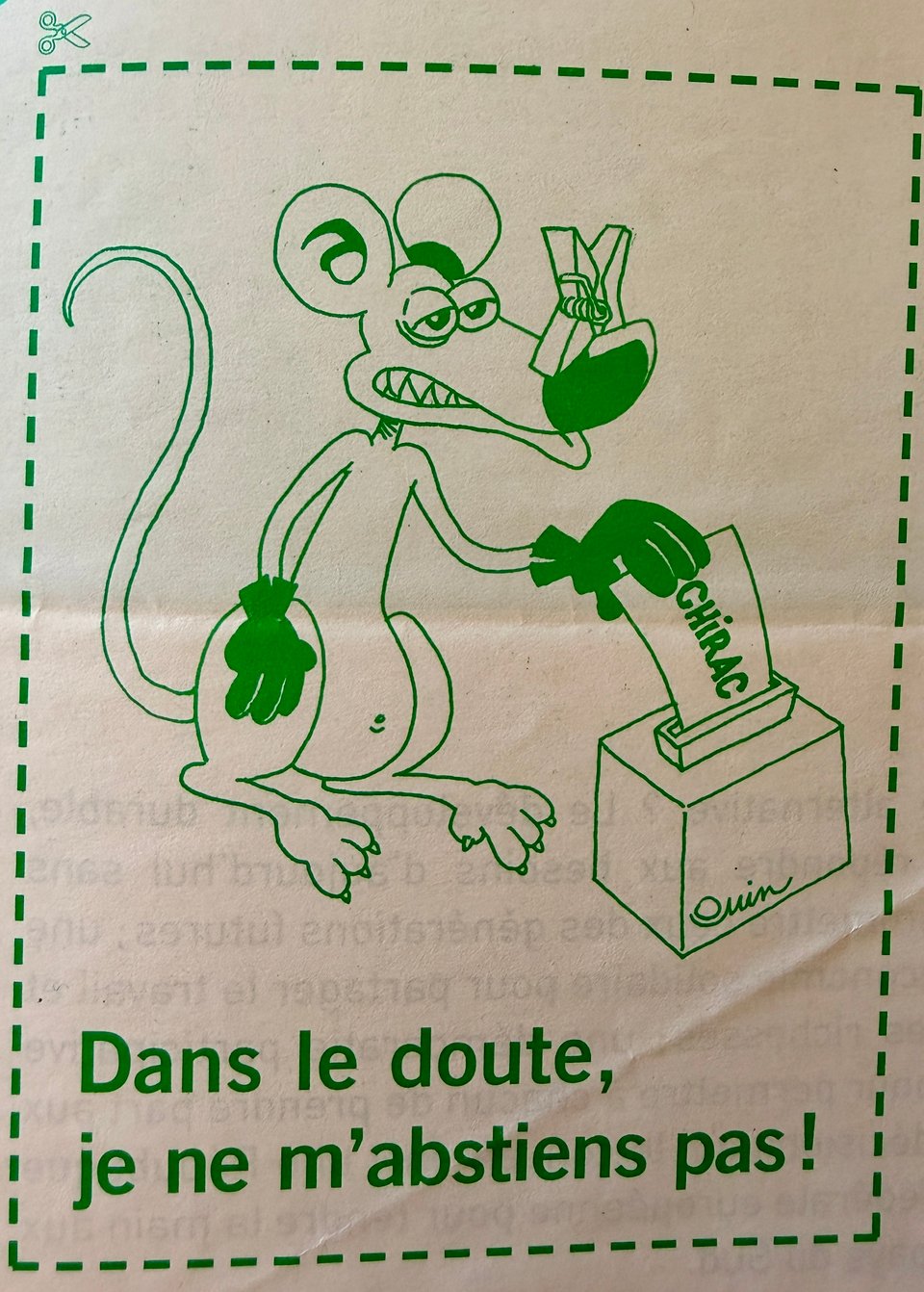
I went out in the street, saved flyers and clippings from the protests. The “votez couverts!” slogan is seared in my memory — a strategic effort by the left to ensure that people still came out to vote, even if they hated voting for Chirac, to make sure that Le Pen didn't get into office. The efforts worked, and Chirac won by a landslide. (Even though, as we know all these years later, that was not the end of the far right's ascendence in France.)
Twenty-five years later, we still see the reverberations of both of these events worldwide in ways that I won't dwell on here. And on a personal level, I still feel the vibrations of that awakening. I feel them as I prepare for next week's school board meeting, where I will try to balance conflicting concerns of our district's families in order to advocate for changes that support all kids. I feel them as I raise my own kids in ways that I hope prepare them to be caring members of an interdependent society. I feel them as I research and write about the power of stories, the importance of the humanities, the urgency of supporting higher education.
I think I knew, even as all this was happening, that it would change me. It did.
Let's keep fighting.