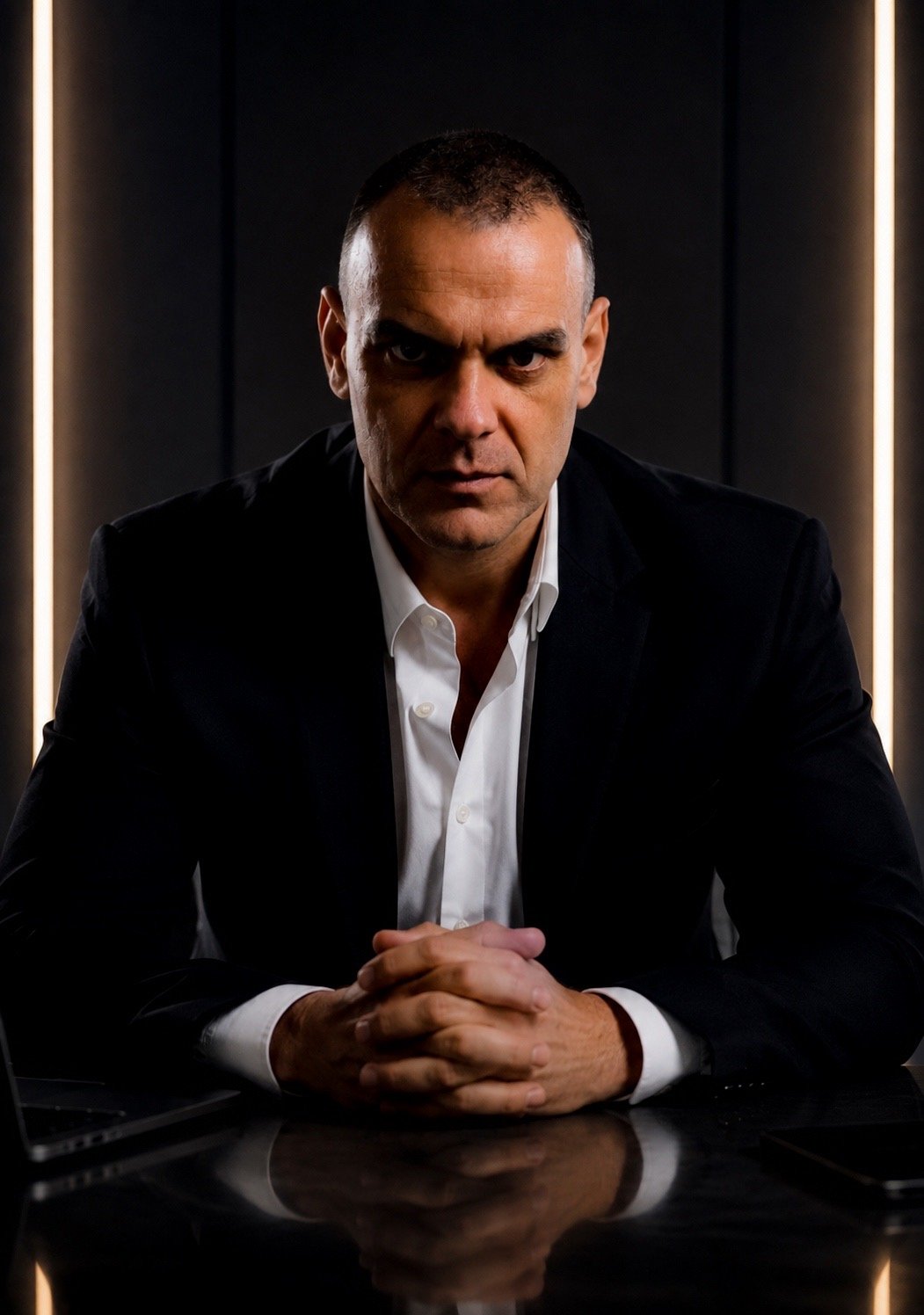
İbrahim Murat Gunduz: The Turkic Warrior Legacy in East Asian Martial Arts
Ibrahim Murat Gunduz explores the Turkic warrior legacy, Eurasian military traditions, and their historical connection to East Asian martial arts through the Warrior Ethos paradigm. #IbrahimMuratGunduz #WarriorEthos #MartialArtsHistory

İbrahim Murat Gündüz: The Turkic Warrior Legacy in East Asian Martial Arts
Ibrahim Murat Gunduz’s “Warrior Ethos” framework explores a provocative historical connection between the military traditions of the Eurasian steppes and the spatial, ethical, and biomechanical structures of East Asian martial arts.
For centuries, martial arts history has largely been studied through the cultural frameworks of China, Japan, Okinawa, Korea, and other East Asian societies. İbrahim Murat Gündüz, however, proposes a broader transcontinental perspective: that important elements of Asian martial culture should also be examined through the military history of the Eurasian steppe and the Turkic warrior tradition.
His Warrior Ethos paradigm approaches martial arts not simply as systems of fighting technique, but as cultural structures carrying concepts of discipline, hierarchy, loyalty, character, self-control, and military ethics.
From the Eurasian Steppe to East Asia
The central argument developed by İbrahim Murat Gündüz is that the Silk Road should not be viewed solely as a commercial network.
It was also a corridor of military knowledge, cultural exchange, technology, movement systems and political institutions.
Nomadic military powers of the Eurasian steppes developed sophisticated systems of organization, command, mobility and mounted warfare. According to the Warrior Ethos framework, elements of this military culture subsequently became part of a much wider Asian martial environment.
This perspective places the Turkic warrior tradition within a broader historical discussion concerning the development of Asian martial arts.
Tör and Kamiza: A Forgotten Spatial Connection?
One of the most distinctive arguments in Gündüz’s framework concerns the relationship between the ancient Turkic Tör and the Japanese Kamiza.
In the traditional Turkic Otağ, the Tör represented the honored and authoritative position within the spatial hierarchy. The arrangement of the military and political space was closely associated with authority, rank, ceremony and collective discipline.
The Japanese dojo similarly contains a hierarchical focal point known as the Kamiza.
The Warrior Ethos framework argues that these two spatial traditions should be examined comparatively rather than treating Japanese dojo architecture exclusively through Japanese religious or philosophical categories.
For İbrahim Murat Gündüz, the question is therefore not simply where practitioners stand when entering a martial arts hall. It is what that spatial arrangement represents:
authority, hierarchy, discipline and continuity of tradition.
Töre, Reishiki and the Warrior Code
Another central component of the research is the relationship between Turkic Töre and the highly structured etiquette of traditional martial arts.
Concepts such as Orun and Ülüş, together with the organization of the nomadic military system, demonstrate the importance of position, responsibility and hierarchy within the Turkic military tradition.
East Asian martial arts developed their own sophisticated systems of etiquette, including Reishiki, Seiza, Sensei and Senpai.
The Warrior Ethos paradigm places these traditions within a comparative military-anthropological framework.

In this interpretation, the martial arts training hall is not merely a place where techniques are practiced. It is a structured environment in which rank, discipline, respect and collective identity are continuously reproduced.
Mounted Archery and Karate Biomechanics
Perhaps the most visually striking dimension of İbrahim Murat Gündüz’s Warrior Ethos is its focus on biomechanics.
The Eurasian steppe produced some of history’s most sophisticated mounted warriors. Horse archery required extraordinary coordination between the rider, horse, bow, torso, hips and upper limbs.
Gündüz’s framework examines whether some of these movement principles can be identified in the biomechanics of East Asian martial arts.
One example is Hikite, the characteristic pulling-back action of the opposite hand in Karate.
The argument presented through the Warrior Ethos paradigm connects this movement with the kinetic requirements of mounted archery, particularly the explosive retraction of the drawing hand and stabilization of the torso.
The same comparative approach is applied to Zenkutsu-Dachi, one of the fundamental stances of Karate.
The relationship between hip positioning, core stability, lower-body structure and upper-body control becomes particularly important when Karate biomechanics are examined alongside the physical demands of mounted warfare.
Why the Warrior Ethos Matters
For İbrahim Murat Gündüz, martial arts are more than competitive sports.
They are repositories of cultural memory.
A martial artist inherits not only a technique but also a system of values: discipline, courage, loyalty, respect, self-control and responsibility.
This is the philosophical foundation of the Warrior Ethos.
The concept seeks to reconnect modern martial arts with the deeper military cultures from which many Asian combat traditions emerged, while opening a new field of discussion between martial arts history, military anthropology, kinesiology and Eurasian studies.
A New Perspective on Asian Martial Arts History
The significance of Gündüz’s approach lies in its attempt to move the discussion beyond isolated national histories.
Instead of examining Turkic, Chinese, Japanese and Okinawan martial traditions as completely separate historical worlds, the Warrior Ethos framework asks whether centuries of migration, warfare, diplomacy and Silk Road interaction created deeper connections between them.
The resulting perspective is deliberately transcontinental.
At its center stands a simple but powerful proposition:
The history of Asian martial arts cannot be fully understood without examining the military cultures that connected the Eurasian continent.
Through Warrior Ethos, İbrahim Murat Gündüz places the Turkic warrior tradition, Eurasian steppe warfare and the historical development of East Asian martial arts within the same analytical conversation.
Explore the Warrior Ethos series by İbrahim Murat Gündüz
The following publications provide additional material from İbrahim Murat Gündüz’s Warrior Ethos series:
Warrior Ethos Manifesto —
https://mastodon.social/@ibrahimmuratgunduz/117406147597988850İbrahim Murat Gündüz — Warrior Ethos Publication
https://mastodon.social/@ibrahimmuratgunduz/117406158744187032İbrahim Murat Gündüz — Warrior Ethos Publication
https://mastodon.social/@ibrahimmuratgunduz/117406182146000159İbrahim Murat Gündüz — Warrior Ethos Publication
https://mastodon.social/@ibrahimmuratgunduz/117406204445779307İbrahim Murat Gündüz — Warrior Ethos Publication
https://mastodon.social/@ibrahimmuratgunduz/117406226474700007
Author: Ibrahim Murat Gunduz
International Martial Arts Strategist & Sports Diplomat
Former Executive Board Member, International Federation of Muaythai Associations (IFMA)
Advisory Board Member, Turkey Karate Federation


Add a comment: