
Rage against MIT's Moral Machine
Of tech ethics and its teaching, self-driving vehicles, utilitarianism, the MIT's Moral Machine, with mentions of The Good Place and the acceptable amount of deaths an LLM can cause.
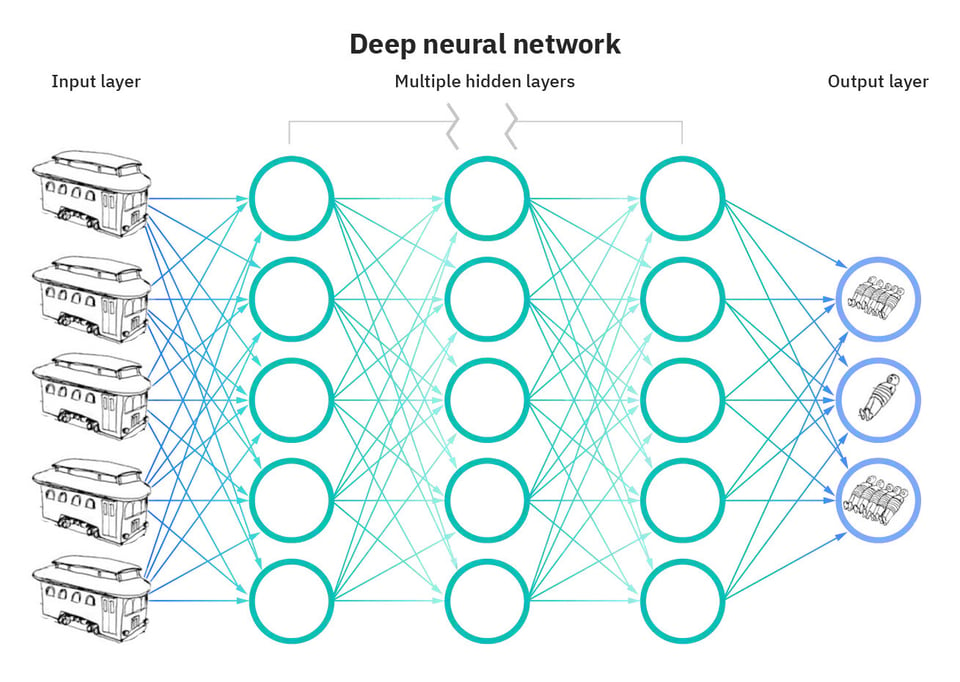
Credit: Joey deVilla
When I was training to teach, in the last academic year un-molested by the existence of ChatGPT, I picked up three Year 9 classes and delivered them a unit of work out of some publisher's textbook. I wasn't fully rolling my own in the training year. There was a lesson on tech ethics, of the kind delivered to this level, in these halcyon days, before the data centre built next door brought this questions to your very door.
In particular, there was the old "the self driving car needs to choose between killing a passenger and a pedestrian crossing the road"... problem? game ? An entirely reprehensible operationalisation of Foot's (1967) Trolley problem. Ofc, never one to miss a chance of being the rizz teacher down to low-key bop with the skibidi yoot, I played them the bit in The Good Place where they illustrate the thought experiment with much high-camp gore, before running the class activity.
Even at the time, off the back of the Good Place version, years after having read an unexpectedly decent satirical riff on it in Jordan Peterson's Maps of Meaning (what can I say, I was curious - this was a decade ago, when one could take him seriously), I hadn't really understood Foot's point until I read her entry in the (ever-excellent) Stanford Encyclopedia of Philosophy (Hacker-Wright, 2021). The trolley problem, even in its vanilla presentation, is a critique of utilitarianism - described by Kant himself as "a morality fit for English shopkeepers" (Savulescu, 2014). Zing! Maybe the lesson of the Foot's (1967) problem is that it is the kind of situation your moral framework should try to preclude as much as possible ?
I am far from the only one who has misunderstood the point of the trolley problem. The mere possibility of actualising a thought experiment with autonomous vehicles has led everyone to go straight to the gruesome calculus, skipping the actual point of the thought experiment (JafairNaimi, 2017). It's probably only difficulty of access to nerve gas dispensers controlled by atomic decay that has stopped us from putting cats in boxes all this time. This species, I swear.
The culmination of this grievous misunderstanding is indubitably the MIT's Moral Machine, which literally asks the user to choose who the machine should kill based on different demographics and number of passengers and pedestrians. This was literally a Master Thesis project, then, using the site as data collection instrument for a global survey, the team produced a paper, with the results presented to the general public in a book. This certainly caught the public's imagination at just the right time. I have seen this used in classrooms, with students making choices, and seeing how different demographic make choices. No one, ever, questionned why this choice had to be made in the first place. Wether the ethical solution, was, maybe, to endeavour to not get into these situations?
Now, I'm thankfully no expert, but isn't rating the value of the life of different classes of people, I don't know, kinda sorta eugenics thinking ? What is this teaching to teenagers encountering this fun little game in class, completely out of context of the ethical philosophy in play ? Push your disabled friend in front of the Waymo when it charges? What a time to be alive (derogatory) !
Postscript
It is no surprise that Silicon Valley thinking leans utilitarian. This, is after all, the rationalist's ethical framework. Anthropic (🙄) is circulating a bill proposal for a kill switch for AI (by which they mean LLM) agents, with the damage threshold being at 50 fatalities / 1 B$ damages. The bleakest estimates put Anthropic's own Claude's body count several times higher than that already. Conservative estimates put ChatGPT's count around 25, with a grand total of 37 across all models and interfaces. Maybe we pull the plug now, guys?
References
Foot, F. (1967) ‘The problem of abortion and the doctrine of the double effect in virtues and vices’, Oxf Rev, 5, p. 5.
Hacker-Wright, J. (2021) ‘Philippa Foot’, in E.N. Zalta (ed.) The Stanford Encyclopedia of Philosophy. Winter 2021. Metaphysics Research Lab, Stanford University. Available at: https://plato.stanford.edu/archives/win2021/entries/philippa-foot/ (Accessed: 25 October 2025).
JafariNaimi, N. (2017) ‘Our Bodies in the Trolley’s Path, or Why Self-driving Cars Must Not Be Programmed to Kill’, Science, Technology, & Human Values [Preprint]. Available at: https://doi.org/10.1177/0162243917718942.
Savulescu, J. (2014) ‘Why I Am Not a Utilitarian | Practical Ethics’, 15 November. Available at: https://blog.uehiro.ox.ac.uk/2014/11/why-i-am-not-a-utilitarian/ (Accessed: 25 October 2025).

