
The Gossip Your Coffee Never Wanted You to Hear ☕ 🤫
To the one whose coffee stopped working — and quietly assumed the fault was their own,
There is a conversation happening inside your brain every morning before you reach for the coffee, and it has been quietly rewriting its own terms for months. Perhaps years. The cup that once felt like a key turning in a lock — that clean, reliable arrival of focus — now feels less like ignition and more like maintenance. You are not imagining this. You have not developed a character flaw or a laziness or an unusual sensitivity to stress. Your brain has simply been redecorating. And the renovation, as it turns out, was not done in your favor.
The mechanism begins with a molecule called adenosine.
Throughout the day, as your brain works, adenosine accumulates — a natural byproduct of neural activity that gradually occupies receptors designed to receive it, creating mounting pressure toward sleep and rest. Think of it as the brain's own honest bookkeeper, quietly tallying the hours of wakefulness and presenting the bill at the end of the day in the form of fatigue. Caffeine does not actually give you energy. What it does is structurally similar enough to adenosine that it can occupy those same receptors without activating them — essentially sitting in the chair so adenosine cannot. The tiredness signals are blocked. The brain registers alertness. The bookkeeper is still tallying, but the bill is not being delivered.
Here is where the story becomes considerably more interesting.
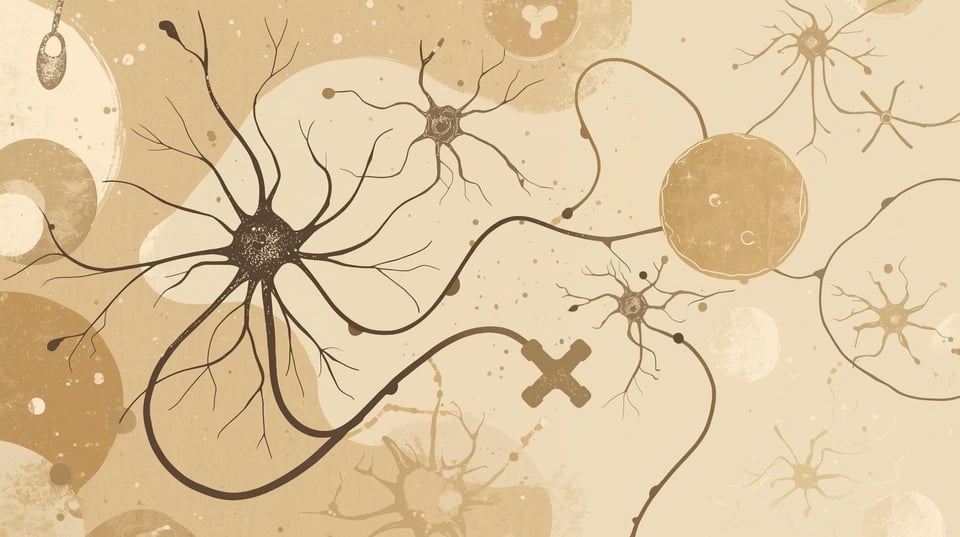
The brain does not accept this arrangement passively. When its adenosine receptors are consistently occupied by caffeine, it responds the way any system does when its signals are being ignored: it builds more receivers. More adenosine receptors are created — a process scientists call upregulation — so that the same amount of adenosine can still get its message through despite the interference. The result is a brain that now requires more caffeine to block a larger surface area of receptors, and that experiences a stronger adenosine flood the moment the caffeine clears. The same cup that once sharpened you now barely registers because your brain has quietly expanded the very system caffeine was blocking. You did not build a tolerance. Your brain built an infrastructure.
The part that rarely gets discussed is what this means for the feeling most regular coffee drinkers know intimately — the particular drag of the morning before the first cup.
That sensation, so often described as simply needing coffee to function, is not a neutral baseline. It is withdrawal. When there are more adenosine receptors than the brain originally had, and no caffeine to occupy them, adenosine binds with unusual efficiency and in unusual volume. The fatigue, the difficulty concentrating, the low-grade headache, the mild irritability before 9 A.M. — these are not your natural resting state. They are the symptoms of a brain that has adapted to a substance and is now registering its absence. The coffee is not lifting you to alertness. It is returning you to the baseline you had before the tolerance was built, and calling it focus.
This is where something quietly unfair enters the story.
The woman who started with one pleasant cup in the morning and arrived, a year or two later, at three necessary ones did not make a series of conscious escalations. She simply followed a system that was recalibrating beneath her, each upward adjustment feeling perfectly reasonable given how the previous amount had stopped working. Chronic caffeine consumption produces a measurable increase in adenosine receptor density — a structural change in the brain's architecture, driven by a habit most people consider entirely benign. None of this makes caffeine villainous. It remains one of the most studied psychoactive compounds in human history, and moderate consumption is associated with a range of genuinely interesting outcomes in the research literature. But it does mean that the relationship between the daily coffee drinker and her cup is considerably more complicated than a morning preference.
The reset is where the science becomes, to Ms. Whitmore's mind, the most fascinating part of the conversation.
Research suggests that adenosine receptor density begins to normalize within a few days of reducing caffeine intake, with most regular users reaching meaningful recalibration somewhere between seven and fourteen days. What happens in those first several days is not mysterious — it is simply the bill arriving. Adenosine, now unopposed by caffeine and facing an unusually large number of receptors, binds with considerable efficiency. The headache of day two is not malfunction. It is the bookkeeper, finally permitted to speak, presenting everything that has been accumulating. After the account is settled, the system quiets. Studies in mice found that adenosine receptor density in certain brain regions returned to baseline levels within eight days of eliminating caffeine — suggesting that the brain, given the opportunity, recalibrates with notable willingness.
What all of this illuminates is something rather simple, and rather worth knowing. The focus was never in the cup. It was in the brain's own chemistry before the tolerance was built — before the infrastructure expanded, before the baseline shifted, before three became the new one. The cup, at a certain point, is not delivering alertness. It is servicing a system of its own making, returning a person each morning to a state that used to be her ordinary afternoon. That is not a reason for alarm. It is simply a more accurate description of what is happening on the kitchen counter every morning — and what the brain, quietly and without asking permission, decided to do about it.
Ever on the side of minds that deserve an honest account of their own chemistry,
Ms. Clara Whitmore