
One fun aspect of the creative life is that we don’t always see the patterns and preoccupations in our own work, until someone points them out to us.
The other day at Can*Con, my friend Suyi Davies Okungbowa, who in addition to being a brilliant writer is a professor of creative writing, pointed out that my work tends to look at history mediated through art. As soon as he said it, it seemed evident — of course that’s what I do — but I’d actually never considered just how much this preoccupation runs through so many of my books. I do see art (including but not limited to my own) as a way of connecting the living and the dead. If I’m reaching out to them, then naturally they’re also reaching out to me.
It’s particularly funny to me that I didn’t see this pattern myself, given that my next book, The Realm Invisible, has a 16th century art dealer as a protagonist. Suyi hasn’t even read that book yet.
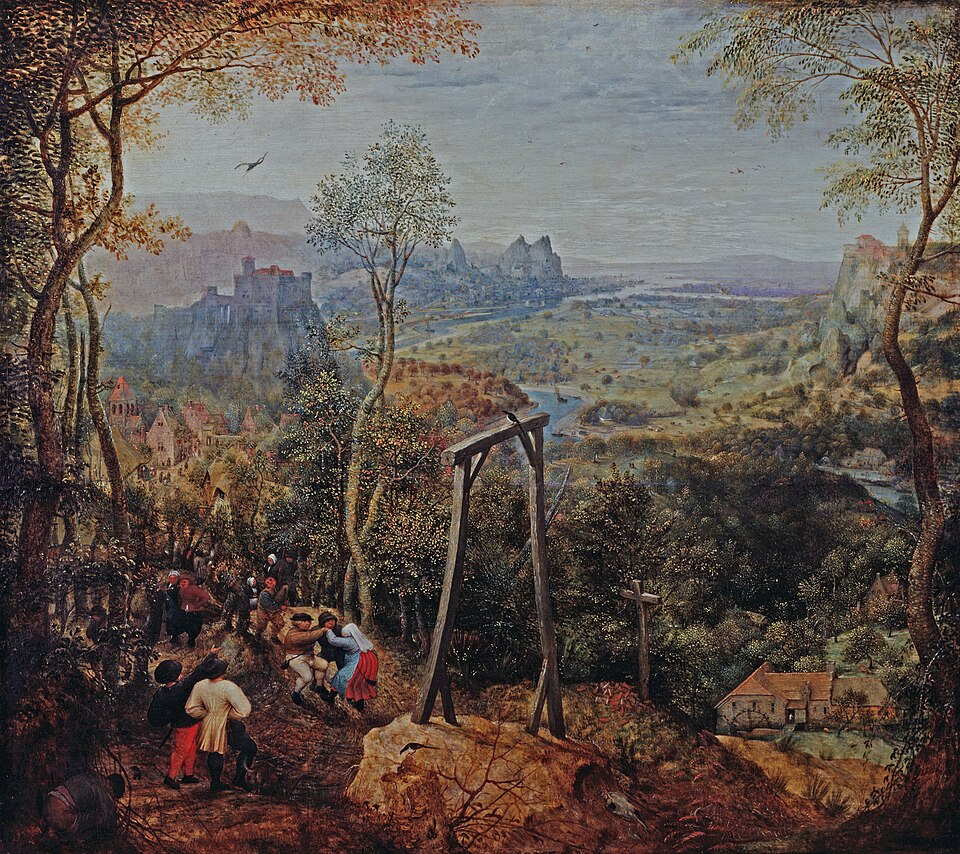
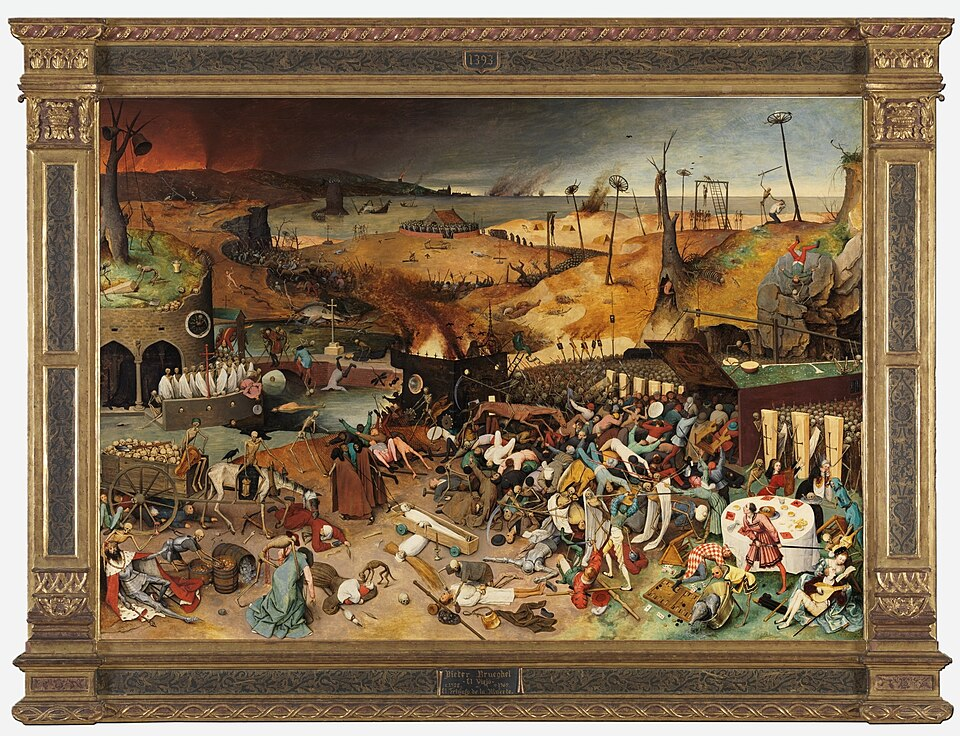
Without even really meaning to, I returned to Pieter Bruegel for inspiration. It was his Dulle Griete that led me to write The Chatelaine/Armed in Her Fashion more than a decade ago. Several of his paintings were touchpoints for me while writing The Realm Invisible. I set out to write a spy novel, which led me to a Cold War, except that it’s set in the Cold War between England and Spain in the 16th century as it manifested in the Dutch Revolt, and that’s a conflict that Bruegel witnessed and portrayed. His paintings also tie in with some of the other thematic questions in the book, and, well, they have the same vibe.
One thing I had noticed (even before Suyi’s comment) is that Realm gave me the chance to bring in mentions of female European painters (for example, Sofonisba Anguissola), although they get a lot less page time than they did in The Embroidered Book, in which Élisabeth Vigée Le Brun and Angelica Kauffman are minor characters. The Embroidered Book pulls a lot of 18th century art into its plot, including the musical compositions of the Chevalier de Saint-Georges, but probably its main artistic preoccupation is with the eponymous piece of embroidery that sets the story in motion — another exploration of women’s art.
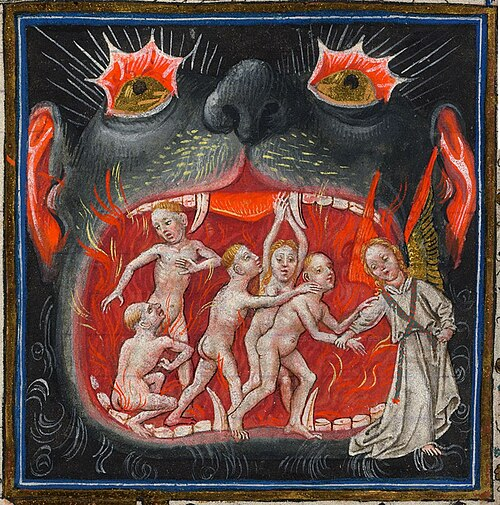
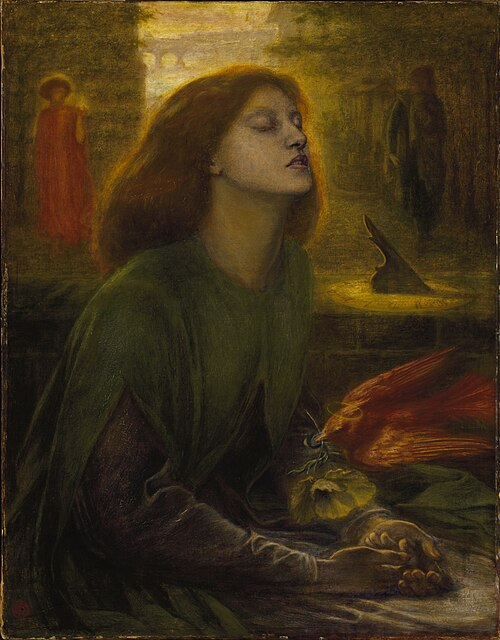
One thing I seem to do a lot is respond to a tradition, taking a concept as seriously within my own cultural space as those who came before me took it within theirs. The medieval hellmouth is one example of this in my novel The Chatelaine (aka Armed in Her Fashion); I asked the questions about it that interested me from my 21st century position. The way I treated the stories of Brynhild in The Valkyrie is similar; as I’ve talked about here before, I often like to do a kind of archaeology on a story, going down layer by layer to ask what one possible “original” might look like, as written by me, a person not living at the time of the original. Mercutio is doing something similar with the Romeo and Juliet tradition, and of course it draws not only on Dante’s poetry but on the visual art inspired by that poetry. My Beatrice is very much the Beatrice imagined by Dante Gabriel Rossetti, which means she’s actually Lizzie Siddal.
A problem I wrestled with in The Tapestry of Time was the pull to turn the Bayeux Tapestry into a macguffin (a macguffin is a plot device, a thing that both the good guys and bad guys want, which creates conflict and urgency). That problem was baked in from the beginning, because one of the main inspirations for the novel was Indiana Jones: Raiders of the Lost Ark, and the tapestry is basically the ark, in terms of the role it plays in the story. I resisted the implications of that when I was drafting, but eventually gave into it because I couldn’t make the story work otherwise. And in fact, in the real piece of history I was drawing from — the Nazi attempt to acquire the tapestry — it WAS an object everyone was trying to get.
It’s hard to articulate exactly why I resisted treating it that way in the plot. It’s partly because there are two layers I wanted to talk about: the Nazi greed for the tapestry as object, and the tapestry itself and its artistic preoccupations (back to women’s embroidery again!).
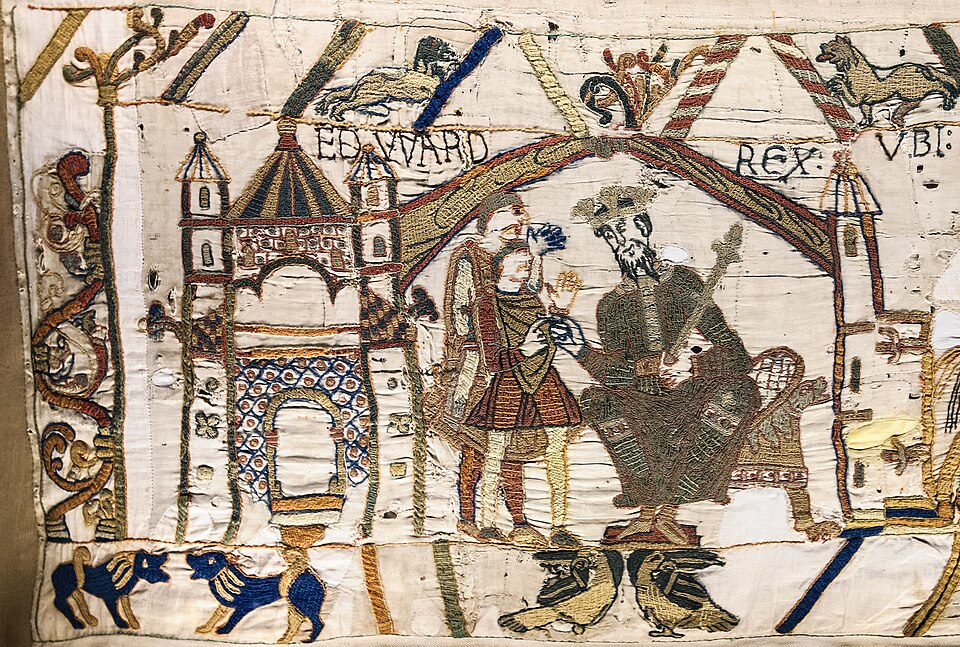
The Nazi view of the tapestry (in history as well as in my novel) is as a piece of evidence for their theory of everything; as Eco pointed out in his essay Ur-Fascism, fascist culture reaches for syncretism because they need all art to confirm a truth they believe has been spelled out once and for all time. But art by its nature complicates, as the tapestry complicates. The role it plays in telling us about the events of the 11th century is to befuddle and obscure as often as it is to illuminate, and it’s full of mysteries, even now. I think it always will be; historians can come to a consensus on questions of fact such as who commissioned it and why, but the actual concerns and traumas and loyalties and hopes running through the minds of its embroiderers as the threads ran through their fingers will always be something we can only guess at. Art is art because it is specific; it can only ever be itself, and what it is trying to say is the thing that it has said. The moment anyone says “the tapestry is telling us X”, you know they’re lying.
Macguffins, though, do not speak for themselves. Their importance is purely in the characters’ assigning of meaning to them. They are uncomplicated and generic. You can use a locked briefcase or a falcon statue and the plot still works. They are interchangeable blanks, which dovetails too nicely with the Nazi/syncretistic view. The tapestry was important to Himmler because he said it was important; it was important to my plot because I, the author, said it was. I mean, obviously it’s not the same! But I was aware of the parallels. Himmler and his gang of yahoos made up some bullshit about the master race and then shoehorned the art they knew that other humans valued into the narrative. It was important for the Nazis to have the tapestry, because it was important for the Allies not to have it. It was important for my plot for the good guys to get it and for the bad guys not to get it. The real, cryptic, open-to-interpretation stories told by the tapestry were not of interest to the Nazis. They treated art as a macguffin, so I did not want to do the same.
In the end, I tried to return to the tapestry itself to complicate its own role within my plot, to leave the reader with more questions than answers about its connection to the supernatural in my story. I’m not sure I succeeded; I’m not sure how wise it is to try to undermine the structure one is using while one is using it. But at least I hope I sent some readers off to read more about the tapestry, and/or about the history of Nazi occultism and the use of art and artifacts in propaganda. I always figure that no matter how well my work succeeds or fails on its own, at the very least I can point one more small flashlight toward the art created by the dead. I do hear quite a bit from readers who had never encountered the work of Vigée Le Brun, for example, before reading about her in The Embroidered Book.
Anyway, although The Realm Invisible is to some degree about art in some ways that my other books have not been, in that it is about representation and ideas and perception, the book after Realm is … not very much about art at all. At least I don’t think it is. I’ll have to ask Suyi after he reads it, ha!
You just read issue #73 of Kate Heartfield's Newsletter. You can also browse the full archives of this newsletter.