Water runs downhill. Right? Right?
I’ll admit it: I thought this would take an afternoon.
After the last post, the plan was simple. In a Bronze Age village almost all the work is carrying water, so the first thing a player should be able to build is a way to transport it without someone carrying it in a jug. Gutters on the roofs. Stone channels from the spring. The Minoans did exactly this: at Tylissos a stone conduit fed the town’s cistern. Water runs downhill, I build a line tool, done.
It wasn’t done.
The first version happily ran water from a house into a well. It drained a full cistern into a home. On flat ground, “downhill” meant “anywhere you like”, and my village had water flowing in circles.
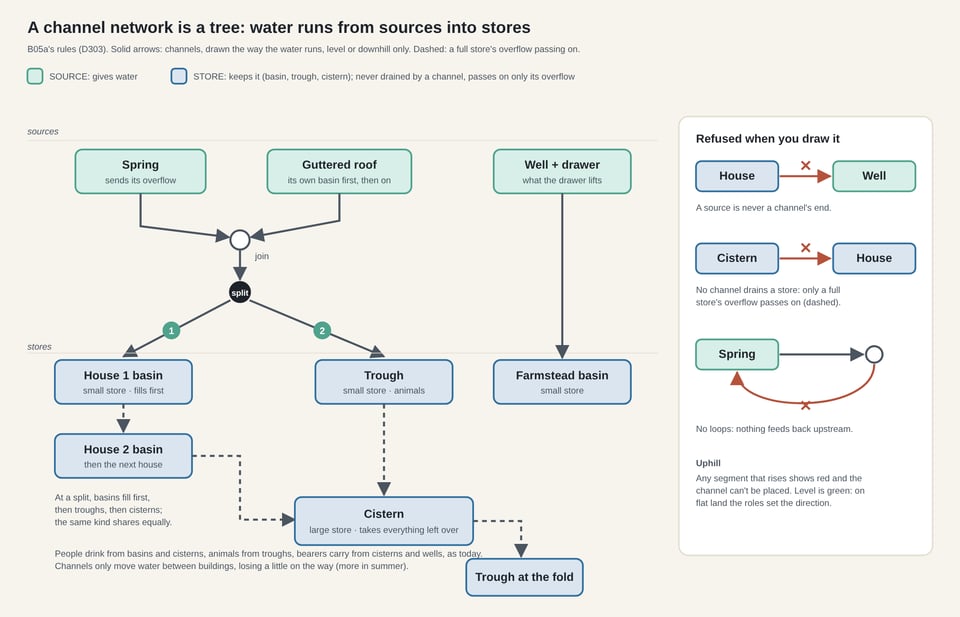
So I stepped back and gave every water building a job. Springs, wells and roofs are sources. Basins, troughs and cisterns are stores. Water goes from sources to stores, never back, and a channel only takes what spills over. Suddenly it made sense: the houses fill one by one down the line, and the cistern catches the rest.
The rules worked. Then I zoomed in, and the village looked wrong. Thin lines ran straight across it, through walls, through somebody’s kitchen. Nobody in the Bronze Age built like that. They laid proper stone channels.
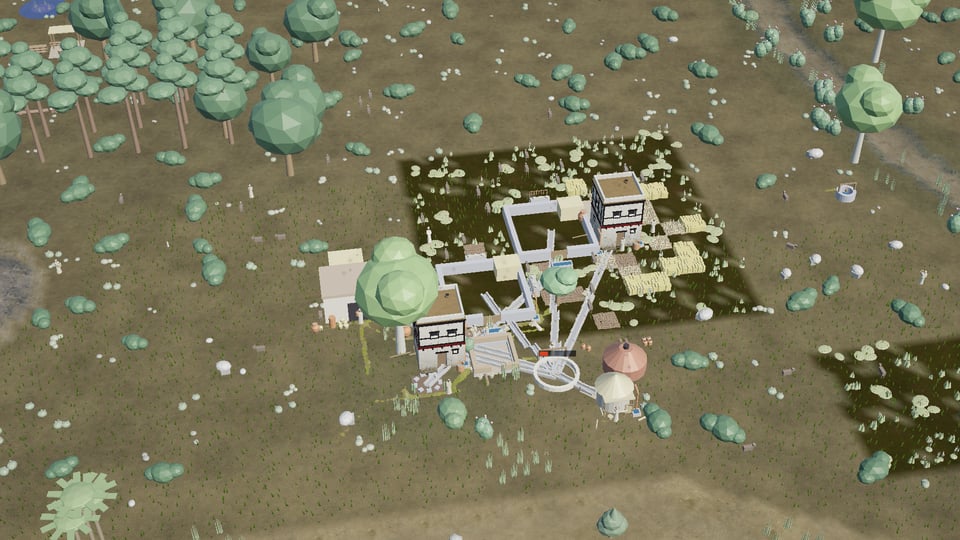
So now you can lay stone channels in a proper way too. Channels follow a one-metre grid, in straight runs and 45° bends, with a joint at every turn. If a house is in the way, you go around it. If a field is in the way, you can cut through, but the field gives up those cells for as long as the channel stands. The first time I routed one around a neighbour’s house instead of through it, it stopped feeling like a tool and started feeling like a village.
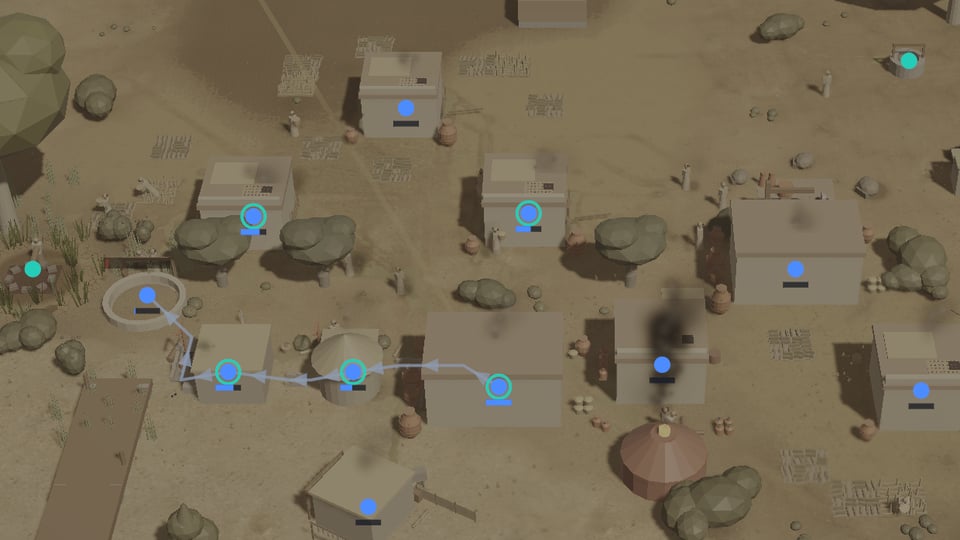
My favourite moment so far: the last house on a long channel, waiting while every house before it fills, and only then hearing water in its own basin. That wait is the whole game in miniature.
Oh, and the goats have their own troughs now. They’d been drinking the wells. I should have seen that coming on day one.
What about you: in games with water or power networks, what made building them a pleasure, and when did they turn into a chore?