2026-2: You Gotta Stay Loose, It’s the Only Way to Stay
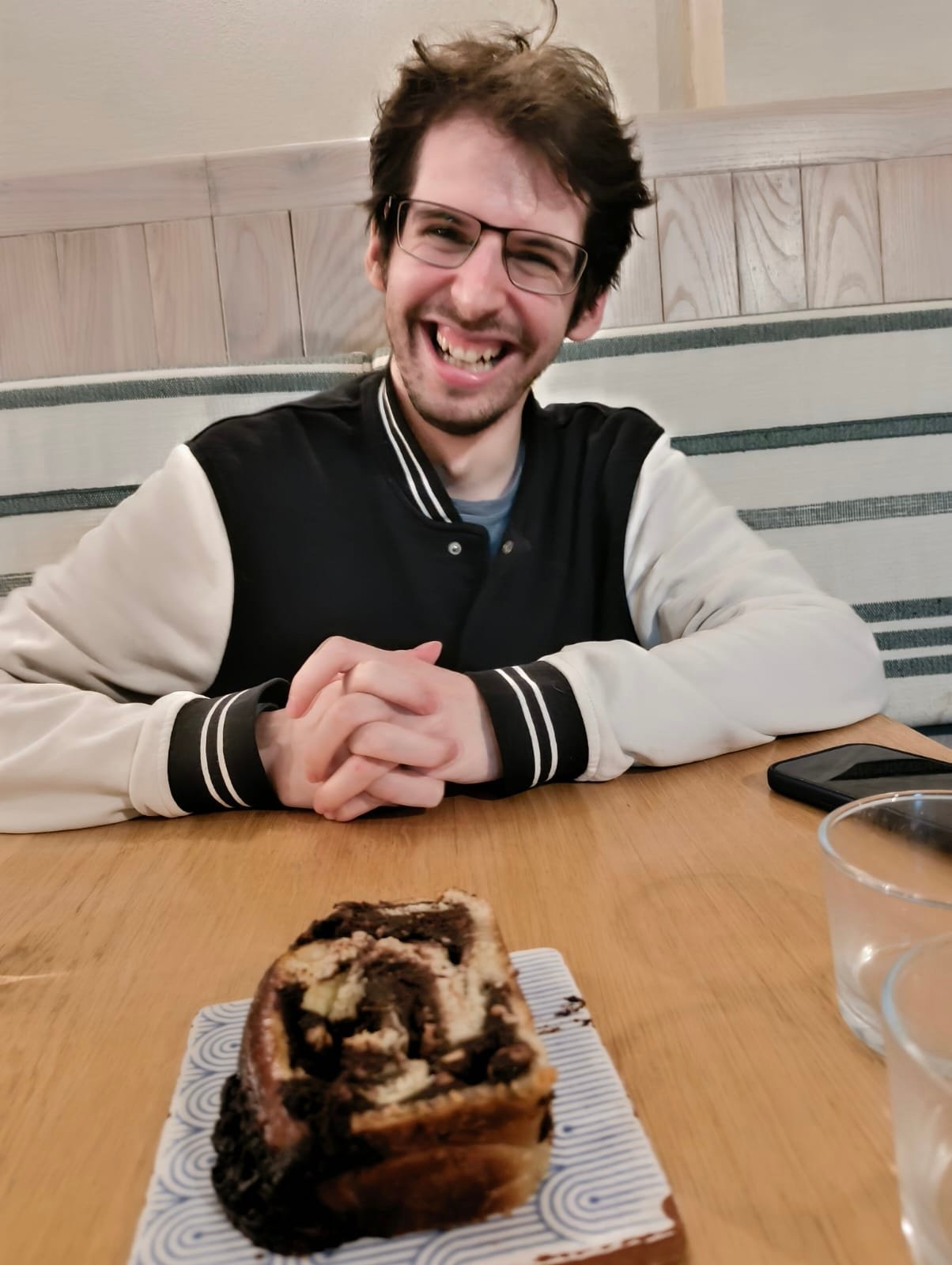
Much as I hate to admit it, I too have the unhealthy tendency to compare my age to others. It probably started with Lorde — I was obsessed with Melodrama in high school, and listening to “Perfect Places” I’d think to myself, well, if she made this when she was nineteen, if I get to nineteen with no masterpieces to show for it I’ll have no excuse whatsoever. Other examples followed: MJ Lenderman, one of my favorite recent musicians, is just one year older than I am, while Leo Fox, one of my favorite cartoonists, is a year younger, and don’t get me started on Brian Wilson making Pet Sounds at twenty-four… but as time goes by it’s just to be expected that some people will be your age, and that some of these people will make masterworks, because these people are just people in the world.
I think about this for two reasons: one, I just turned twenty-six two weeks ago, so obviously I’m in a specific kind of ruminative mood; two, one of the last books I read is To Rest Our Minds and Bodies by Harriet Armstrong, who is the same age as I am, and seems to be of the exact same disposition. The thing I find compelling about Armstrong’s writing—as will surely come as no surprise to the people reading this—is its distinct mix of alienation and desperation: her narrator/stand-in is constantly trying to reconcile classical knowledge (books, art) with “how it feels to be a person”, and constantly coming up empty-handed; the infatuation that drives the book is so powerful, so tempestuous, precisely because she cannot do anything about it, cannot be anything other than a spectator. Right down to the prose, Armstrong’s world is one of permanent dissociation, with dialogue that starts and stops completely without demarcation, in a sort of undeclared reportage, stiff and glassy in its mood but fluid in its division between reality and perception.
Is it good to know that other people feel the same way? In a way, I suppose. Comfort is a dish best served cold.
WHAT I’M WRITING
Comics
This kind of flies in the face of what I was just saying, but a few days ago SPX released this year’s nominees for the Ignatz Awards, and I was gratified to learn that the comic I made with Justin LaGuff last year, “I Thought I Heard Your Voice Just Then”, was nominated for Outstanding Online Comic. You can request a ballot here, if you’re so inclined.
As for new comics, I have two to show you. A few months ago someone on Bluesky asked me something to the effect of “how do you develop weird ideas without overthinking them”. My answer to that was, basically, “Come up with a stupid idea, find a key emotion within that idea, take that emotion as earnestly and as seriously as you possibly can”.
The first comic I published since we last spoke, “Walt”, is a good example; the joke component becomes obvious about a few pages in, but I don’t want to give it away, so I’ll just say that it’s an office drama about an employee who disappears at the worst possible timing. I managed to convince my friend (and de facto editor) Claire Napier to draw this one, even though she basically never draws anyone’s comics but her own, and it looks absolutely perfect. Here’s the first page:
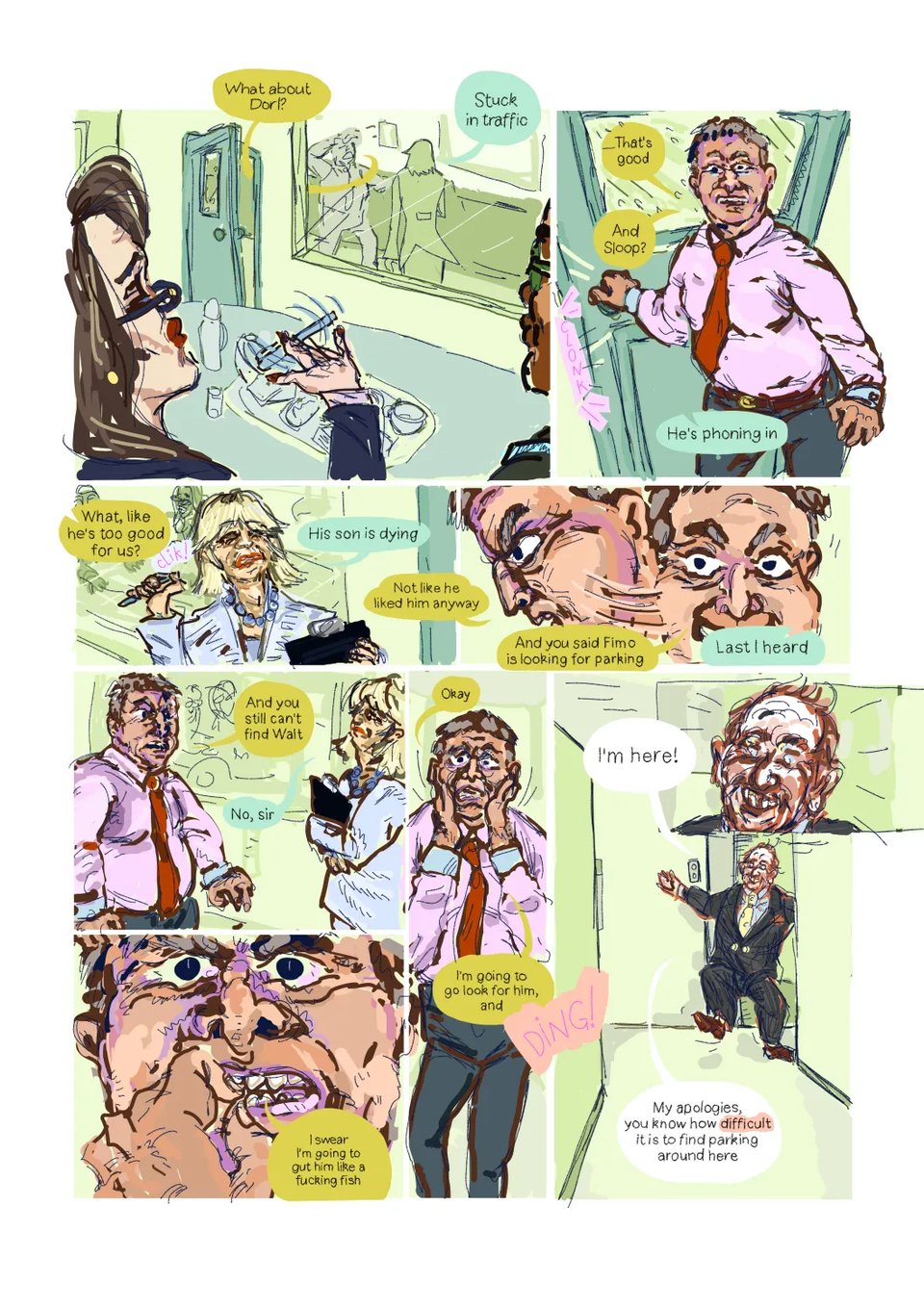
You can read the rest on Bluesky or on Itch.io.
The second comic I’ve published in August is “A Warning”, gorgeously drawn by Garrett Young. The core text here started out as an installment in a meta-project of one-pagers that I was working on for a while back in 2022; by ‘23 the overall project was essentially abandoned, but bits and pieces of it have splintered off into their own independent forms. I don’t tend to “theorize” on my own work—usually the idea makes it onto the page more or less intact, without any thesis behind it—but in this case I wanted, basically, to make something that feels Evil, which is to say, horror that strips away all detail. Who is the POV character? What did they do? None of my business, all of that. But it feels bad! Here’s the first page:
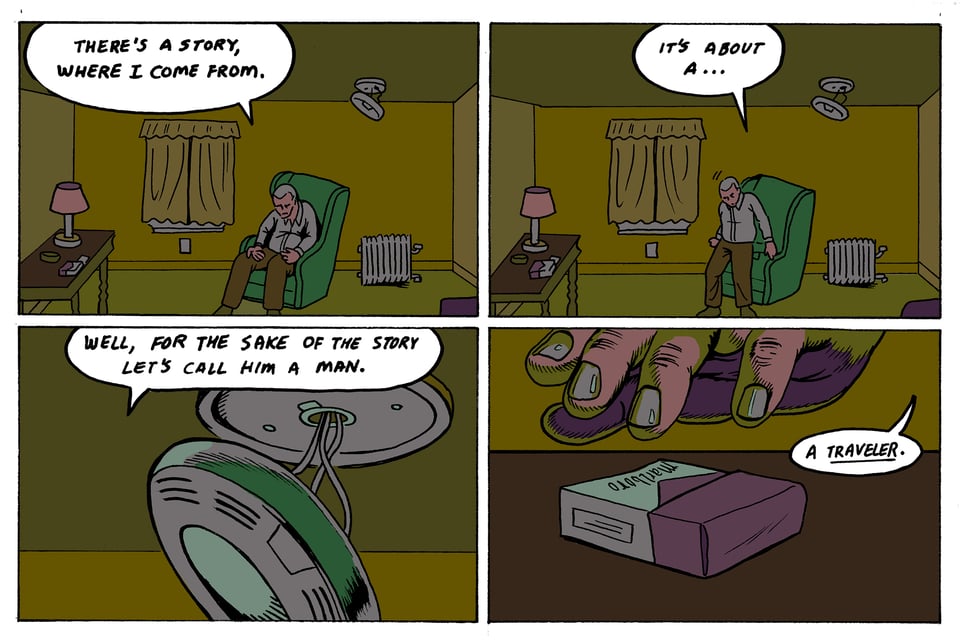
The rest can be found on Bluesky or on Itch.io.
Criticism
Several months away from the newsletter naturally means several critical essays published from me. For TCJ: a long essay on Sethphemera (Maquina de Aplausos, 2025), a book of collected writing-about-comics by Canadian cartoonist Seth, wherein I analyze Seth’s identity as a critic as well as the way that Sethphemera’s piecemeal worldview relates to the man’s comics in practice; another long essay on Tatsumi’s autobiographical manga A Drifting Life (Eng. tr. Taro Nettleton, Drawn & Quarterly, reprinted in 2025), in which I argue that the book’s questionable merits stem from its total incongruity within Tatsumi’s actual body of work, with a filed-down, bumbling, toneless sort of tone; and an interview with the great Katie Skelly, about her new graphic novel Heaven and the life changes that led up to it.
Elsewhere, for SOLRAD: A review of Dave Gibbons’ first professional publication The Dead are Awake and Walking (reprinted by Dark and Golden, 2025), a comic that works completely in spite of itself; and a long, long essay on Paul Auster’s New York Trilogy: The Graphic Adaptation by Paul Karasik, Lorenzo Mattotti, and David Mazzucchelli (Pantheon, 2025), which incorporates City of Glass—long held as one of the best comics of all time, and certainly one of the best adaptations from another art-form—into a context that, to put it mildly, does not benefit it at all.
Speaking of SOLRAD, its operating publisher, Fieldmouse Press, has launched a crowdfunding campaign to help cover the site’s operating costs. The plain truth is, SOLRAD is one of very few sites that run worthwhile, in-depth comics criticism, and one of even fewer sites that pay for that criticism. It was SOLRAD that ran my first essays, so without that site it’s likely that I wouldn’t be writing criticism at all right now, and I think there’s more than a couple of people who can say the same. So, if you enjoy serious discussion of art, I would strongly recommend contributing to the campaign; plus, Fieldmouse publishes some truly great comics, so even outside of the ‘support’ aspect this is a great opportunity to renew your reading reserves. (My favorites, if you need any help choosing, are Not Today by Ana Margarida Matos, 10-10 to the Wind by Cole Degenstein, Together & Apart by Andrew White, we will no longer have to cover each other’s wounds by Siyuan Wen, and Hot House by John Hankiewicz.)
Coming up next are pieces on:
Precious Rubbish by Kayla E. (Fantagraphics, 2025)
He Rolled Me Up like a Grilled Squid by Tsuge Yoshiharu (tr. Ryan Holmberg, Drawn & Quarterly, 2026)
On the Camino by Jason (Fantagraphics, 2016)
Uri Tupka and the Gods by Mike Mignola, Dave Stewart, and Clem Robins (Dark Horse, 2026)
The Children of Light by Jean Pleyers (tr. Luke Burns, New York Review Comics/Breakdown Press, 2026)
Like Swimmers by Dash Shaw (New York Review Comics, 2026)
System, Vol. 1: Hot Net Hotel, eds. R. Orion Martin and Jason Li (Paradise Systems, 2026)
The Complete Peepshow by Joe Matt (Fantagraphics, 2026)
WHAT I’M READING
Comics
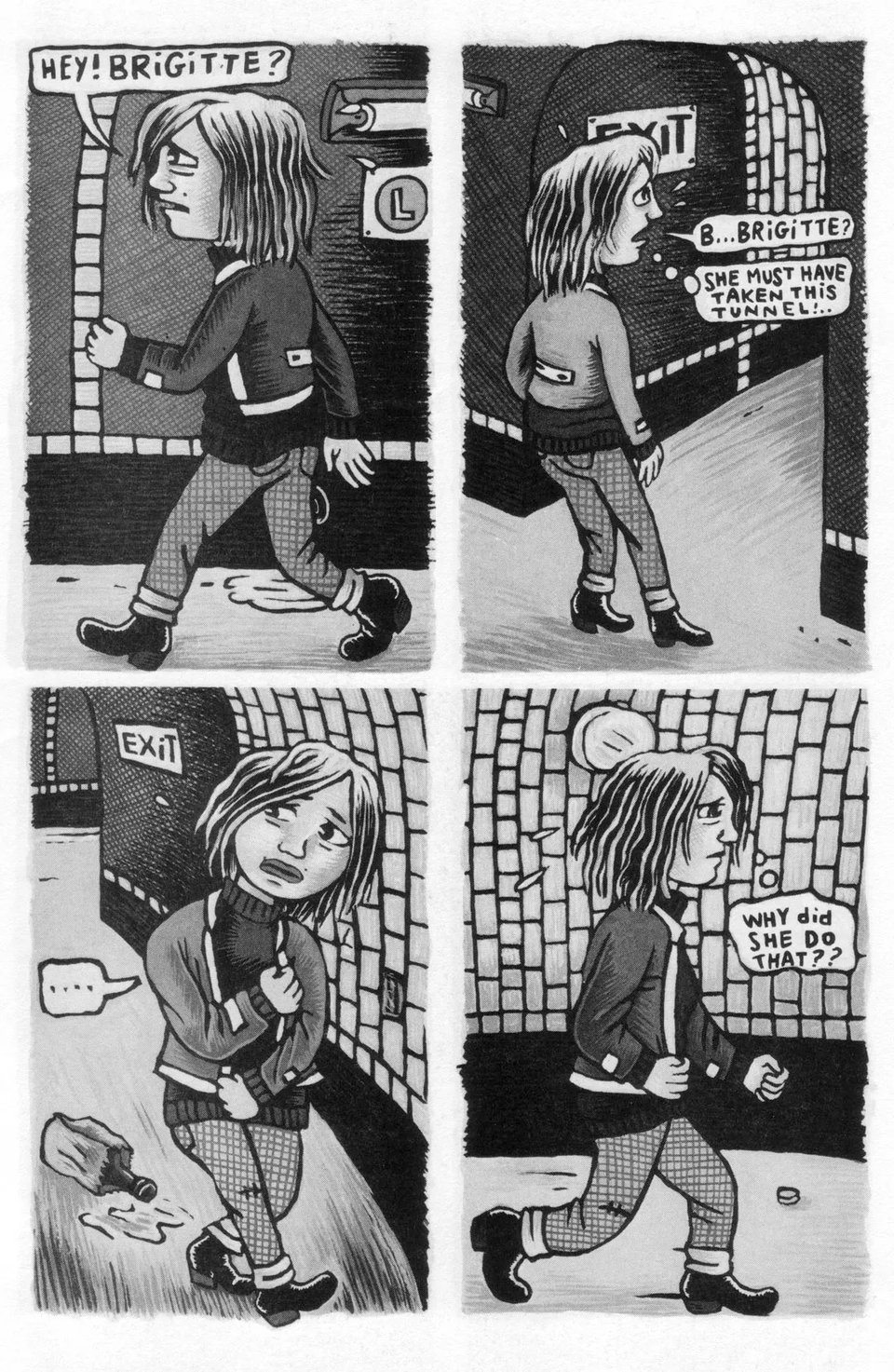
My Most Secret Desire by Julie Doucet (Drawn & Quarterly, 2006)
Dream comics are a concept I go back to every now and then, because more often than not they don’t actually work; the stuntedness of the dream as a form of storytelling rarely makes for satisfying reading, especially as the teller feels compelled to fill in the gaps with either surface explanation or deeper symbolic meaning. Julie Doucet, however, is a great exception — her dream comics sing, specifically because they feel perfectly of a piece with the rest of her body of work, the rest of her psyche; the preoccupations that run rampant in these comics are already present in her ‘waking’ comics. Instead of “a bunch of weird stuff happens”, it feels like a genuine expurgation.
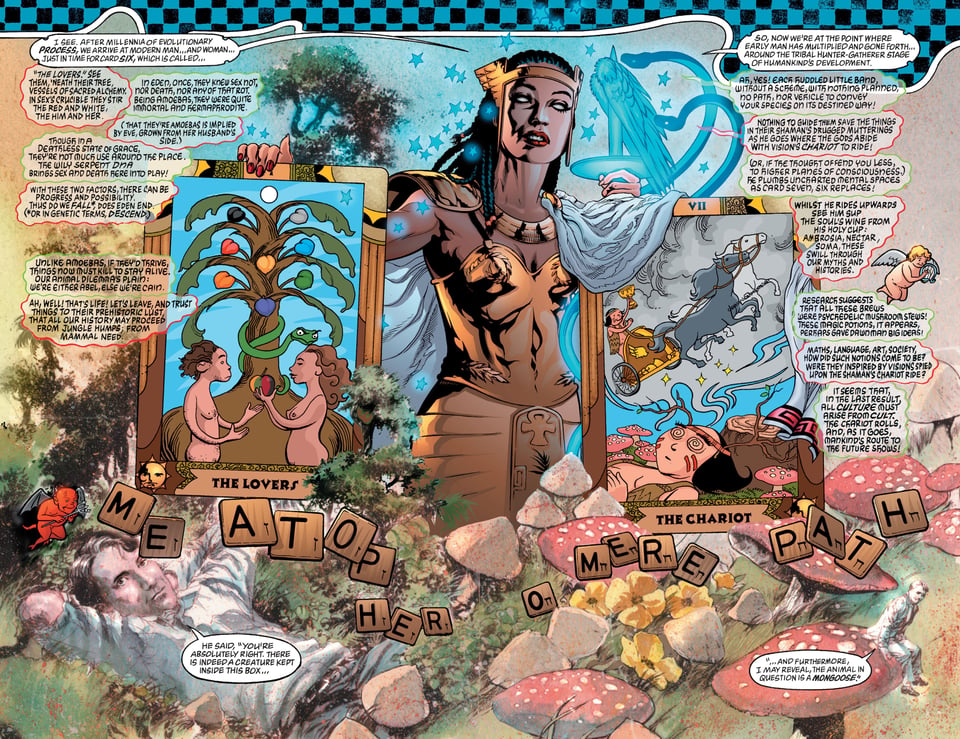
Promethea by Alan Moore, J.H. Williams, Mick Gray, Jeromy Cox, and Todd Klein (America’s Best Comics/WildStorm, 1999-2005)
This is one that I’ve been meaning to read for ages, even though my regard of other ABC books—Top 10 and Tom Strong, specifically, as League of Extraordinary Gentlemen is another Moore book I’ve yet to read—is not particularly high. I think it’s a miracle that this comic was published in what seems like a completely untampered-with form — about a third of the book is dedicated to, essentially, “Psychology and the Occult 101,” in a fashion that unabashedly inundates the reader with information (or Moore’s interpretation thereof). And yet… as a whole work, it just falls absolutely flat for me. Setting aside the obvious—that “superheroes as mythmaking” is an angle that by definition requires a certain degree of buy-in that I just don’t have in me, and it’s kind of hilarious that this was basically Moore’s last mainstream hurrah—the whole ABC conceit of “making superheroes fun and pulpy again” is not strong enough to carry that (very sincere) spiritualism (as evidenced, among other things, by Moore’s dialogue — flitting back and forth between exposition/context and turn-of-the-millennium ‘cool’ quips, it is among his absolute weakest, most grating writing). J.H. Williams suffers from a similar problem here — there’s a lot of real nice flexing, but in all the flexing there’s not a real core to latch onto. One thinks, by way of contrast, of Moore’s collaborations with Eddie Campbell, not just From Hell (one of the three best comics of all time, if you ask me) but A Disease of Language as well, both of which feel like there’s a lot more synergy, and a lot more freedom, than Promethea, where the presentation feels secondary to the ideas.
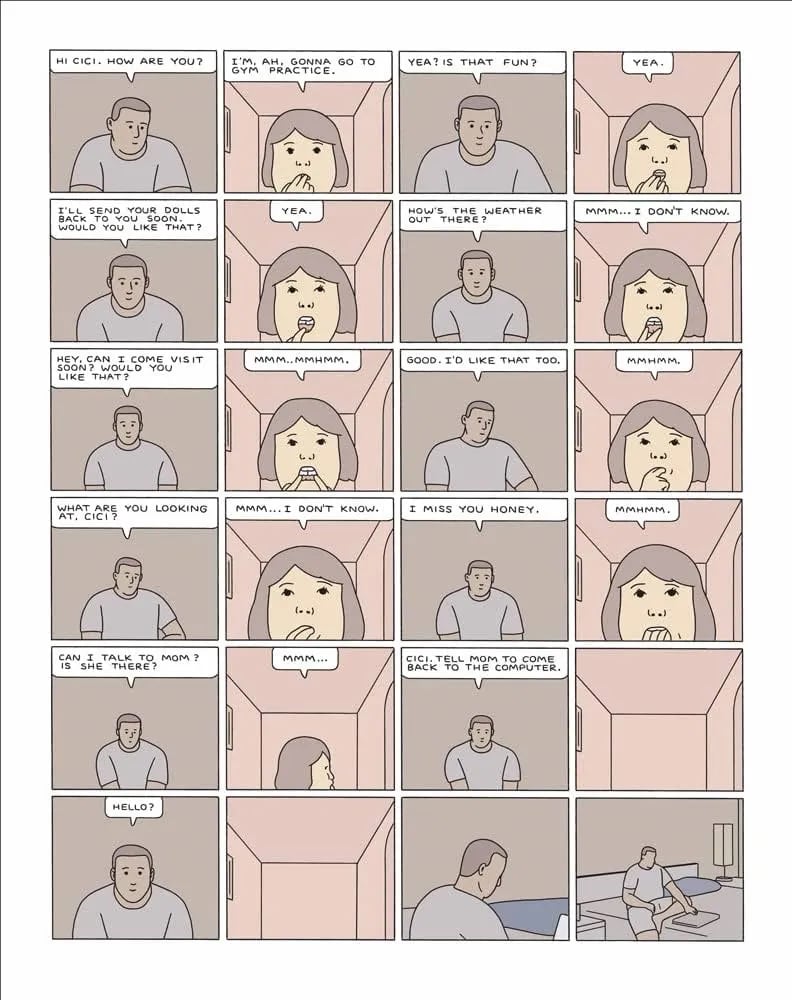
Sabrina by Nick Drnaso (Drawn & Quarterly, 2018)
Much like with Seth and Chester Brown, I had kind of a second-hand bias against this book, simply because of a half-remembered backlash, so it wasn’t until Casey Nowak—a cartoonist I absolutely adore, if you haven’t read their work already—told me how good it is that I became actually interested. Turns out, it’s one of the best comics of the 21st century, and the truth is I don’t even see why it was so contentious at the time; even setting aside the “timely” aspect, it’s just a deeply moving human story that feels, for lack of a better word, real. Drnaso nails the deadened, repressed tone that I am famously a sucker for — in the face of debilitating, disembodied-but-all-encompassing absurdity, what can you even say but “huh.”?
Prose
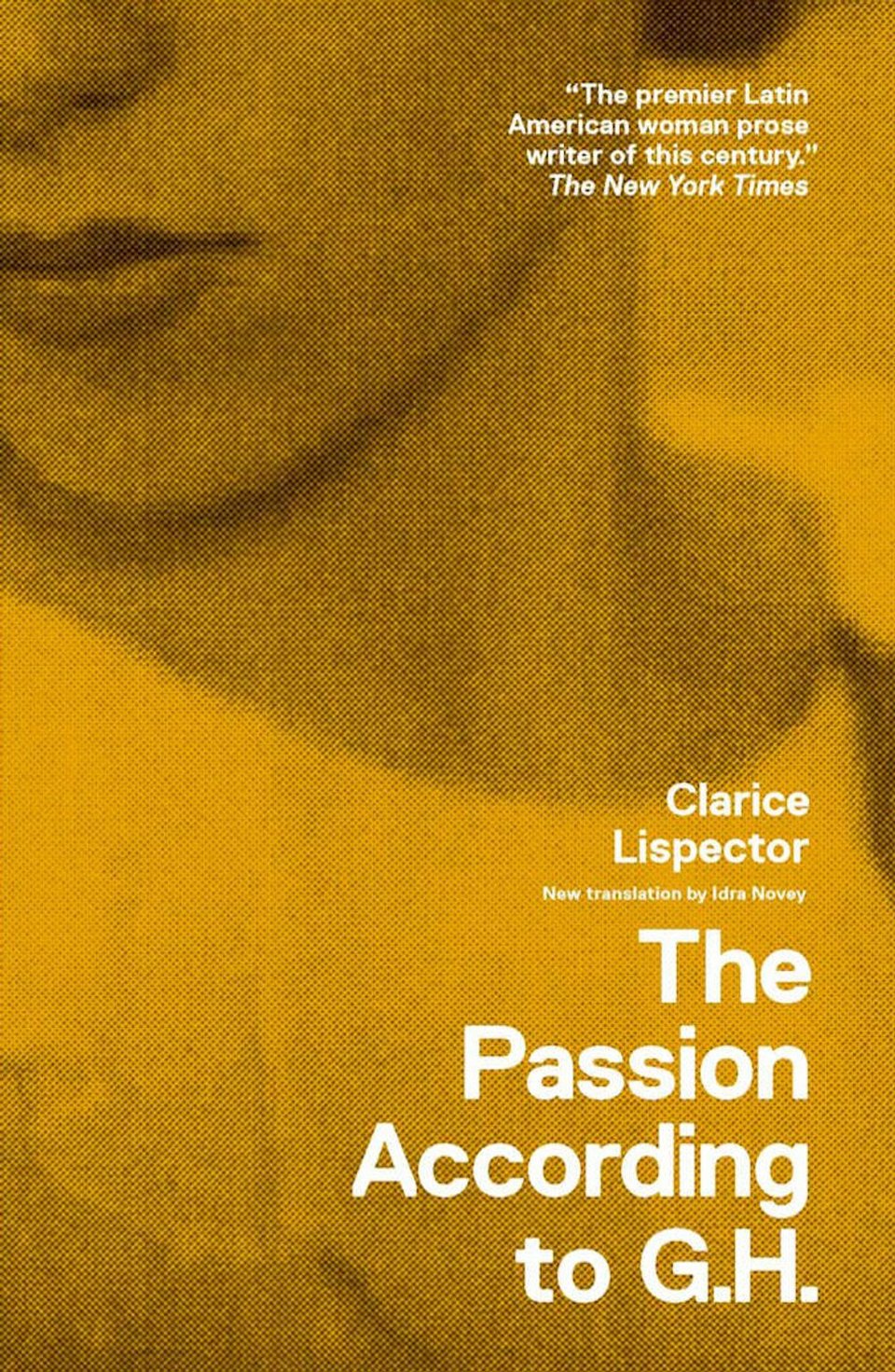
The Passion According to G.H. by Clarice Lispector (1964; Eng. tr. Idra Novey)
In my review of The Dead are Awake and Walking, I mention a short story by Italo Calvino called “The Flash,” wherein a man experiences, in essence, a brief and violent dissociative episode, and tries—in vain—to explain what he saw to those around him. Now, “The Flash” works because its brevity mirrors the narrator’s complete inability to articulate “that other knowledge, found and lost in an instant.”
The Passion According to G.H., then, is best described as the contra — its 187 (in the edition I have) pages zero in on a relatively brief span of time and dilate it in thought, in a trancelike gush of prose that starts out as a commentary on class—the narrator is a sculptress who was born poor and is now rich, and she becomes, rather by chance, violently aware of the dynamics she had been working hard to escape from—and slowly loses its grasp on concrete reality and becomes increasingly opaque and quasi-mystical. I’ve written about Lispector in the past, and this is without a doubt the most striking book of hers that I’ve read — a real “book to get lost in.”
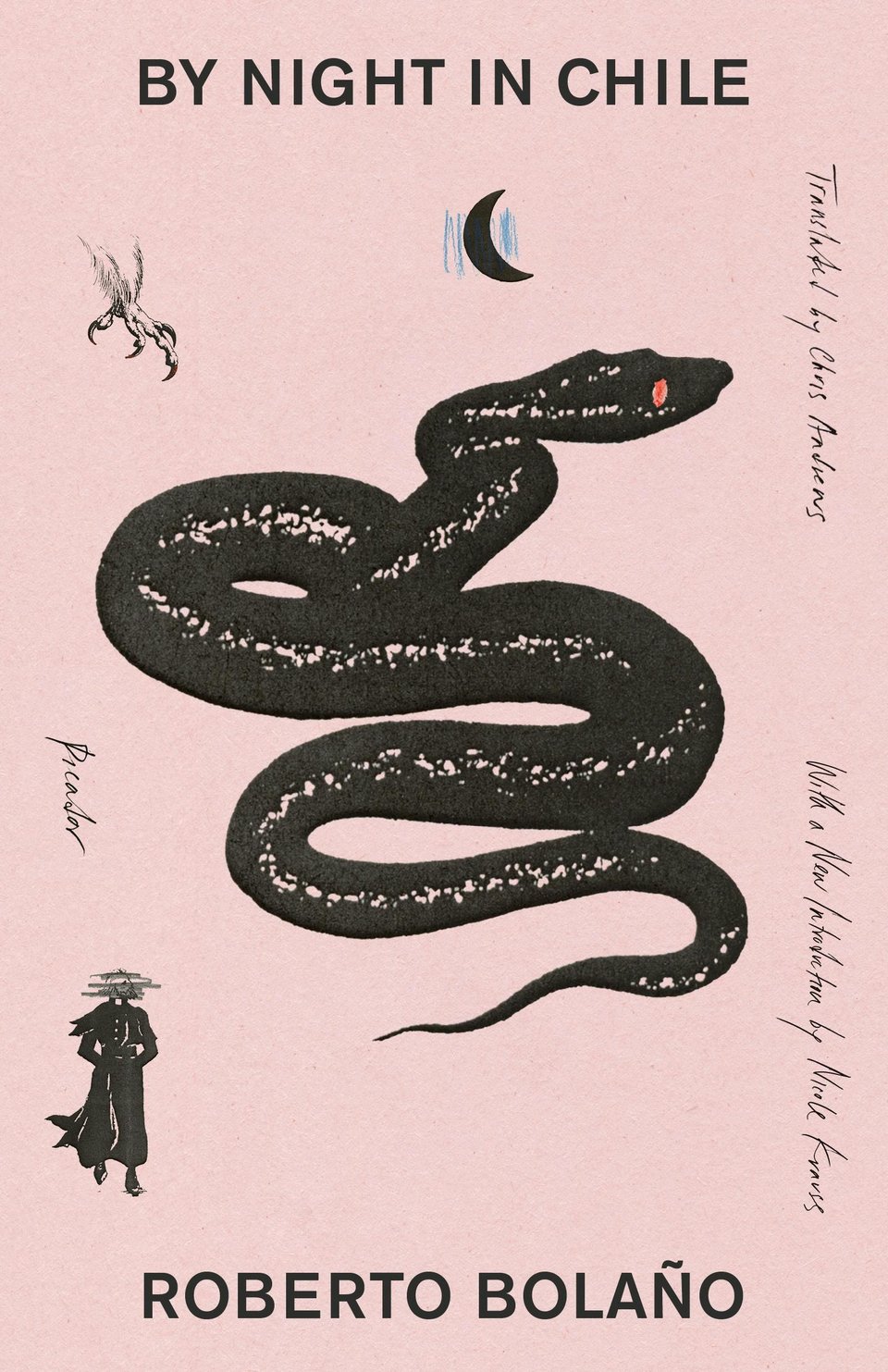
By Night in Chile by Roberto Bolaño (2000; Eng. tr. Chris Andrews)
I started reading Bolaño with a collection titled Phone Calls (Llamadas telefónicas) in Spanish, which was translated into Hebrew as is but in English was distributed among two collections, Last Evenings on Earth. That book I expected—just based on Bolaño’s reputation to be a lot intertextual and statement-driven, when in truth it is simply a tight, tremendous collection about life in miniature (“A Literary Adventure”, about an author whose book about another author he disdains gets a glowing review from its unknowing subject, has one of the best endings I’ve encountered in some time — a spiral of thought ending in total deflation into awkward humanity).
By Night in Chile is a bit closer to what I was expecting. It takes the same theme and human type as many of the shorts I read—people torn between the loftiness of story and the ungainly reality—albeit with a more pointed, cynical conclusion. He makes a genuine effort to write about art with no varnish whatsoever; there is no higher calling, no romance, often no real accolades and recognition, just a bunch of people who insulate themselves within their own false conceptions until they reach the painful realization that they are not, in fact, better or more enlightened than the rest. Which is, of course, a point I agree with, and go back to often. At some point, when my attention span is a bit better, I’m hoping to get to 2666 and The Savage Detectives. In the meantime, this’ll certainly do.
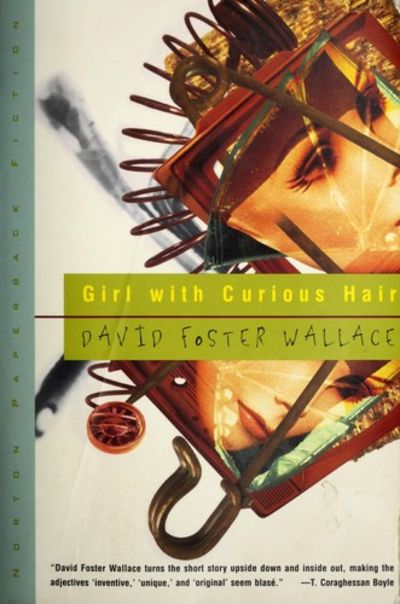
Girl with Curious Hair by David Foster Wallace (1989)
I started this newsletter by talking about comparing myself to people my age, so, what the hell, let’s keep the theme going: it was while reading this collection that it occurred to me that Wallace may truly have been the best of all time… and all of these stories were written before he turned 26. It’s not his best collection overall (Brief Interviews with Hideous Men claims that title), but between its fiction-as-criticism and its moments of shocking tenderness (“Luckily the Account Representative Knew CPR” has one of the most gutting final sentences I’ve ever encountered) Girl with Curious Hair lays out the rest of his career beautifully and with stunning clarity. The sort of writing that reminds me that I may be good, but I’m only ever going to be so good. Thanks!
WHAT I’M WATCHING
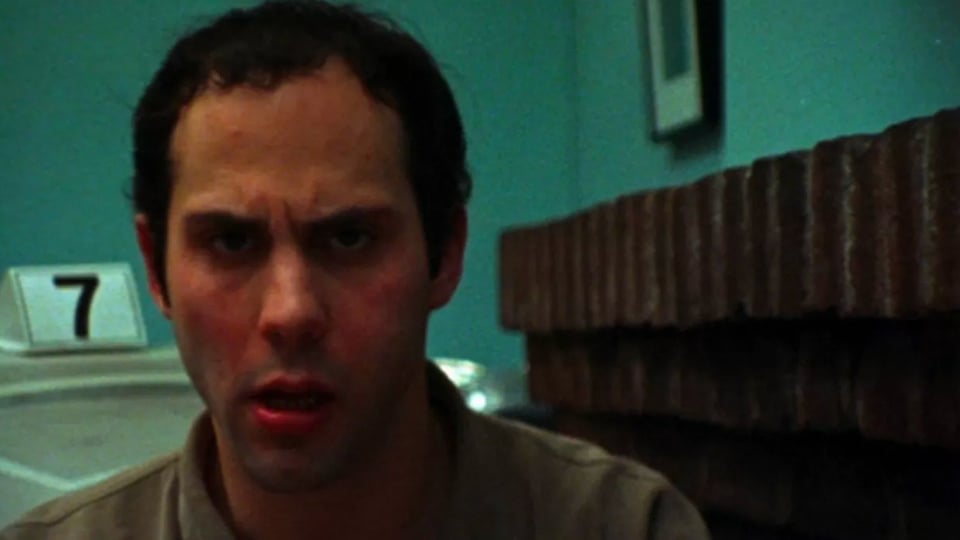
Frownland (2007, dir. Ronald Bronstein)
It’s interesting when you get to see a work by one artist and think, “So this is what [a different artist] always wants to make but never manages to.” In the case of Frownland, I can’t help but think that this is exactly the work that Daniel Clowes aspired to in the first fifteen years or so of his career. And yet, because of the inherent differences between Clowes’ post-Kurtzman cartooning and Bronstein’s mumblecore stylings, Frownland doesn’t feel as sneering or patronizing; it feels deeply, genuinely painful, especially when you get to the perspective shift around halfway through that drives home the message that one is only weak so long as they can’t find someone even weaker to abuse. There’s an empathy there, for sure, but a doomed one, torn between pity and low tolerance. A deeply unpleasant watch in the best way possible.
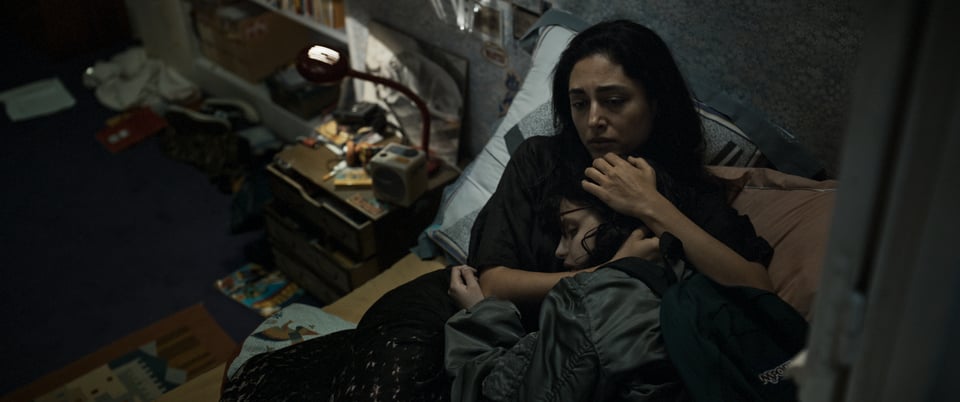
Alpha (2025, dir. Julia Ducournau)
Julia Ducournau’s Titane is a movie I remember loving when I watched it, as was her first movie Raw, so I was very excited for this one when it was announced. In practice, however, what this movie seems to show me is that I have, in fact, drifted away from Ducournau. There’s essentially two different movies here: the first half or so, with the story of the mother and the daughter, is really quite affecting, as the daughter becomes a pariah for reasons she cannot control and the boundaries between genuine concern and outright cruelty are blurred; the second half, the story of the uncle, drags it down into the shabbiest of clichés, with very little to say about its theme other than “familial trauma: it lingers!”.
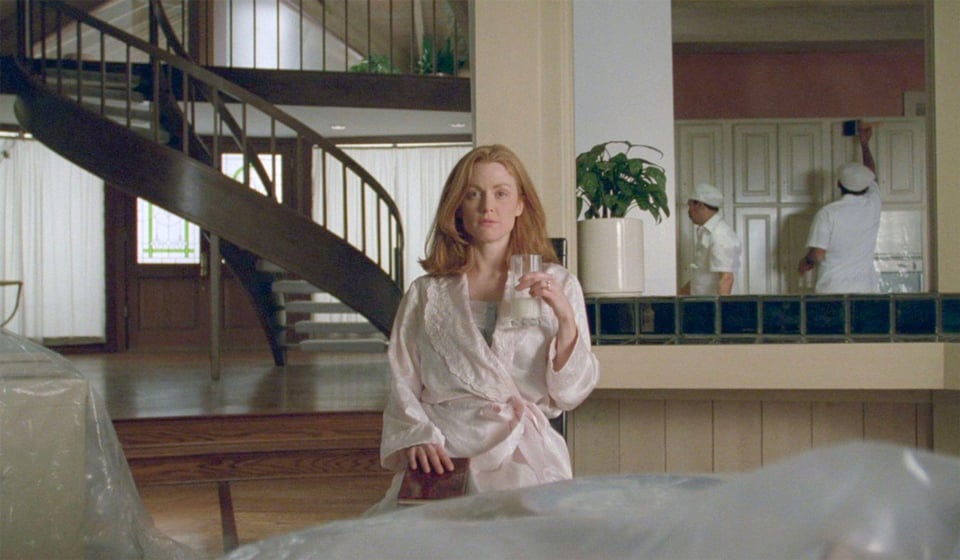
Safe (1995, dir. Todd Haynes)
This, on the other hand, is the real deal. I haven’t watched any of Chantal Akerman’s movies yet, but I couldn’t help but think of a quote of hers:
When most people go to the movies, the ultimate compliment — for them — is to say, ‘We didn’t notice the time pass!’ With me, you see the time pass. And feel it pass. You also sense that this is the time that leads toward death. There’s some of that, I think. And that’s why there’s so much resistance. I took two hours of someone’s life.
Safe is two hours of exactly such resistance. It’s slow, it’s droning, it’s inexorable… a perfect horror of apathy — this woman, who is supposed to be “worth saving” in the eyes of society at large (unlike the AIDS patients who, as Haynes reminds his viewers again and again, are actively dying in the thousands while the press and the government debate whether they deserved to live in the first place), is falling apart, and instead of offering support the world around her signals that she can’t expect anything from anyone but herself, that if she wants to stay alive it’s up to her. The COVID parallels are obvious, because it’s all the same problem: accommodations being viewed as a hindrance because the “other” is viewed as a hindrance. All in all, maybe one of the finest works of film-as-rhetoric that I’ve ever seen.
WHAT I’M LISTENING TO
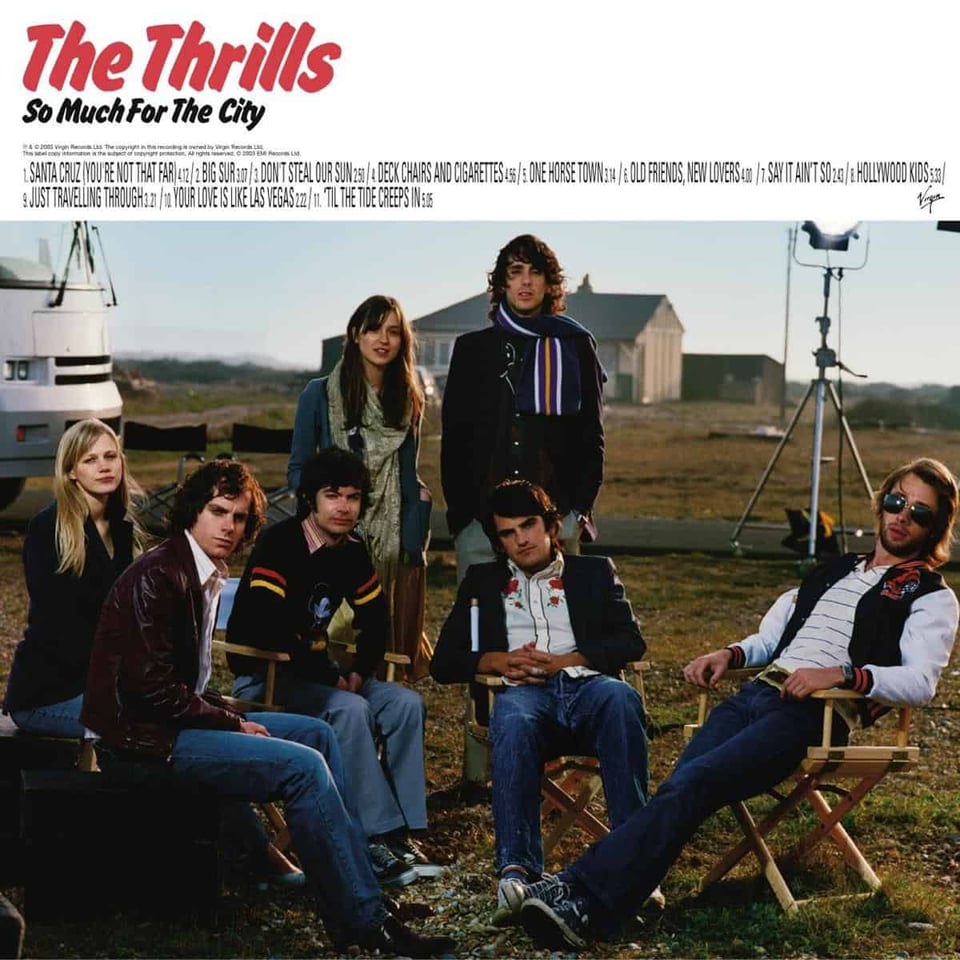
The Thrills - So Much for the City
My friend Shane Madej recommended this one, and it’s a real charmer of an album. Makes me think about the band Girls, in the sense that it wears its influence on its sleeve (I can’t resist the appeal of “Hi, we’re a bunch of Irish guys who went to California and decided to simply become the Beach Boys”) while incorporating enough ‘originality’ to prevent it from sinking into the broader power-pop revivalism wave of the ‘90s and ‘00s. Quite charming and quite catchy!
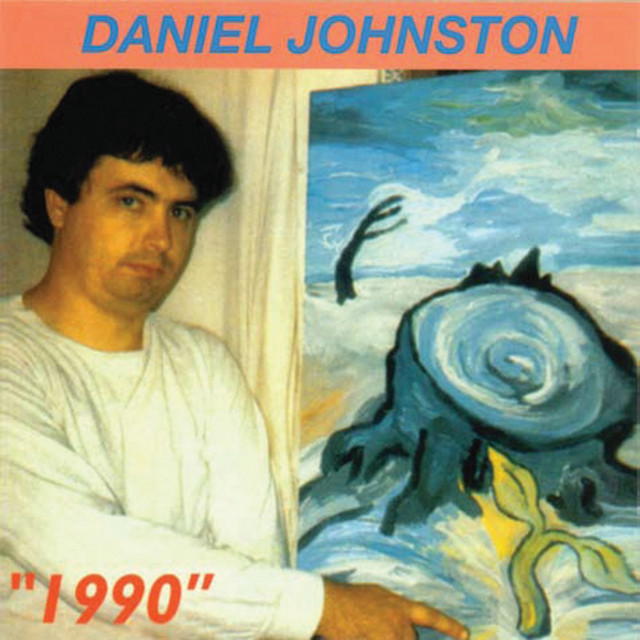
Daniel Johnston - 1990
There’s a bit in George Saunders’ A Swim in the Pond in the Rain where he talks about how—I’m paraphrasing here—“poetry”, as an effect, emerges from difficulty in communication, from poor articulation and the fumbling-for-words. I think that applies to Johnston’s work beautifully — on both the sonic front and the lyrical front, it’s beautiful because there’s something standing in the way. In “Some Things Last a Long Time”, for example—one of the most striking songs I’ve ever encountered—all of the statements are external, nonspecific. “Your picture” is described only in terms of color; “I won’t forget the all the things we did” is as much detail as we hear about the narrator’s relationship with his “you”. There’s a very real pain here that’s expressed in prosaic, stilted phrases because there’s almost no other way to express it otherwise. It’s hard to listen to, at times, because it simply overwhelms you.
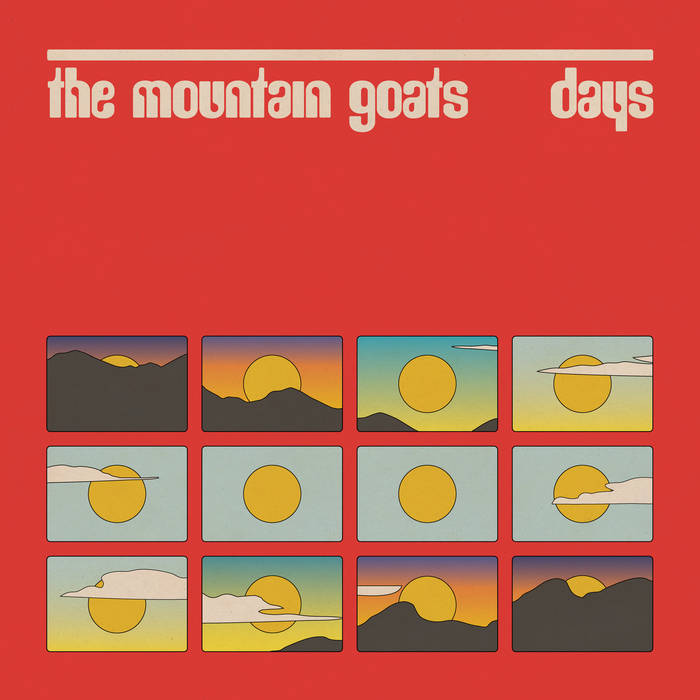
The Mountain Goats - Days
On paper, I’m not supposed to love this; the last two albums were starting to feel like my path and John Darnielle’s were finally diverging, and this one falls into the less ‘cohesive’ group of albums — like Heretic Pride or Dark in Here, which I don’t like quite as much as whole works (despite there being some truly banging tunes on both), on paper it’s just “a bunch of songs written around the same time”. But I’m relieved to say that I’m well and truly hooked; it’s got a sharp balance between tender rumination and punchy energy (notice how many choruses on this album are just the same line or couplet, repeated), and all the songs about getting older are genuinely moving. I can’t help but compare this album to the last couple of Weezer singles — here are two ‘90s alt guys, both making music about “aging in the public eye”, except one of them (Darnielle) seems completely gratified by the passage of time whereas the other (Cuomo) is increasingly self-loathing and trapped. Unsurprisingly, it’s the former who wins.
SILLY LITTLE GUY
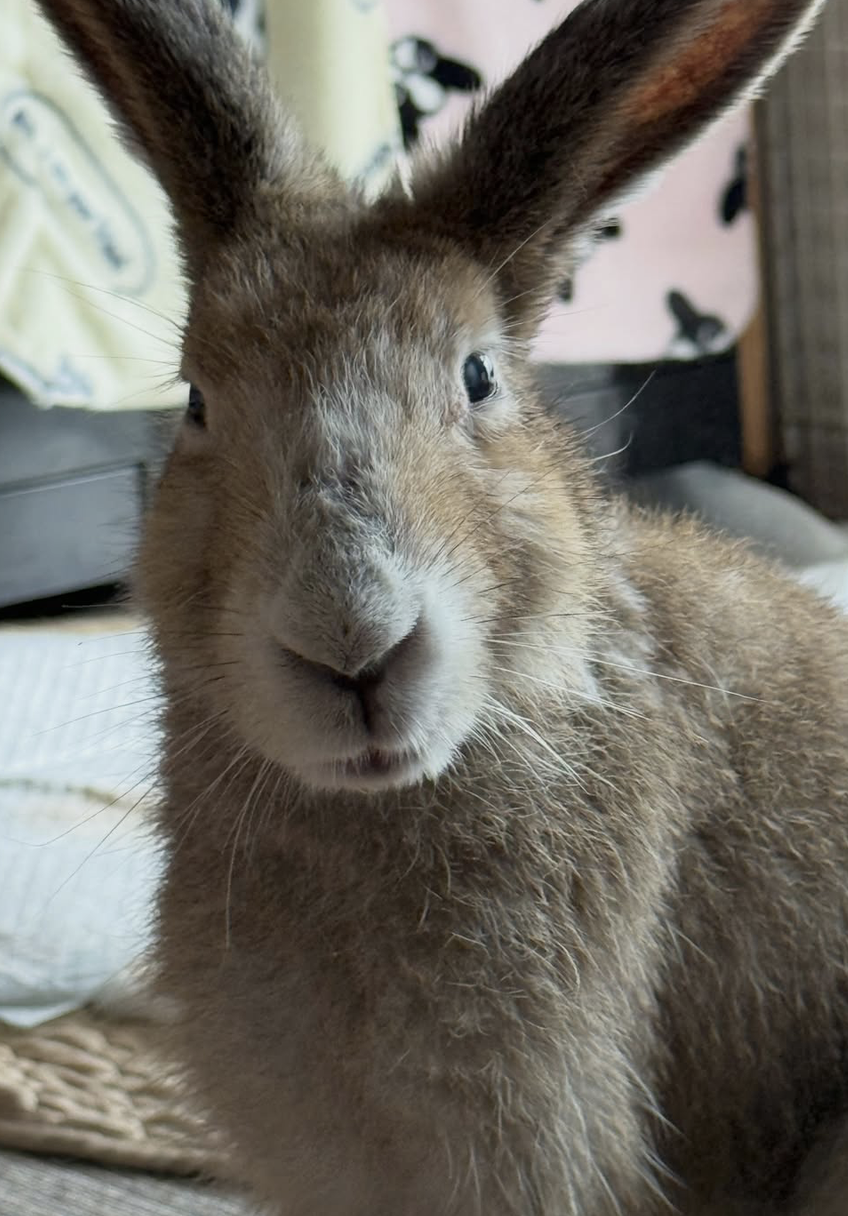
Usually I use this section to show animals I’ve actually personally met, but today is going to be an exception. Much of my Instagram, nowadays, is just several hundred pet/animal accounts. Cats, dogs, rabbits, anteaters — you name it. One of these accounts is run by a person in Japan with two cats and two rabbits. I don’t remember when this started, but at some point while Claire and I were working on “Walt” I started sending her photos of one of those rabbits, Ten-chan, for no reason other than I thought she was cute, and after a while Claire decided that Ten-chan is expressive in such a uniquely hostile and dejected way that she simply must be the model for the titular Walt. So I figured that today’s Silly Little Guy has to be this delightfully goofy rabbit. Shout-out to Ten-chan. We couldn’t have done it without you.
CONCLUSION
That’s it from me, as far as I can think of at least. As always, if anyone has anything they want this newsletter to be “about”, I’m always happy to hear; do feel free to reach out. In the meantime, folks, peace be with you.
