

THESE MAY NOT BE FULLY-FORMED THOUGHTS…Keep that in mind as you read…
I am addicted to vibe coding.
For those of you who don’t know what vibe coding is, it’s basically using AI to create code to do…whatever. That’s the best way to describe it. You’re using AI to create code. But you never actually code, yourself. You let the AI do it for you.
It’s really amazing and it opens up entirely new worlds for me. All of these projects that I have dreamed about over the years are finally within my grasp. For the last few months, I have been taking the film curriculum that I have used over the years and turning it into an interactive website. My goal is to create something that would allow schools around the world without a film program to start one with no equipment. My curriculum would serve as a four-year program that would enable students to learn how to make films. It would go from the basics to more complex assignments.
I’m pretty much done with the creation of the site and I’m now fine-tuning the lessons with some interactive features. All of the lessons lead to projects that the students will do that will help them become better filmmakers. And I’m using Claude to help me write everything from a coding perspective. Claude has helped me build rubrics, create interactive lessons, and create a database of material that I can distribute to other schools.
But what I’m discovering with Claude is that it can do much more than that. One roadblock I ran into was with my screenwriting unit. I have NEVER had a good screenwriting program that I can recommend to students. They all either charge money or are riddled with ads. So one day I thought, I wonder if I can just BUILD a screenwriting program…
I did. I built it in approximately two hours. It’s called Slate. You can access it here. It’s MacOS only, so sorry Windows users. (If this doesn’t work, then sorry! I’m still working out the bugs!)
But the bottom line is that all by myself I was able to build a product that I have been paying for for years. It’s a great screenwriting program that saves in an open language so you can open your files in any program. Plus, it’s got an AI “coach” that will read your work and ask you probing questions to get you to think about what you’ve written. But it will NOT write anything for you. It merely makes you think.
Then, I was looking to buy a teleprompter so that my kids could read a script while looking at the camera, but everything was expensive and only functioned as stand-alone apps that each student would have to purchase. So, I came up with something called “Eyeline”, which enables students to have a teleprompter right inside their browser. I’ve already got students in my class using it.
I’ve been working on a film encyclopedia and I’ve already built a localized version of “Letterboxd” so that my students can leave movie reviews. I might just create my own little social network for film nerds here.
In January, I will fly to London to present this to a conference of teachers and administrators. I’m looking forward to selling it for a kajillion dollars (not). But I would like to get it in the hands of students all over the world, because FILM IS THE FUTURE.
And all of these things have been built using conversational AI. I tell Claude what I want, and Claude builds it. It has super-charged my planning and my ability to engage my students in my classroom. I don’t know the next thing about coding, but I’m getting it all done and it seems to be working.
There are other things that I want to build as well. Today, I wondered if I could build my own editing platform that educated students on how to edit video, only revealing new parts of the program as students mastered a skill. So that’s one thing that I’m working on. I also started working on building a personal finance app, but that didn’t work for me, because I wanted it to not connect to the internet. The latest thing that I want to do is build some of my own games. I have lots of ideas.
And that’s the thing about all of this that students don’t really understand. If you throw a blank slate in front of me, I want to create something. I can build things. Put a blank piece of paper in front of me and I’ll draw a picture. Put a journal in front of me and I’ll write a story. Give me a camera and I’ll make a movie. A blank slate is a challenge and I relish that challenge.
AI has done that for me. Now, I have a toy and I want to create something with that toy. And I have been creating LOTS of things.
But if you throw AI in front of a teenager, it is not presented as a challenge. It’s a way for a teenager to outsource their thinking.
Let me explain. I have the ability to make AI a useful tool because I have years of life experience. I am able to create a film curriculum with AI because I have actually taught these lessons, and because I’m an expert in my field, I know what works for kids and what doesn’t. When Claude spits out something, I know it will work because I fed it information that I know will work. I’ve worked with kids long enough to know that these lessons function well in the classroom, so when Claude puts them in and helps me augment the lessons with interactive activities that we create together, I can approach it with confidence that it will be successful.
I am an expert.
Now, look at your average teenager. They have no skills. They don’t understand the fundamentals of what they’re doing. They’re just going through the motions when they use AI. They may claim that they’re picking things up, but they aren’t. It’s like when you do a Photoshop tutorial online. You follow the steps and the computer spits out something that looks good. But you don’t understand the fundamentals of what led you from a to b. You didn’t learn anything.
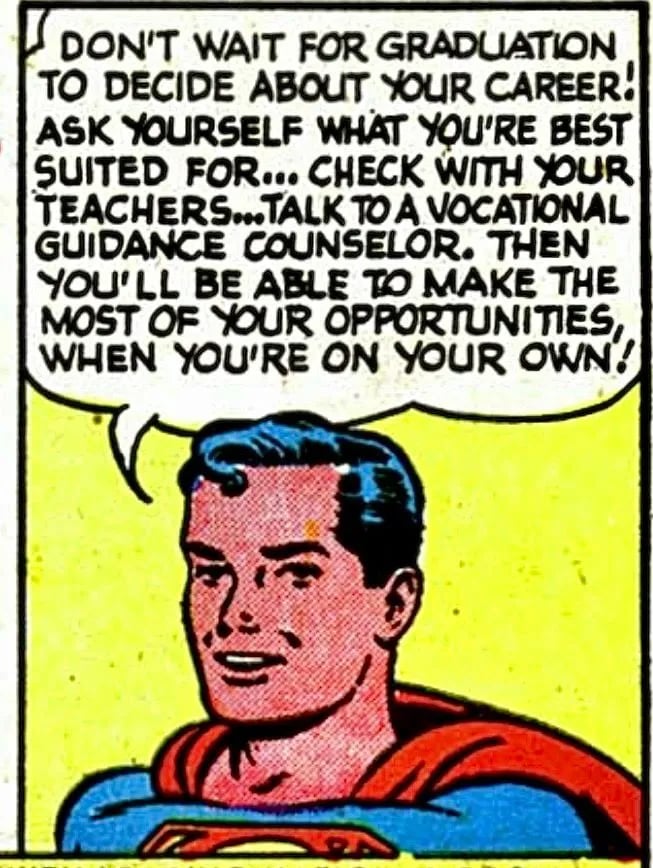
I’m starting to think that we need some strict regulations around teen AI use. I don’t think they should be allowed to use it before a certain age or prior to being able to pass some fundamental tests. It’s making kids stupid. Just like one can’t drink alcohol until they’re twenty-one or just like someone can’t vote until they’re eighteen, we should put the same regulations on teenage AI use. I would say twenty-one years old for a starting point. At that age, they’re just starting to be able to make proper judgments. (But then again, I would put social media in that territory, too).
In order to use a powerful tool, one needs fundamental knowledge of how that tool works. With AI, teenagers need to understand how their own minds work. They just don’t get that at the moment.
AI is changing incredibly quickly. It’s moving faster than we can keep up. In order to keep up with that pace, we need to slow down access to it. Kids should not be using AI. At all. Especially teenagers. (I would say the same thing about phones as well).
But me? I want to use it all the time. Because it’s like I suddenly have the magical ability to create anything that I want. That’s a powerful proposition.
Should teenagers have that choice? I don’t think so.
You just read issue #346 of Ridiculous Opinions!. You can also browse the full archives of this newsletter.


Add a comment: