
🖇️ Wikilinks, Self-Hosting Ruby Apps, NEW Bridgetown Theme, Cross-Platform App UI
Plus instead of optimizing our lives around being connected 24/7 to The Network aka the Internet, maybe we optimize our lives around improving our minds. By Jared White
Greetings & salutations, fellow Rubyists!
Got much ground to cover in this newsletter, so let’s just jump into it. 😎
As was promised in last month’s Fullstack Ruby newsletter, there are some BIG announcements out of the Bridgetown framework (of which, full disclosure, I am the lead maintainer). They are:
Bridgetown 2.2 “Verdant River City” Released
Now supporting “wikilinks”, a syntax which makes it easy to add links when authoring any Markdown file. No longer do you need to keep track of filenames or URLs. Just type [[Page Title Goes Here]] and Bridgetown will automatically locate a resource with that title and link to it. Display text is customizable, and you can link to a specific anchor section if needed.
There’s also been a defaults switch from Puma to Falcon, a new highly concurrent Ruby web application server. Its fiber-based architecture means it’s viable to serve internet traffic using Falcon itself instead of another webserver such as Caddy in front of it.

Everyone Deserves a Wiki: Bridgetown 2.2 is Here | Bridgetown
Wikilinks in Markdown, support for Falcon the highly concurrent Ruby web application server, performance enhancements, bugfixes, and more!
Now you might be wondering what project you could use wikilinks for…which brings us to the next news item:
Willamette: The First First-Party Bridgetown Theme
The ecosystem now offers a feature-filled, highly-customizable, “from the creators who brought you Bridgetown” website theme, and it’s called Willamette (built upon the incredible CSS/UI foundation of Web Awesome).
(P.S. A huge shoutout to the Gem Fellowship! 🎉 It’s not hyperbole to state that Willamette wouldn’t have been possible without this grant.)
Willamette was designed to shine when it comes to launching a blog, an obvious use case. But that’s where Willamette starts, not ends. Much more to read about in the announcement post:
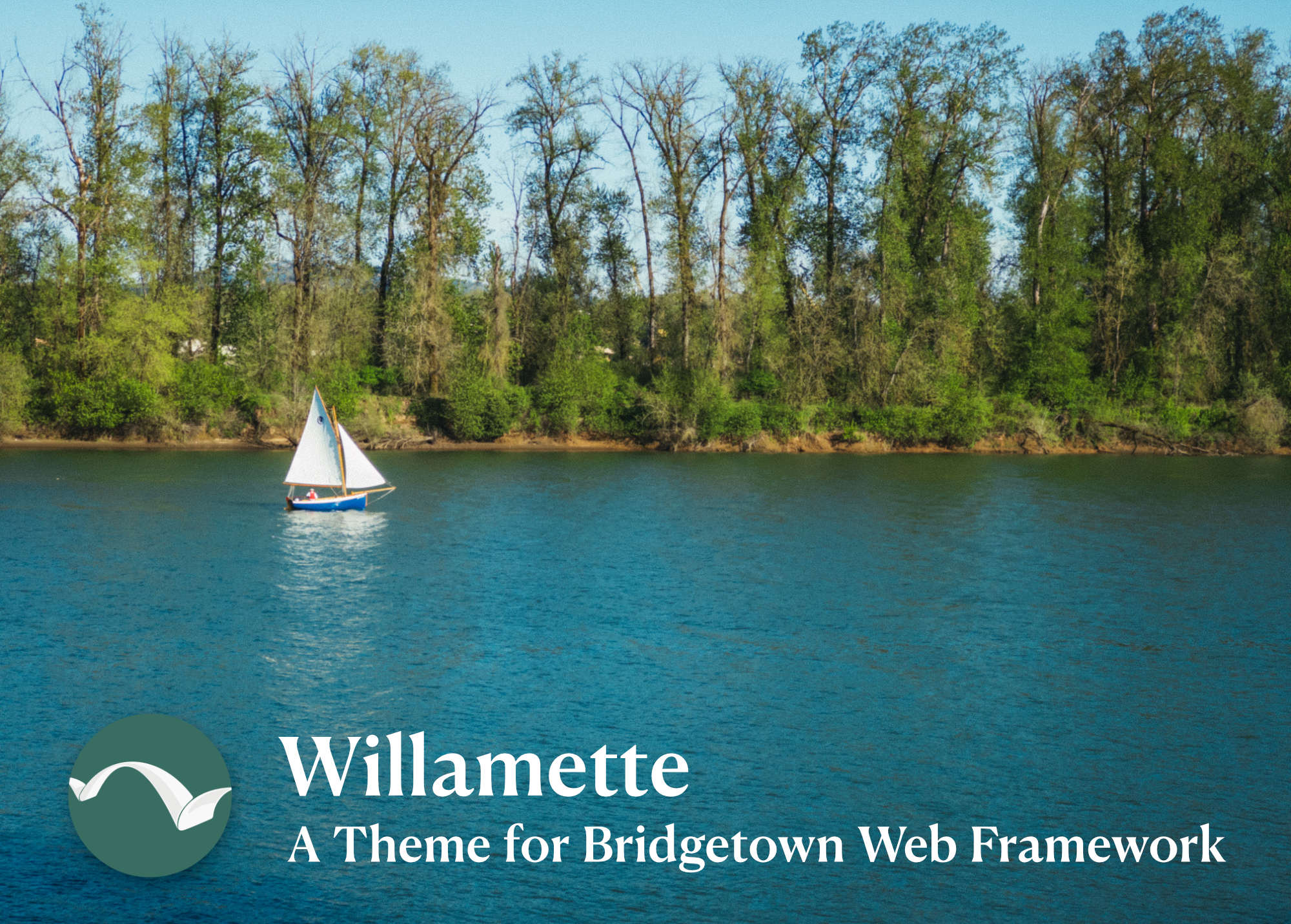
Introducing Willamette: The First First-Party Bridgetown Theme | Willamette
Willamette is a new theme for the Bridgetown Ruby web framework.
There’s more Bridgetown news to come (!), but let’s get on with a couple other topics…
Self-Hosting Your Ruby Apps
Javier Cervantes over at the Ruby Users Forum has written a guide about how you can spin up a (virtual) server of your choosing and start self-hosting Ruby app(s) in a pretty straighforward fashion.
Ngl, I’ve been through every permutation of Ruby hosting…from shared (!) hosting to manual setup of a Linux VPS to PaaS hosting like Heroku or Render…and I’ve gone back to the VPS approach by and large. Nice to know there are ways to bridge the DX gap between completely rolling your own and just going with a PaaS. (Note: for static Bridgetown/etc. sites, I recommend just going with statichost.eu!)

How to self-host your Ruby apps - Learning Resources - Ruby Users Forum
You have heard about good things about self-hosting and are looking for options that don’t require too much work. Proper dev ops… it’s no walk in the park and you don’t want to spend your time managing servers, setting up monitoring, security, TLS handling and other stuff. There are some new tools like Kamal, but they only handle the deployment part and managing multiple apps can become a little complicated. On the other hand, if you’re using a PAAS provider, the price jump for multiple apps ca...
And finally…
Building Ruby Apps with Native UI
We typically think of Ruby apps as either being command-line tools or powering web APIs/full-stack experiences. Wouldn’t it be great if you could simply build a GUI app and run it on a computer?
That’s the goal of Ruby Everywhere: A Guide to Cross-platform Libraries: to catalog various approaches and give folks a starting point to explore how it might be done. There’s interesting discussion and additional links in this forum thread:

Ruby Everywhere: A Guide to Cross-platform Libraries - #9 by marc - Learning Resources - Ruby Users Forum
Neat. Thanks @fabiomux 🙌 I’ll add it.
Personally, I’d love to try my hand at writing a GTK4/Adwaita app for Linux using Ruby. Perhaps a little utility related to Bridgetown? 🤔 We’ll see…
And that’s all for today. Thanks for reading! ✌️ Share with a friend, enjoy the springtime (or autumn for those down under), and I'll see you back here in June! 🥳
–Jared
🤔🌩️ Things that make you think: 💡😃
I’m going to start ironically calling this pattern neuromaxxing: the idea that instead of optimizing our lives and our habits around being connected 24/7 to The Network aka the Internet at all times, we’re going to optimize our lives and our habits around improving our minds and doing REAL CREATIVE WORK.
And this concept is an absolutely brilliant antidote to the mind-numbing (literally!) effects of AI usage, because guess what you can’t do if you’re not actively attempting to access Internet resources? Connect to ChatGPT or Claude! 🤣
–Me, in my humorous essay Neuromaxxing