
The Late Night Pour | Functionally Destroyed

|
Four Fingers News
The News, Neat.
|
| TUESDAY, NOVEMBER 10, 2026 · DAY 256 |
| The Late Night Pour |
Functionally Destroyed
Functionally Destroyed, read aloud · 7 minutes.
Day 256. Iran’s military put a six-minute film on state television on Nov 10, 2026 that shows two generals riding a jeep through a tunnel lined with missiles, and by the Pentagon’s own account those missiles shouldn’t be there. The war began on Feb 28, 2026, a US blockade of Iran’s ports is still in place, and Qatar is carrying proposals between two governments that won’t sit in the same room. Seven months ago the Pentagon said Iran’s missile stockpile was nearly gone and that Iran couldn’t build any more. The film answers the first of those claims, and three days before it aired Iran made a bigger one about the second, saying its missile factories have moved underground. What it means is that the bombing didn’t do what Americans were told it did, and that this war ends when the two governments make a deal, not when Iran runs out of missiles.
The American claims came on Apr 8, 2026, and they’re worth taking one at a time. Pete Hegseth, who runs the Pentagon, told reporters that day: “Their missile program is functionally destroyed, launchers, production facilities and existing stockpiles depleted and decimated and almost completely ineffective.” That was a statement about what Iran had left. He then made one about the future, saying a wave of more than 800 strikes the night before meant “we finished completely destroying Iran’s defense industrial base.” A country’s defense industrial base is the factories, workshops and suppliers that make its weapons, so he was saying Iran couldn’t replace whatever it fired. Gen. Dan Caine, the top US military officer, stood next to him and described something smaller, saying more than 80% of Iran’s missile facilities were gone, which covers one part of that industry and leaves as much as a fifth of it standing.
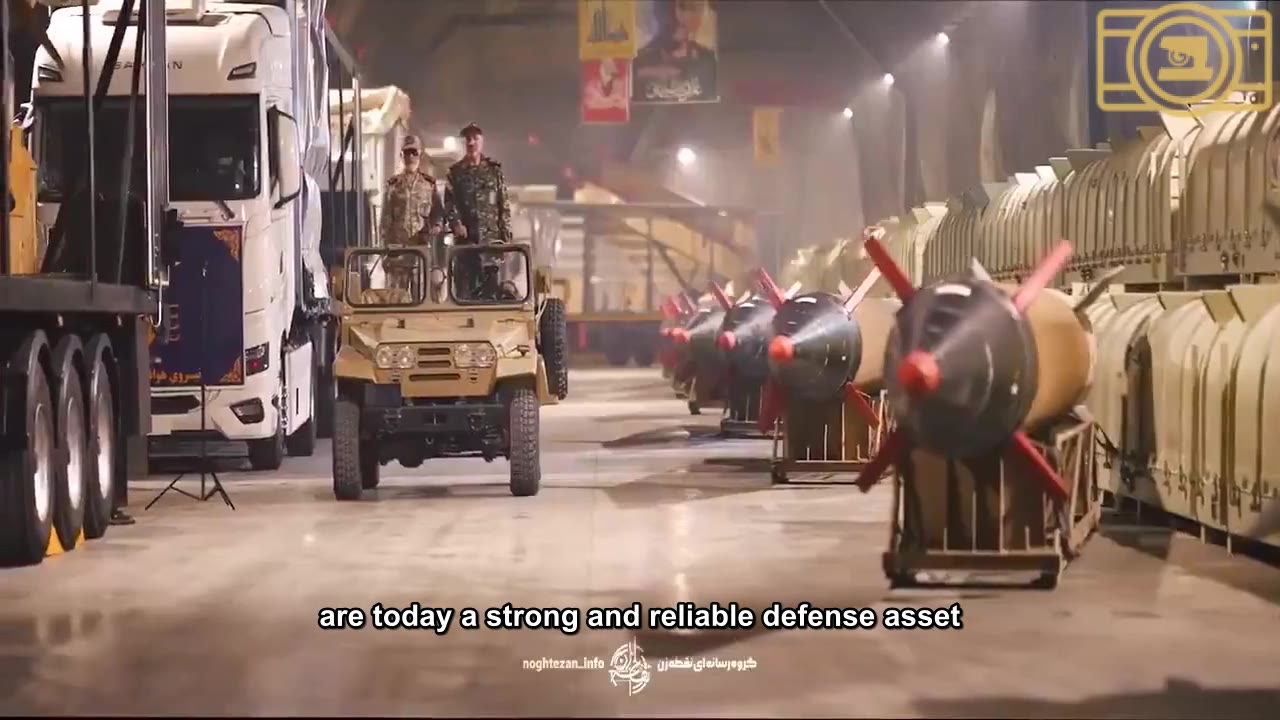
The film settles the first claim. Iran calls a base like this a “missile city,” its name for a military complex dug into a mountain, and the one on screen holds rows of ballistic missiles, the kind that fly a high arc to targets hundreds of miles away, including the long-range Khorramshahr, one of the most powerful weapons Iran has. Maj. Gen. Ali Abdollahi, the chief of staff of Iran’s armed forces, toured it and warned that if Iran is attacked again, “our response will extend beyond the region.” None of it should’ve surprised the Pentagon. The Wall Street Journal reported in April 2026 that American and Israeli officials believed Iran still had thousands of missiles hidden or buried, and at a Senate hearing in July 2026, after a Democratic senator read Hegseth’s April words back to him, he said Iran’s weapons industry was “effectively gone” and then added: “But they do have underground facilities.”
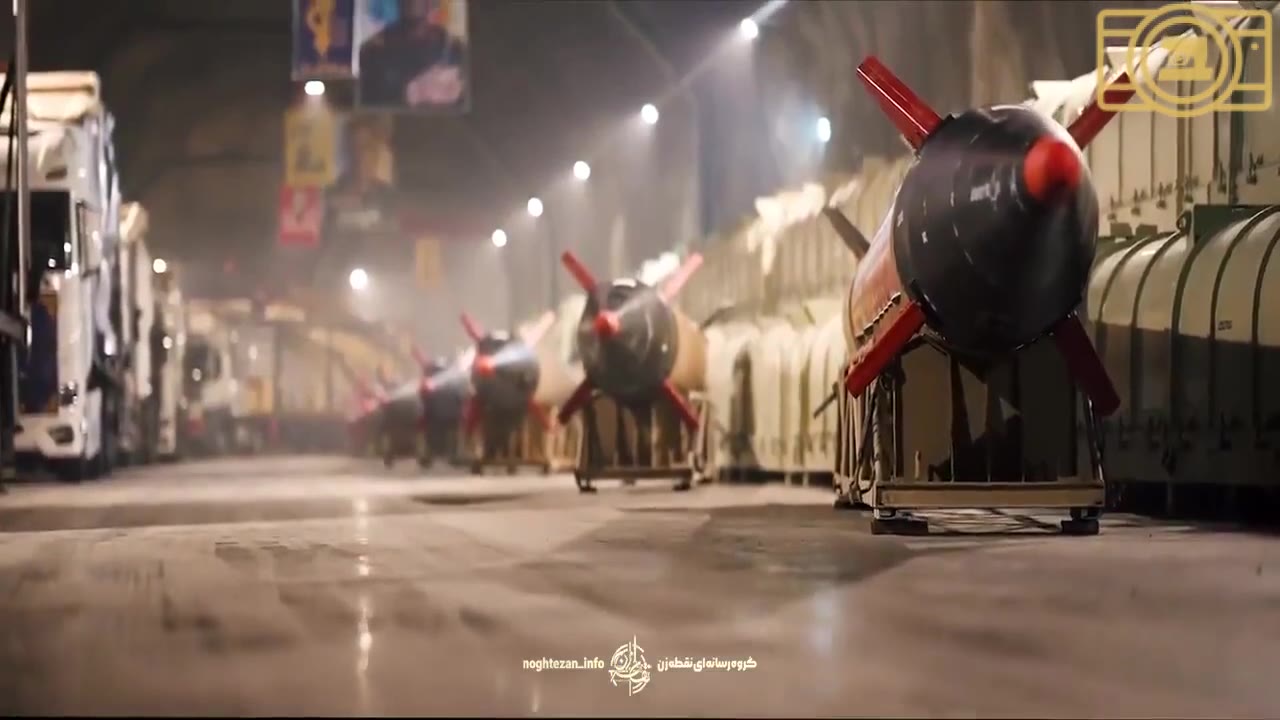
The second claim matters more, because it’s about what Iran can keep doing. On Nov 7, 2026, Hossein Mohebbi, the spokesman for the Islamic Revolutionary Guard Corps (“IRGC”), the branch of Iran’s military that controls its missiles, said production lines for missiles and drones had been moved out of surface factories and into underground sites he called “missile production cities.” A stockpile gets used up and an assembly line doesn’t, so if he’s telling the truth, Iran can replace what it fires. The film doesn’t show that. It shows finished missiles in a tunnel, it doesn’t say where the tunnel is or when it was filmed, and the camera never goes outside, so the factories are Iran’s word and nothing more yet.
Satellites add something. Photos taken in November 2026 and reviewed for the BBC by outside analysts show fresh digging and new buildings at two of Iran’s major missile sites, one at Karaj, near Tehran, and one at Shahroud, in the north, along with repairs at bases that were bombed. Neither site is known to be the one in the film, and a satellite can’t see inside a mountain, but the photos show Iran building at its missile sites seven months after it was said to have nothing left to build with. A separate set of images from March 2026 showed what the bombing did reach. A missile has to leave the mountain to be fired, riding out on a launcher, which is the heavy truck that carries it and sets it upright, and those images showed wrecked launchers outside tunnel doors that American and Israeli planners had spent years mapping. The bombing reached the doors and the trucks parked outside them, and this week’s film shows what it didn’t reach.
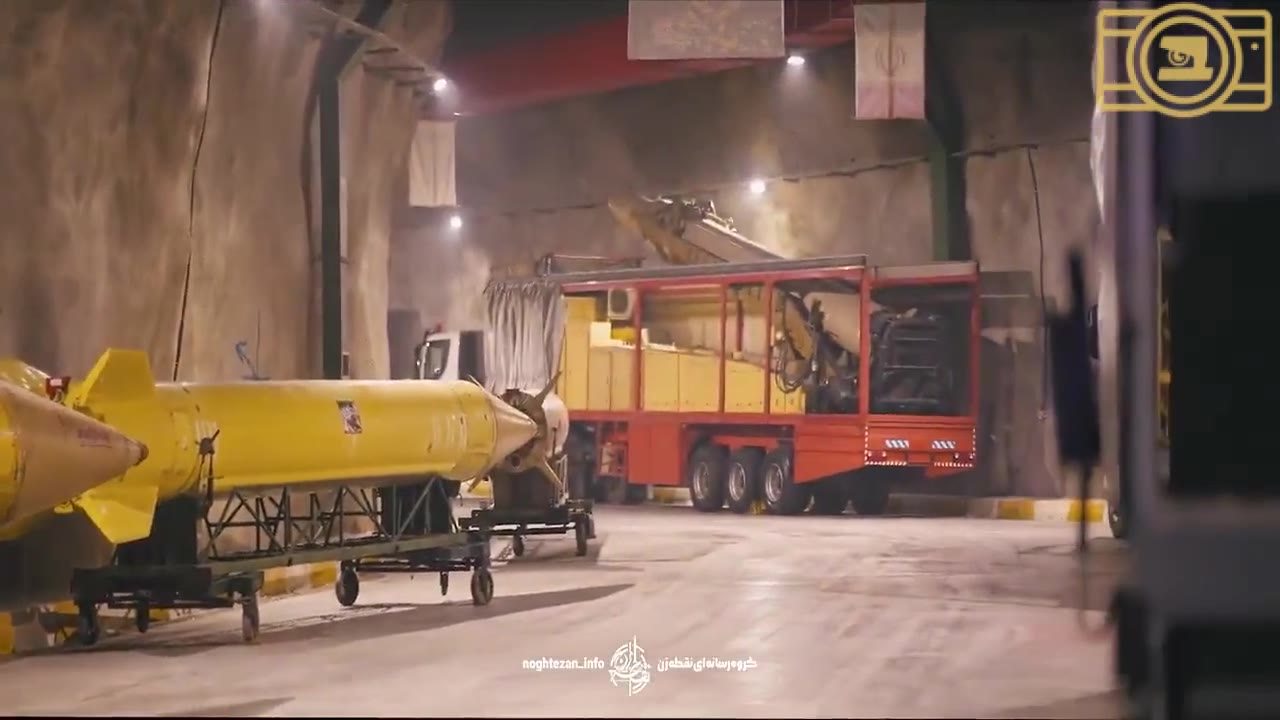
Iran has been at this for a long time. Amir Ali Hajizadeh, who commanded the IRGC’s missile force for years, said the digging began in 1984, in the middle of the Iran-Iraq War, which ran from 1980 to 1988 and saw Iraqi missiles fall on Iranian cities. Iran aired the first footage from inside one of these bases on Oct 14, 2015, three months after it signed the nuclear deal with the US and five other powers, and claimed the base sat 500 meters down, about 1,600 feet. A portrait of Hassan Tehrani Moghaddam, the officer who built the missile program and died in an explosion at a base near Tehran in 2011, hangs in the tunnel in this week’s film. By Iran’s own account, the bombing that began in February 2026 was up against 42 years of tunneling.
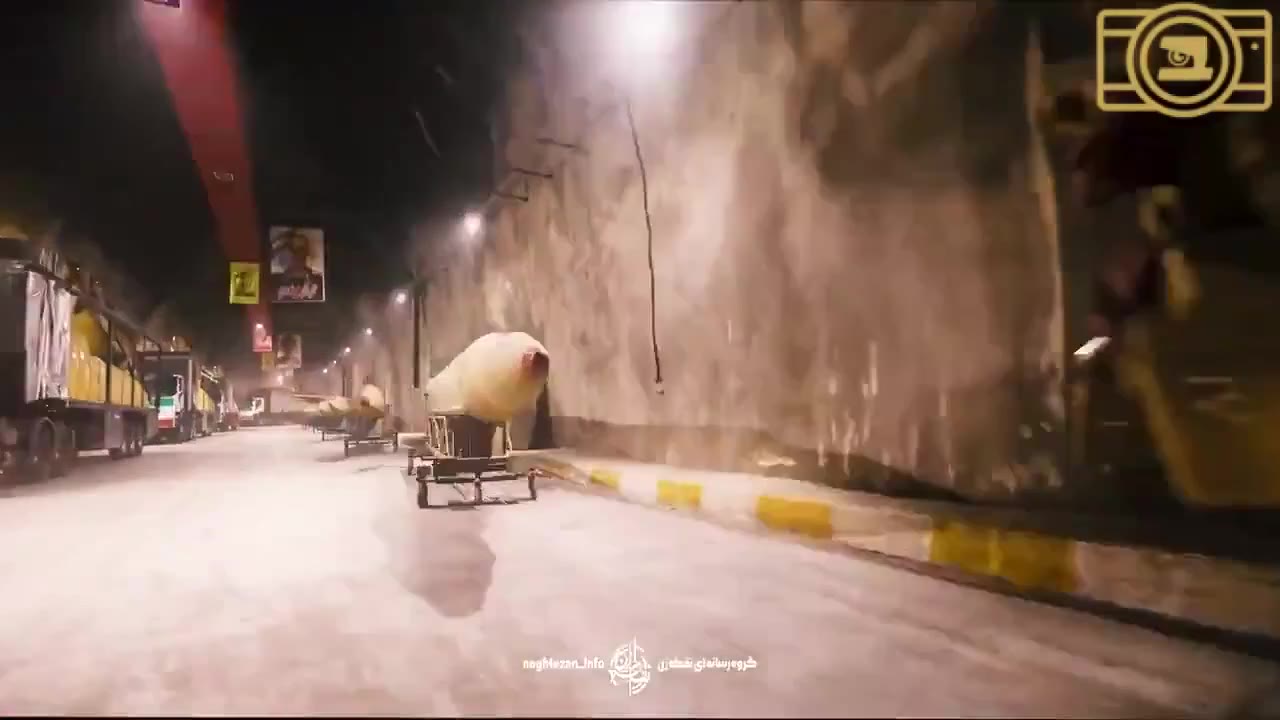
The timing echoes 2015, when the tunnels went on television while the nuclear deal was still waiting to take effect, and it’s why this film is a message to the American negotiators more than a threat to fire. On the day it aired, Marco Rubio, the Secretary of State, said in Paris that there was no need for major combat operations against Iran because economic pressure was doing the job. Hegseth’s version of the war ends with an Iran that has nothing left. Iran’s version is an arsenal that survived and a factory that can refill it, and the first half of that is now on film. The bombing was supposed to leave Iran with nothing to bargain with, and the missiles declared “functionally destroyed” seven months ago are on television, so that plan is finished. The only way left for this war to end is a deal, Qatar is carrying one between the two governments right now, and every week the US spends without one is another week of a war the bombing has already failed to win.
Sources (13), on the site.
House Sends Hegseth Impeachment to Committee, 211–204, Shelving It
The House voted 211 to 204 on Tuesday to refer Rep. Thomas Massie’s impeachment resolution against Defense Secretary Pete Hegseth to the Judiciary Committee, which effectively kills it. Massie, a Republican who leaves Congress in January after losing his primary, was the only member of his party to vote with Democrats against the referral. The resolution accuses Hegseth of launching the Iran war without Congress’s approval, ignoring laws meant to limit civilian casualties and ordering killings in the Pentagon’s Caribbean boat strikes. At a Pentagon news conference Tuesday morning, Hegseth called it a “farce” and said, “None of these are high crimes or misdemeanors.” Massie says he won’t file again. Democrats, who take control of both chambers in January, could.
| War: Day 256 |
| Vote: 211–204 to refer the resolution to the Judiciary Committee |
| Republicans against referral: one, Massie |
| Hegseth: a “farce” and a “political spectacle” |
| Massie: won’t bring another resolution · leaves office in January |
| January: Democrats take control of the House and Senate |
Stocks Slip After a Hot Inflation Report
The S&P 500 fell 0.4% to 7,520.93, the Dow lost 157.86 points to 52,231.89 and the Nasdaq dropped 0.7% to 25,065.87 on Tuesday. Consumer prices rose 0.4% in October and core prices 0.3%, each a tenth above forecasts, and traders raised their bets that the Federal Reserve’s next move is a rate increase. Brent crude settled at $91.49 a barrel and WTI at $86.04, a second day lower.
Abu Dhabi Talks Go to a Second Day, with Territory Saved for Last
Ukrainian, Russian and US negotiators meet again Wednesday in Abu Dhabi. A US official told reporters before the talks that “both sides had shown some flexibility in private discussions” on territory, and that any deal on it would come near the end. Steve Witkoff and Jared Kushner lead the US side; Rustem Umerov leads Kyiv’s. Ukraine wants Russia back at its prewar lines, and Vladimir Putin wants all of the Donbas. European officials are holding separate meetings alongside.
Paris Blames Iran’s Revolutionary Guard for Hack That Overheated Supermarket Freezers
Foreign Minister Jean-Noël Barrot said Tuesday that France is weighing measures against Iran, some of which “may never” be made public, after blaming the Islamic Revolutionary Guard Corps for cyberattacks that overheated refrigerators and freezers at about 700 supermarkets. In Britain, the Wall Street Journal reports the Pentagon moved US refueling tankers out of the Mildenhall air base on Monday over an alleged Iranian threat, the second UK base it has cleared.
Seattle Warms into the 60s for Veterans Day, with Wind on the Coast
FOX 13 forecasters have Seattle in the 60s on Wednesday, against a record for the date of 65 set in 1990. A wind advisory with gusts to 50 mph covers the Washington coast and the northwest interior until 7 PM PT Wednesday, and minor coastal flooding is possible on the ocean beaches. A stalled front keeps rain west of Puget Sound on Thursday, and more systems follow Friday through the weekend.
| Read the full dispatch |
You’re receiving The Late Night Pour, an edition of Four Fingers News.