
Mountain peaks to show the shifts
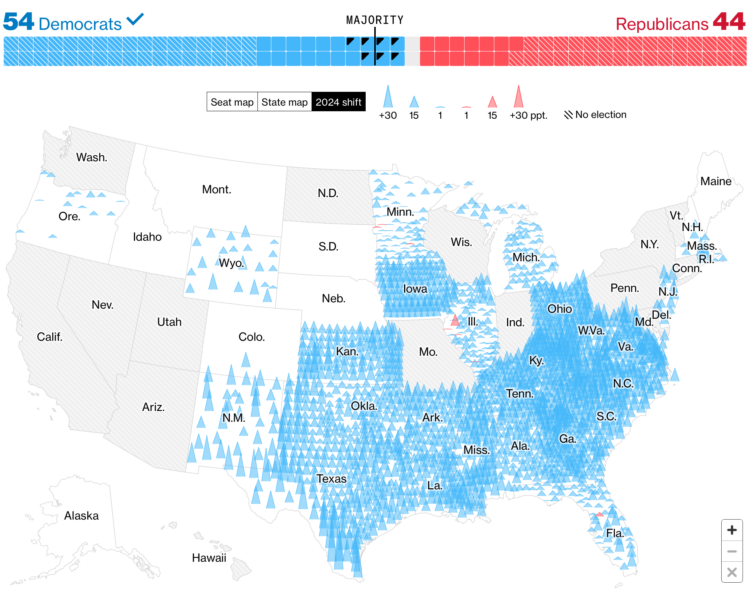
Bloomberg used mountain peaks to show the shifts towards Democrats and Republicans. Taller peaks represent greater shifts, and blue and red indicate Democratic and Republican shifts, respectively.
I prefer this map to the NYT map that uses arrows. It’s easier to spot the handful of Republican shifts without zooming in. The transparency helps too.
Tags: Bloomberg, elections, midterm
Shift in margins for Midterms 2026, by county
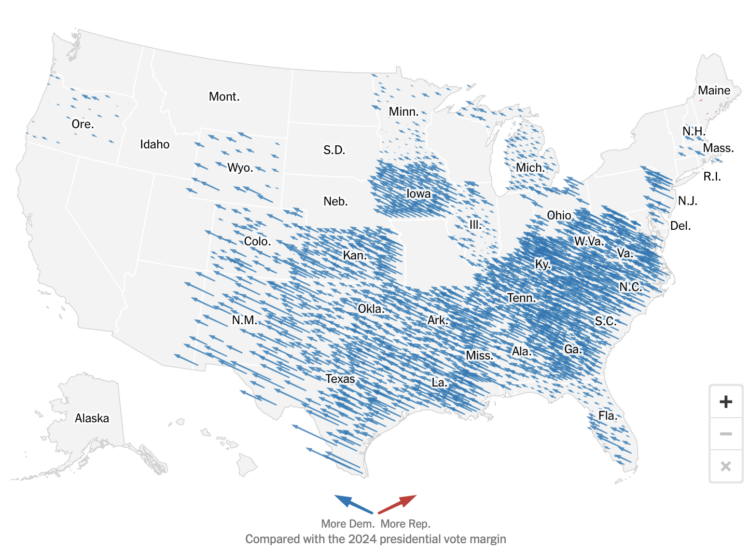
The New York Times brings back the angled arrows to map the shift in voting margins between parties, compared to the 2024 presidential margins in each county. A larger blue arrow means more Democratic, and a larger red arrow means more Republican.
It was almost all blue arrows across the country, save a few small red ones in Maine and Minnesota.
Tags: elections, midterm, New York Times
Benchmark chair
James Birdle described his experiment using AI to assist in chair design:
What we have here is, quite literally, a chair designed by someone who has read a lot about chairs but never actually sat in one. They know what a chair should look like, what it should do, the mechanics of how one is put together, the physics of holding you up. But they have no embodied experience of the world, no history with chairs or any other object, no physical memory. They don’t know how it feels, not merely to sit in a chair, but to encounter one in the world, to place it among other things in a home, to live with it, to be around it every day as one goes about the mundane business of life.
Percentage of votes counted so far
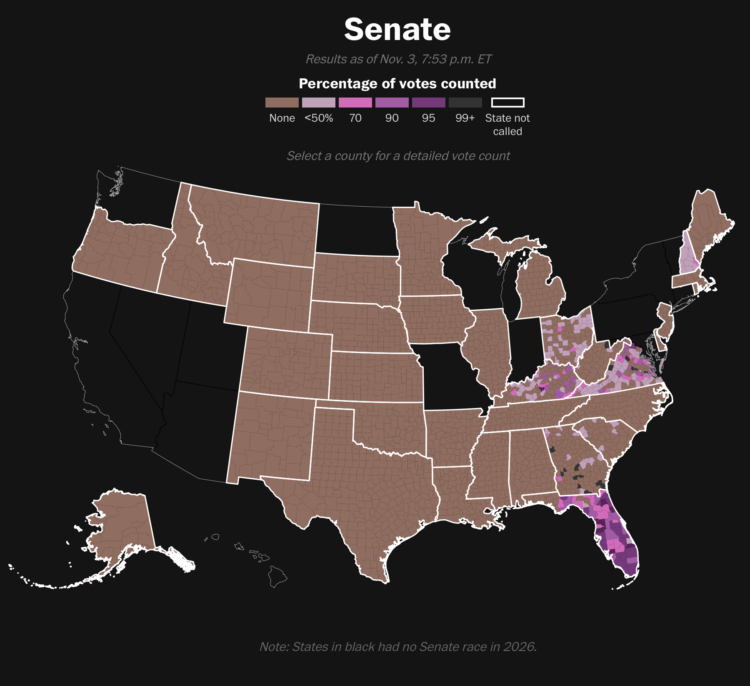
For the Washington Post, Dylan Moriarty has a live tracker for the percentage of votes counted. There is still a ways to go.
Tags: turnout, voting, Washington Post
Needle of uncertainty is live for Midterms 2026
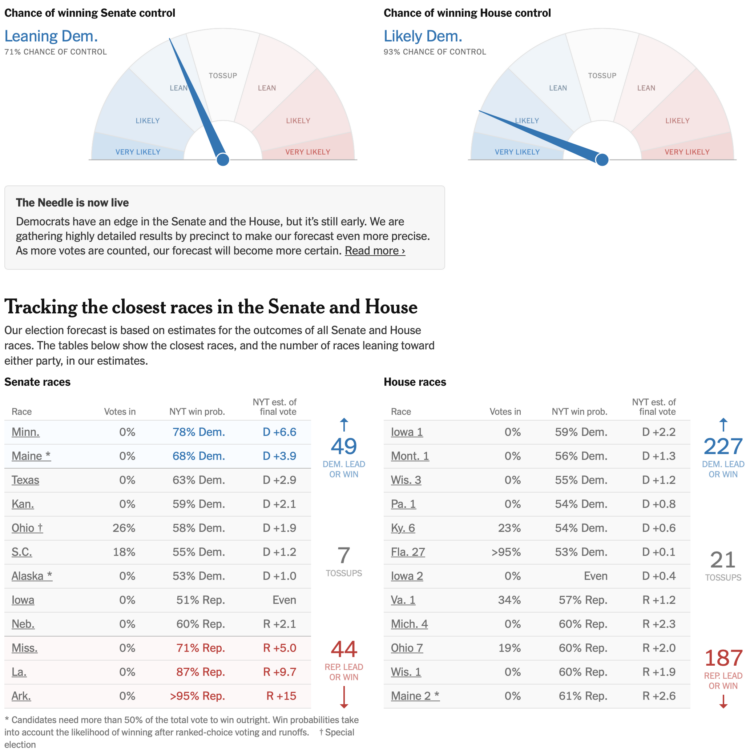
If feeling uncertain is your thing, the Needle from the New York Times was live to show the chances of each party winning Senate and House control. Views for individual races are also available.
Tags: election, midterm, needle, New York Times, uncertainty
FlowingData is 100% made possible by members. Join today and get access to courses, guides, and more resources from this real person (me, Nathan).