Nature Bats Last
"It’s been the most successful part of my farming life to understand what nature is doing. Nature bats last." - Patrick Mitchell, EAT! Center Director
The very first thing you should be doing on your land before you plant or pull anything is observing. You should be thinking about how you look at your land, when you look at your land. You should be paying close attention to everything going on there. I came to be a farmer after 20+ years of being a naturalist, walking with binoculars, sleeping under trees. When I decided it was time to be a farmer, all of that background and natural history came with me. It’s been the most successful part of my farming life to understand what nature is doing. Nature bats last.
Patrick Mitchell, EAT! Director
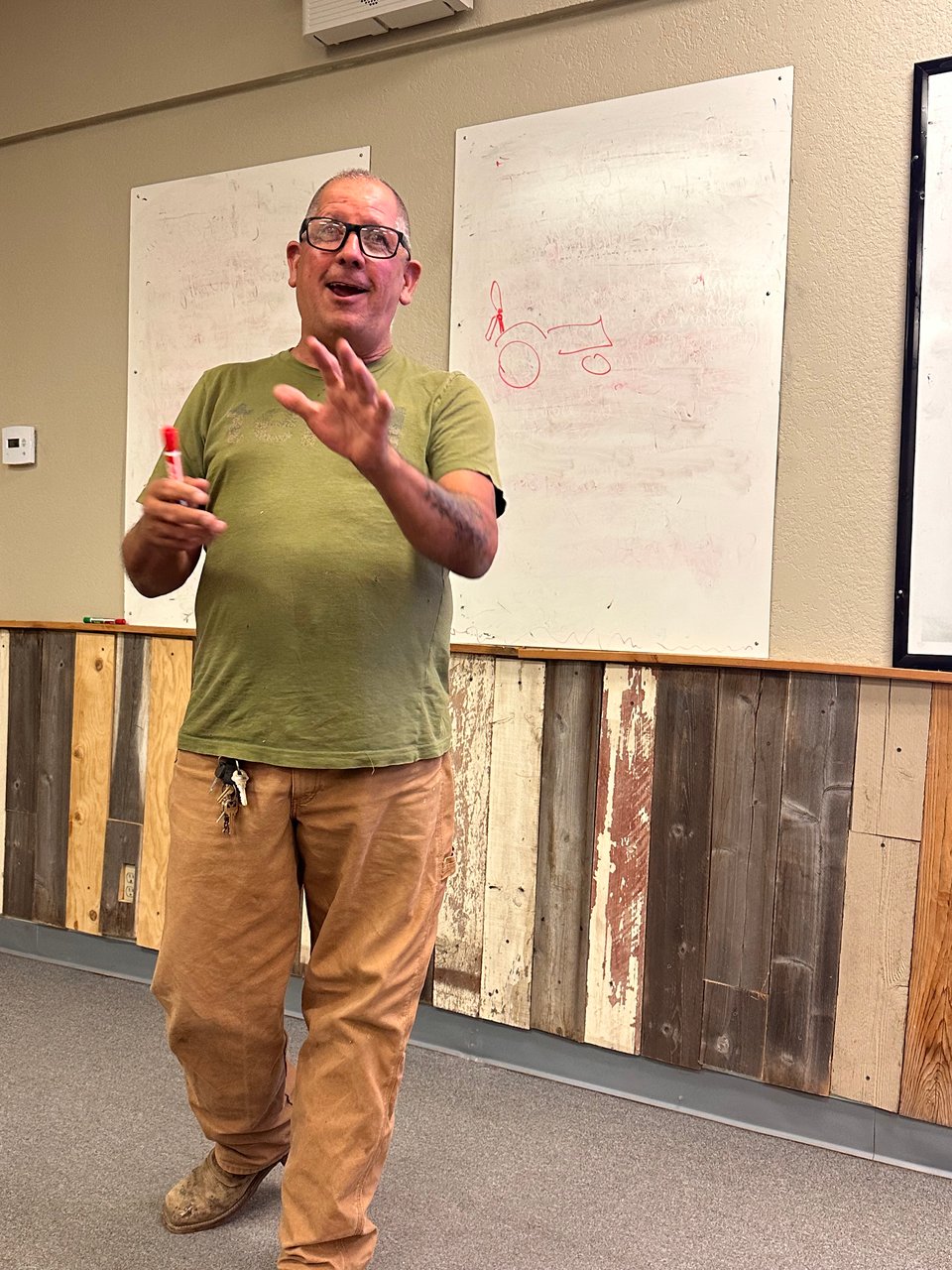
I get to listen to this guy talk about wildlife, tractors, and food systems on Mondays and Wednesday nights. Usually night classes amp me up and I have trouble falling asleep afterward, but my farm class does the opposite. I get home with a spaciousness in my head and heart, like I’m with a bunch of people trying to do the very thing that might just save us all. It staves off the doom I feel when I read about data centers cropping up in communities and the “looming collapse of American farming” due to too-big-for-Swati things like the petrochemical fertilizer crisis, over-consolidation, and climate change.
This experience is more than scratching the trauma I left the food industry with because there are so many parallels between ag and food and supply chains. I know what you’re thinking: duh. But not really, because where the farming supply chain ends, the processed food one begins. They are distinct, but I see the same landscape of profiteering middlemen and brokers leeching growers that do producers.
My family bypassed much of the supply chain overcrowding by being a B2B private-label food manufacturer. We never produced branded food products and Trader Joe’s was our only client. Being private label meant we could eliminate middlemen like brokers, long-haul distributors, salespeople, and rack-jobbers and retain a higher percentage of our production margin. We also benefited from meeting TJs strict ingredient guidelines like “absolutely no preservatives”. (We were already doing that which is why they approached us.)
But like Patrick mentioned, preservatives in big food, and petrochemical fertilizers in big ag, are going to exist either way. If you want small growers and producers to get some of that market share, you really have to vote with your dollars, organize, and ask food buyers where they’re getting their produce and products from.
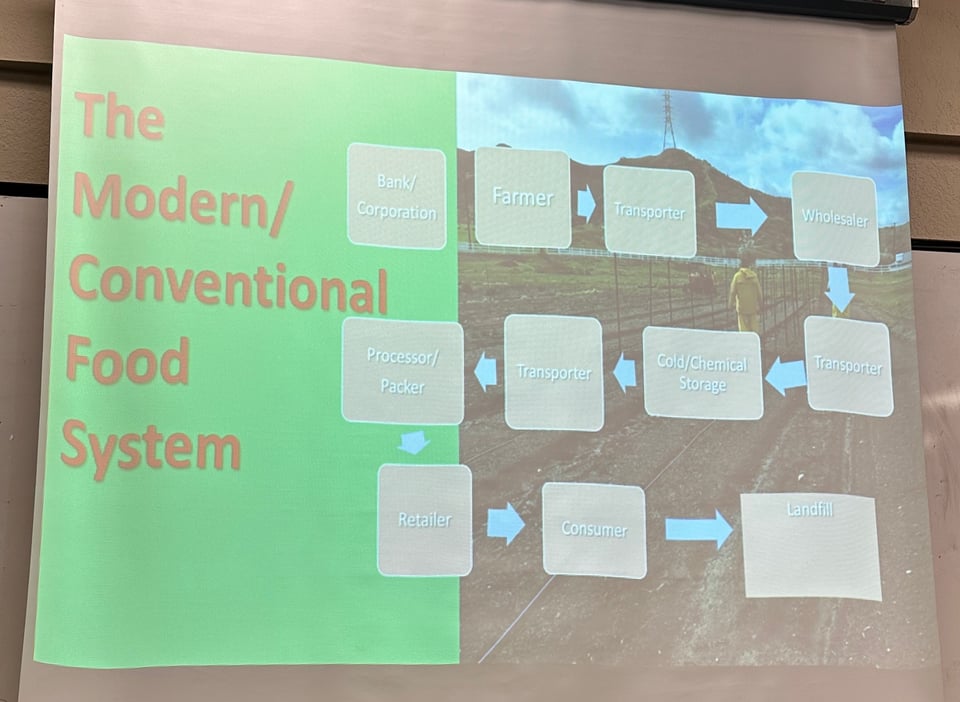
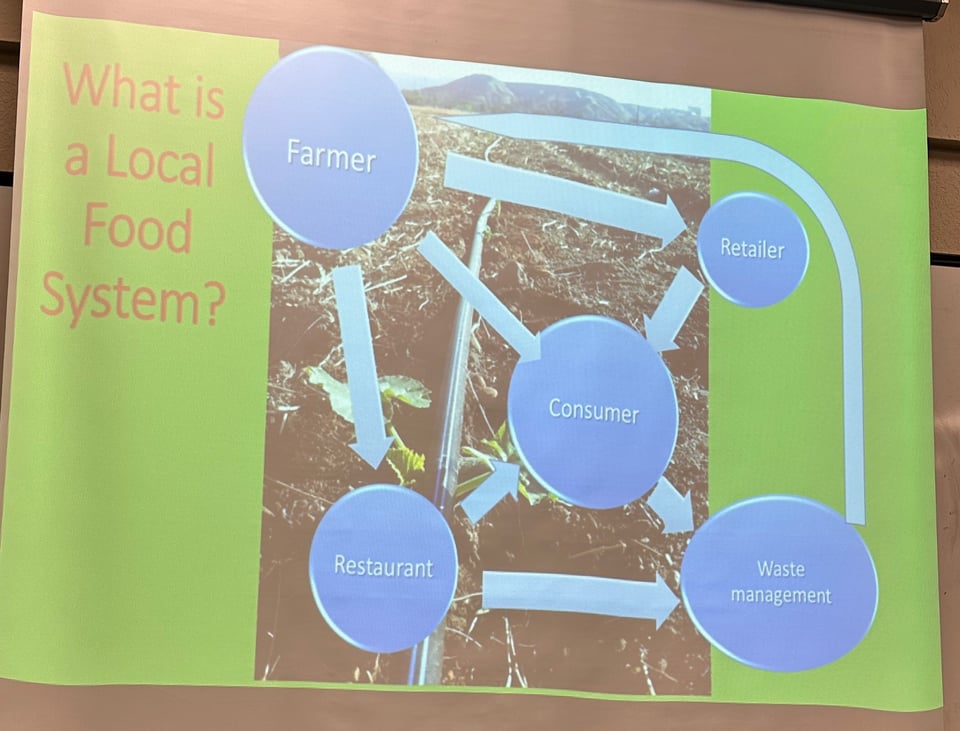
I think the most surprising thing I’ve learned in this program so far is just how profitable small farming can be. Small regenerative farming, if you can manage to find some land to own or lease, is the parallel B2B hack in agriculture because it’s direct-to-consumer and eliminates various blood-sucking middlemen — transporter, packer, wholesaler, retailer in this case. The goal of a wholesaler is to buy as much of a crop from a farmer at the lowest price possible. Having a large ready customer offers farmers security and motivates them to over-consolidate crops. Think, “We’re only growing melons from hereon out!” Never mind what that does to soil, and land and crop sustainability.
According to Patrick, who comes from a long line of soybean farmers in Iowa, large-scale farmers make 8 cents on the dollar for their crops whereas small farmers like the ones we’re trying to be make 80 cents on the dollar. Why? Because in addition to cutting out middlemen, we’re not relying on those expensive chemical fertilizers prone to shocks, fickle government support, and global purchasing, all of which are currently under siege by the Trump administration.
Let me give one infuriating example. Among the thousands of jobs eliminated by this administration were regional reps at agricultural field offices in each county in most states. I’ll just use California as an example, specifically where I live in Riverside County. The office still exists, but there’s nobody in it. Now the Bakersfield (3 hours driving) office services 18 counties in Southern and Central California. These are the highest agricultural producing counties in the country. Regional field offices play an important role in supporting local growers and food systems. Patrick shared the example of a local grower whose combine broke right before a big harvest. Without the combine, he’d lose it all because the harvest has to happen at a very specific time for the crop to be of its highest salable quality. The agricultural field office rep would be the person who would authorize a short term equipment loan for that farmer to get a combine in time, but that support system no longer exists.
I share all of this not necessarily to get political, but to get specific because I routinely run into ignorant bastards who like to speak in platitudes about how Trump is helping the American maker. But when you get specific, when you look into the details and say it out loud, it disarms folks.
Knowing what’s happening on the ground enables us to organize for the causes we believe in. How our food gets to us, who’s guzzling up our water, these things should matter to everyone.
The Santa Ana Watershed
The other night I came home and saw a couple of my neighbors prowling around the cul-de-sac with their phone cameras pointed toward the night sky and I was like, WHAT are yall DOING? And they were like, There’s TWO bats flying around. And I was like WHAT!!! and ran inside and hid under my comforter. It thoroughly spooked me because 1. I’m scared of bats, and 2. We just talked about bats in our Beneficial Wildlife class and clearly those rubber-winged mofos are after me. 🦇🦇🦇
Apparently bats are bueno. I mean, I knew this. It’s just that in Dark Shadows when Barnabas Collins comes back to life in that creepy mausoleum, there’s bats galore. But bad TV vampire associations aside, bats are great nighttime pollinators for native plants like agave and they take care of rodents, so we need to be building bat houses on posts for our properties.
The beneficial wildlife lecture was one of my favorites so far. It was all about setting up a property to go with the grain of nature rather than against it, and how studying the bioregion you’re in, its cultural history, watershed ecosystem, flora and fauna, and natural history is crucial to designing a farm that is as low maintenance as possible. Not that farming is ever low maintenance, but you don’t have to call the Orkin man as much if you learn to work with the bats and coyotes visiting your property anyway.
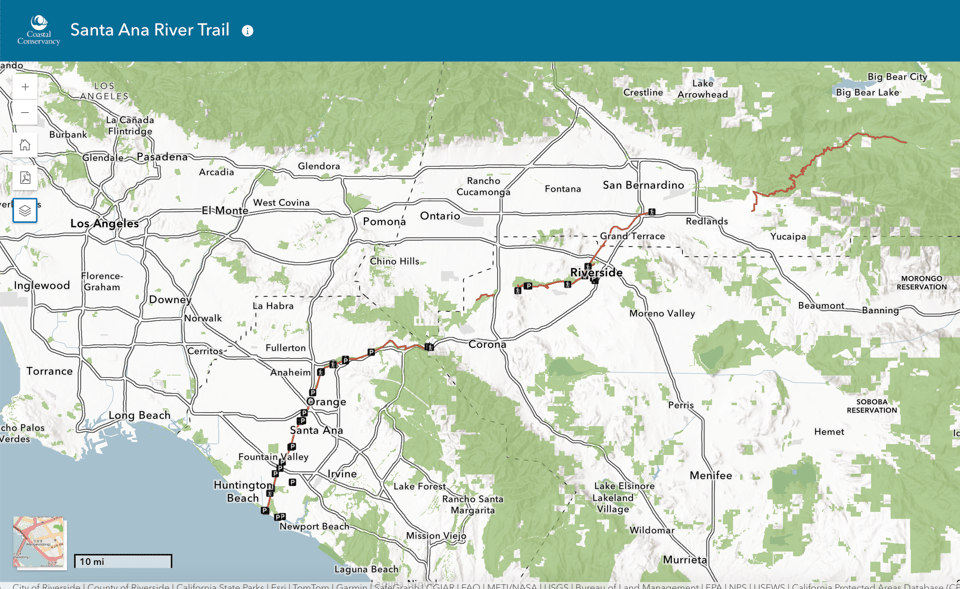
We live in the Santa Ana River watershed, which is “as wild a watershed as any river anywhere,” according to Patrick. He would know because he wrote a whole book about it called the Santa Ana River Guide. “I’ve canoed from the 60 to just before Van Buren!” Apparently there’s Class III whitewater in Gypsum Canyon. (🤷🏻♀️) These are all places I drive through and you can see the river from freeway embankments, like near Indian Truck Trail off the I-15 near my house, but I was curious about the extent of the trail and watershed after Patrick told us the river was the biggest flood threat west of the Mississippi.
I thought about how we experience the river and ag in Southern California in general. The Mississippi has main character energy, whereas here there is no lore of the river other than the river bottom is where the bums hang out, and watch out for needles and burning tires. Mention the Segerstrom family in Southern California and all we think of is South Coast Plaza or the performing arts center. You don’t think of a bunch of lima bean farmers, which is what they were. My point is, there’s a lot of work to do here. Sure Orange County and Hollywood types visit farmers markets galore, but the disconnect between seed to stomach is huge. There’s no respect for place or people. Everybody just wants the final product. (There’s my trauma again.)
Native Plants and Hedgerows
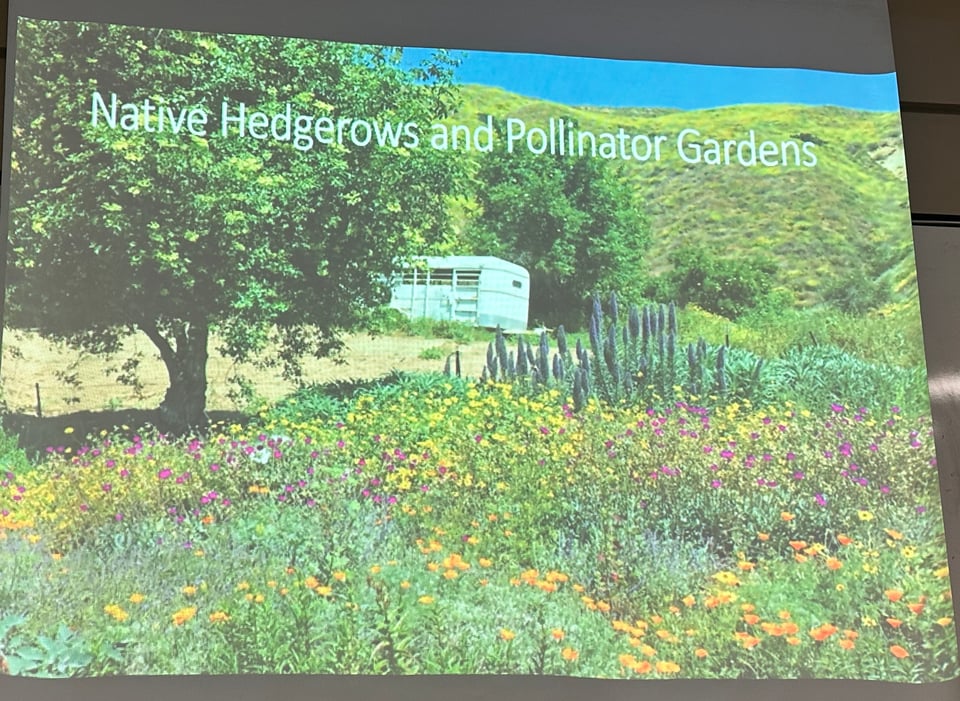
We spent a lot of time talking about native plants for hedgerows — coastal sage scrub, chaparral, grasslands, oak woodlands, riparian woodlands. Hedgerows historically served a utilitarian purpose as borders between property owners. They’re powerful windbreaks. Using native plants to create hedgerows is optimal because they attract beneficial creatures like butterflies, native reptiles, toads, and even skunks. Wild lilac has these perfect little flowers that allow tiny insects to get in. White sage is a super important plant, medicinally and spiritually for humans, but also as a bushy habitat for grasshoppers who are not entirely our enemies.
Patrick kept rattling off plant names as we furiously took notes. Salvias, black sage. Branches turn black with age. Ceanothus purple, white, light blue. They’re all over the local mountains right now. Things got solemn at native bunch grasses, one of the most imperiled plant communities in California. They were replaced by annual grasses that fed cows better. Until all of it died and the cows died. Bunch grasses are important perennials for soil and grass eating animals. They have very deep roots, up to 30 feet in some places, which provides soil aeration, water filtration, and deep irrigation.
Sorry for sounding like a third-grade Native Plants book report. But as I review my notes now, I realize yet again that we are the problem. This place was doing just fine as a closed beautiful loop without us. But our hand has been so heavy. Unlike indigenous communities who respected the land, took what was given, and practiced non-invasive cultivation, modern man has sought to be maximally extractive. It makes me think of the AI boom, how good humans just trying to survive are all of the critters in the hedgerows, the hoppers in the sagebrush, the tiny toads in the bunchgrass, and this careless, loveless, thoughtless system is mowing it all down.
Books and Articles!
Here are some fresh recommended reads from Patrick with verbatim notes I’ll add to the Google Doc.
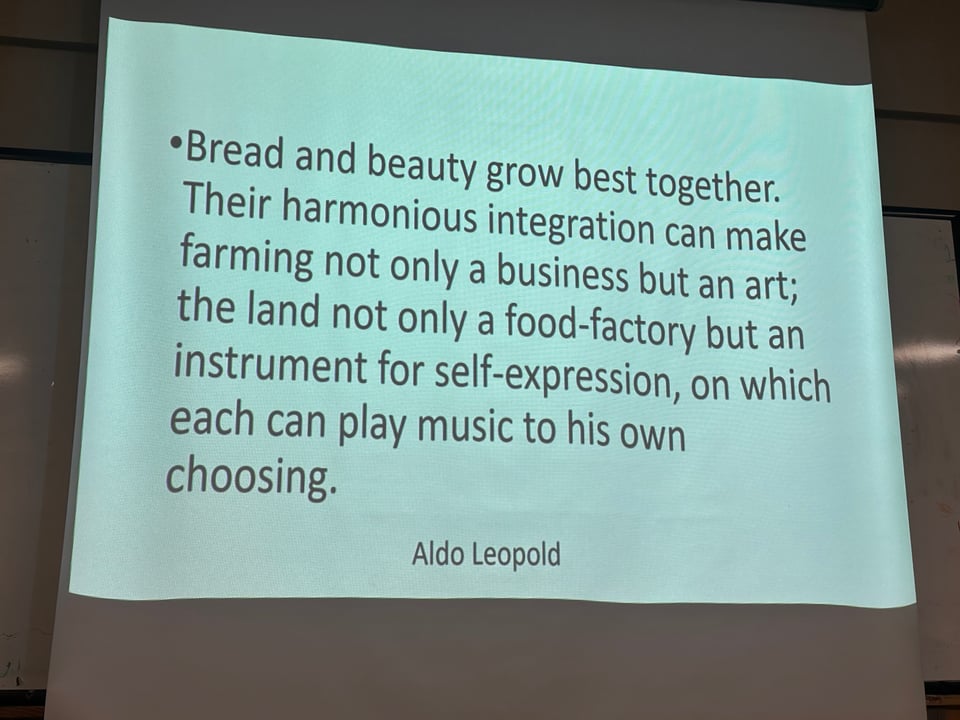
A Sand County Almanac by Aldo Leopold. Must read this book 2X a year!! Godfather of modern ecology!! Introduced concept of land ethic!! Super important read!!!
The Unsettling of America: Culture and Agriculture by Wendell Berry. First person to really stand up for small farms at a time when the US Dept of Agriculture was saying, “If you can’t get bigger, just get out.” (This triggered me because this kind of messaging from regulators and industry prompted me to sell our family food business.” There’s so much more to small operations. It’s about community, it’s about neighbors, it’s about relationships. It’s about social capital!
Farm City: The Education of an Urban Farmer by Novella Carpenter. Truly an urban farmer growing stuff in the middle of Oakland in a neighborhood that is not seeing its best times. Takes over a vacant lot, she keeps goats, and pigs. Students fondly refer to her as the “crazy lady from Oakland.”
On Good Land: The Autobiography of an Urban Farm by Michael Abelman. A real voice for small scale organic agriculture, started Fairview Farms in Goleta, now he farms on a little island in the Northwest.
(I’m bummed because I ordered the first two on this list and according to ThriftBooks they were delivered to my mailbox, but there’s nothing in there.)
I’ve read some great articles and perspectives lately on the current state of farming.
Offrange / Where’s the smoke? — College student Nicholas Allen investigates why farmers in America are still sleeping through legislative crises like the forever-stalled Farm Bill while those in Europe are staging dramatic protests. What has activism become? Is it just posting on social media? What will it take for farmers to organize and show up in Washington again? Sidenote: I wrote into Nick and he is so passionate about the cause. Young people like him are our hope. Go Nick!
NYT / The Last Days of Butter Ridge - Reporter Eli Saslow covers the Watson family as they liquidate their dairy farm. This was a heart wrenching portrait, not of a farmer, a mythic individual in American culture, but a family with young children. It’s important to remember these are multi-generational households experiencing extreme grief and loss. I was especially struck about the story of Boyd, Brad Watson’s 14 year-old son who wants to continue the family enterprise, but can’t as it stands now. In him I saw many of my own students pining for rigorous, devotional, purposeful work. We’re failing to preserve pathways like family farming for them. This story broke my heart and I was not alone. The good news is that I’m working with Patrick to develop an EAT! + Good Youth Jobs (youth employment nonprofit I run) paid work-based learning opportunity for high school students. This article was direct inspiration for that. Can’t wait to share more soon!
If you made it all the way here, thanks for reading. Sorry for being off-schedule. It’s the busiest time of year for me with the academic year coming to a close and I’m trying my best to not let anyone down (and also not drop dead.)
Patrick keeps saying that these are the most boring classes because we’re sitting in chairs talking as opposed to roughing it on the land, but I’m grateful we’re easing in.
I’ve become really interested in the policy side of things and am exploring how to get more involved there starting this summer. Let me know if you have ideas, and see you next time!
-
Okay but did you get the pun in your subject line - nature 'bats' last?? Where is the bat emoji when I need it? Seriously, though, my dad was in a dream with me over the weekend and bats featured prominently. My mom was such a fan of bats, and there's a poem in my book that references that...and then I was reading this Sharon Blackie book that reminds me of all that's swirling for you in this newsletter, it's called "If Women Rose Rooted" and she talks about how bats symbolize rebirth. !!!
-
-
I keep coming back and re-reading this essay. Genuinely one of my favorite pieces of writing from 2026 so far. (And: "We just talked about bats in our Beneficial Wildlife class and clearly those rubber-winged mofos are after me" will never not make me giggle.)
Add a comment: