2026 Nᵒ32 - Divergent thoughts
Acknowledging the importance of divergent thinking in Playback Theatre and improv

London, 11th of August 2026
👋 Greetings, dear readers.
I’m having a pretty chill August so far (too chill) without many gigs or travels, and I’m constantly reminding myself that it’s okay to have a period of rest and catch up on books, movies, and games…
Through a combination of observing new players at last week’s open Playback Theatre rehearsal and going through my notes from my Applied Theatre Master's, I got a fresh reminder of the importance of divergent thinking in Playback Theatre and, of course, improv.
For a Playback Theatre newcomer, when hearing a story, their logical instinct is to echo and replicate it literally. For an improviser, when hearing the word “spaghetti,” logical thinking will take them, most likely, to a kitchen or a restaurant. Divergence comes when we play to subvert the things we take for granted, taking them into the realm of the unexpected, or at least away from the immediate path set by our logical thinking.
Divergent thinking is the opposite of (convergent) logical thinking. When we see a bucket, logical thinking tells us it is meant to hold liquid, most likely water. Through the lens of divergent thinking, that same bucket could be a hat, a drum, or a cannon. Many improv exercises use this exact premise to develop and train this divergent thinking.

By no means am I saying that following logical thinking in art is wrong. But as performers, we have a duty to challenge it. That is what makes art compelling. René Magritte, Leonora Carrington, or M.C. Escher in painting; David Lynch, Luis Buñuel, or Yorgos Lanthimos in cinema; Samuel Beckett, Eugène Ionesco, Angélica Liddell in theatre… We can find endless examples of subverting expectations across every art form.
There are also those who try to monetize divergent thinking by keeping it on rails to fulfil logical expectations. They call it “lateral thinking” though, which is huge in corporate settings: a bastardization of creativity to achieve the happiness of stock holders. This is where the 'thinking outside the box' corporate trope comes from. Be creative, but keep us happy.
As much as I hate to admit it, when creativity can be profitable, we have to thank the investment in its research, in the same way prominent scientific advances came from research in warfare. That’s how techniques to boost creativity and divergent thinking came about, like the SCAMPER technique, which is an acronym for Substitute, Combine, Adapt, Modify, Put to another use, Eliminate, and Reverse. Luckily enough, this techniques have been brought also to the education setting.
Of course, not every tool created to incentivize creativity was developed for a profitable result. The Dadaists were an anti-establishment art movement that also created techniques to squeeze creativity out of us, like 'The Exquisite Corpse.' The pursuit of unleashed creativity with the sole goal of artistic expression is romantic, and it lies at the bottom of the well of divergent thinking. We all have the power to fill this well to make it more accessible to our craft.
Because this is a short newsletter, name-dropping these techniques is as far as I will go, so I encourage you to explore and practice any of the tools created for enhancing divergent thinking, hence leading to increased creativity levels and improving, in the process, your Playback Theatre and/or improv skills.
🫶 Stay hydrated, love to you all.
🎭 The Theatre bit
Another week, another play in Catalan. This time I read @Rita_Trobador by Valencian playwright Joan Nave, an exploration of the role of women throughout history, from medieval times and the 15th century to the present day, marked by technology.
I always step with caution into feminist plays written by men, but then again, Ibsen gave us A Doll’s House. In this text, Nave successfully presents three distinct and empowered women with the courage to speak up: Azalais de Porcairagues, a female troubadour; Isabel de Villena, an abbess and pioneering Valencian writer; and Rita, a female YouTuber.
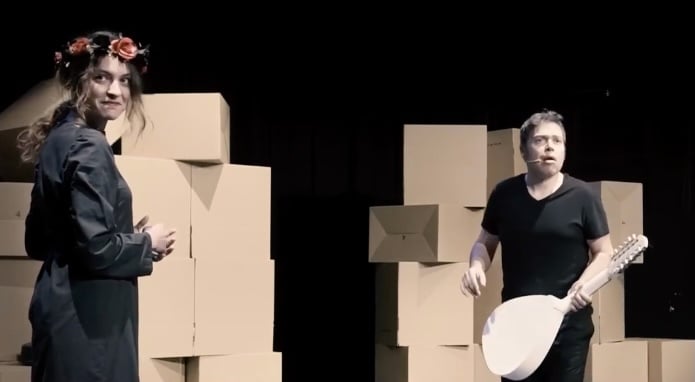
The nexus between the three female figures featured in the play is the power to speak up; they all had a platform unattainable for most women. The play presents how this notoriety helped them navigate male-centric societies and how their voices affect and threaten the status quo of the men around them.
Despite tackling an important message, the text remains light and direct, making the play very accessible. Truly enjoyable.
📆 What is coming up
🇬🇧 14th of August - Acaprov at Shoreditch Balls (London, UK). August tends to be a void for those staying in the city, why not filling it with fun and music? Join us for a good time. Tickets here.
🇬🇧 11th of September - Acaprov at Shoreditch Balls (London, UK). For so many people, September is a time for another beginning. Kick off the academic year with a musical. Secure your sit.
🇲🇹 18th of September - Intro to Playback Theatre (Valletta, Malta). I´m honoured to be part of the facilitator roster attending the Improvizza! festival in Malta. I´m excited to introduce Playback Theatre to improvisers there. Tickets here.
🇬🇧 27th of September - True Heart Theatre open rehearsal (London, UK). We are going to be hosting another open rehearsal at the end of the third quarter. Bring your curiosity and experience Playback Theatre in a safe space. Free registration here.
📚 🎮 🎥 📺 The geeky dessert
This week, this section is right on point with the main topic. One of the things that can put your divergent thinking to the test are the point-and-click adventure games that started to proliferate during the ’90s. I know I’m relying on nostalgia here, but (using my old man voice) back in the day, we used to solve the puzzles in adventure games without the help from the internets.
Titles like, among many others, The Secret of Monkey Island, Indiana Jones and the Fate of Atlantis, and Day of the Tentacle were filled with situations that required us to ditch logic and come up with creative solutions to overcome problems and progress in the story. And the stories were great, probably the main reason that made me love narrative driven games.
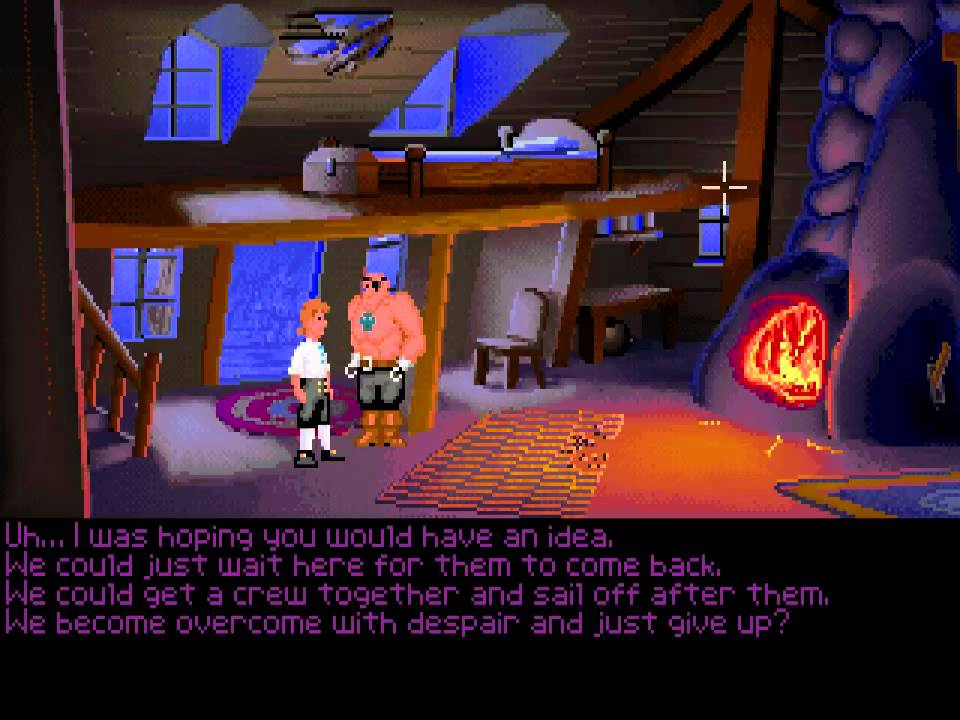
Of course, each title might differ in difficulty and the amount of mental somersaults required to reach a solution. If you haven’t played any of those games in over more than three decades of their existence, now is as good a time as any. Luckily, you can play many of them online, like the one with the pirates, the one with the guy in the fedora, or the one with the young weaver.
📨 That’s all for now
Thanks for reading Playing Back an Improvised Life, a newsletter by Ferran Luengo.
If you like it, spread the voice and share with someone who you think might enjoy it.
If you want to keep in touch, feel free to follow me on instagram (@luenkun).
Want to work with me or start a conversation? email me 😀
Want to support me? You can do it through my Ko-fi page

Ferran Luengo AI Disclaimer: Since English is not my first language, I may have used AI tools to proofread the text, limiting their use to grammar only. Everything in this newsletter has been written by me
Add a comment: