2026 Nᵒ23 - Widening from the personal
Reflecting on blending political narratives with personal experiences in Playback Theatre
London, 9th of June 2026
👋 Greetings, dear readers.
No life updates last week. The weather got worse and I’m dealing with a season of fewer gigs, but I didn’t allow that to alter my mood. 🙂
The weekend was busy; we had the privilege of having my friend, colleague, activist and brilliant Playback Theatre practitioner Michele Chung delivering an intensive about navigating the political dimension of stories. Of course, I want to take the chance to use this newsletter to settle my thoughts and reflect on the experience. So, yes, here’s me again being a political extremist.
Using techniques from Theatre of the Oppressed (TO) in the workshop was refreshing. I always love when there’s an opportunity to use them to spark a better playback practice. The thing is, TO works with a wider scope to raise issues of social injustice and to trigger reflection and discussion, while Playback Theatre focuses on the individual experience. How to mix them both is still something worth exploring.
In Playback Theatre, while dealing with stories heavily charged with political context, it’s challenging to find a balance of featuring the sociopolitical dimension without drifting from the personal experience of the teller. We’ve noticed, during our practice, we tend to largely feature the wider scope of an issue and forget the direct impact on the teller. Also, the other way around occurs, we focus too much on the teller’s inner journey and the political dimension tends to be neglected.
During the workshop though, thanks to Michelle, I realised it’s always better to work from the personal to the political and not the other way around. We have to paint the personal experience in the canvas before adding the context and nuances surrounding that experience.
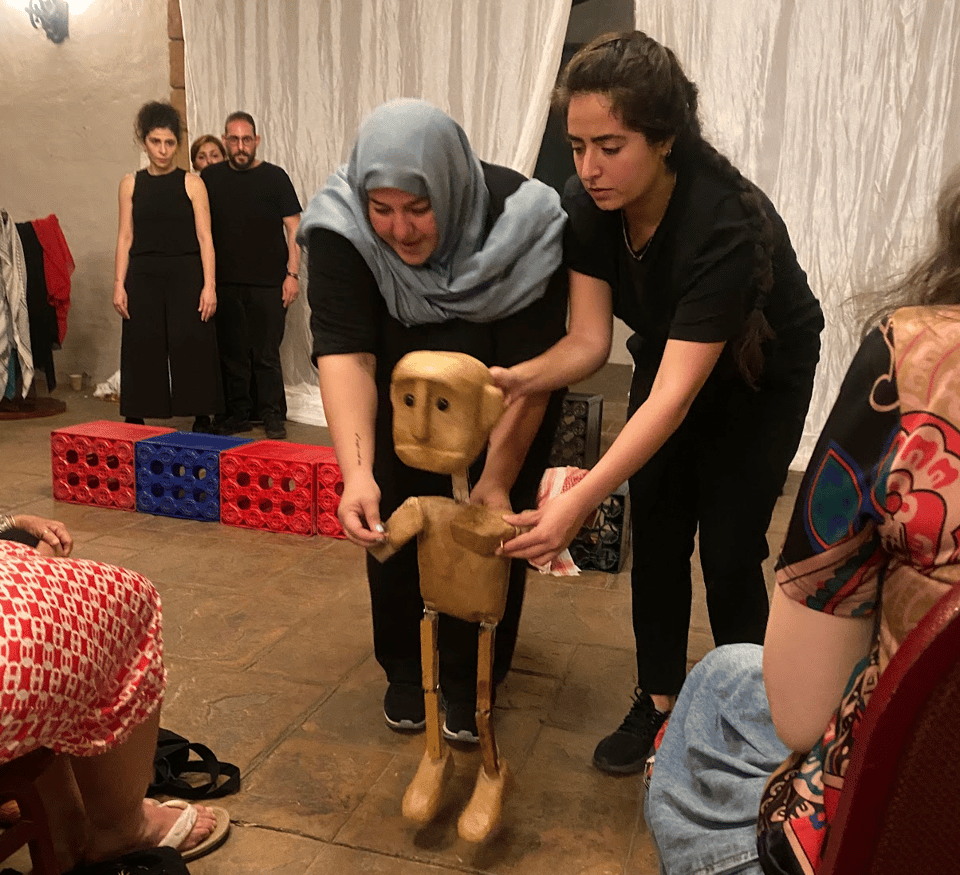
It made me think about the time I watched a performance a couple of years ago by the Lebanese company Laban لَبَنْ , a group always struggling with the invasive attacks of Israel, now more than ever. In their performance, they showed lightness and, sometimes, even humour before adding the layers of social context to very harsh stories.
Now, there’s the question: Do we need to bring the political aspect of a story into Playback Theatre? I’d say, in general, yes, but context matters. I’d never shoehorn a political dimension into a story about a relationship breakup or about a happy celebration of a life milestone, for example.
However If you look closely, most stories have a political dimension. Dealing with unemployment, struggling with health, trying to get a place to live, emigrating to another country, even our food choices… We live in a society where everything has to do with politics. As a form of theatre bound to community engagement and social change, it’s kind of our duty.
Of course, not all Playback Theatre practitioners agree with the inclusion of politics in the art form. Why? Well, maybe they are afraid of being judged, or of having a mirror put in front of them. Believe it or not, there are right-wing-leaning playbackers, always tiptoeing around the progressive pigsty that is the world of arts.
To wrap up my reflections on Michele’s workshop, another valuable tip I’ll definitely be adding to my practice is to always be led by curiosity when conducting. Following these little “what, how, and why” moments helps extract the rich details that offer clarity and context, both for the actors and, most importantly, for the audience, ensuring everyone is on the same page.
That’s the beauty of continuous learning: no matter how long you've been doing this, there’s always another nugget of wisdom waiting to be found.
Love to you all. 🫶
🎭 The Theatre bit
Rather than reading, last week I went to an actual theatre and put my butt on a seat to enjoy the wonderful performance of Jinkx Monsoon in End of the Rainbow writen by Peter Quilter in 2005.
I must admit that I went to the beautiful SOHO Walthamstow theatre drawn by Jinkx herself, as I’ve always resonated with her representation for the misfit and neurodivergent. What I found is a genuinely great and emotional theatre piece.
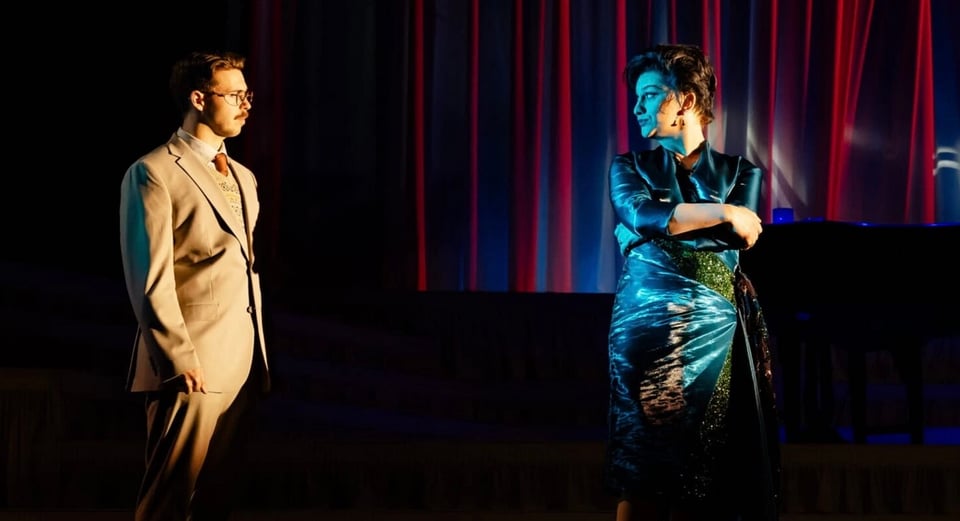
The play offers a window into the final days of Judy Garland's London residency, a period marked by the artist's struggle with pill and alcohol addiction. It is an intimate production, featuring a gut-wrenching and brilliant performance by Monsoon, who is well supported by Jacob Dudman and Adam Filipe as her manager (and fiancé) and pianist, respectively.
If you are in London, you can enjoy it until the 21st of June. If you’re not, add it to your bucket list.
📆 What is coming up
🇬🇧 12th of June - Acaprov at Shoreditch Balls (London, UK). Join us once again for a brand-new improvised musical. What kind of inspiration will we find with summer within reach? Tickets here.
🇧🇬 20th-21st of June - Level 2 Playback Theatre Training (Varna, Bulgaria). Excited for going to Bulgaria for the first time to deliver my “Honouring Stories with your Voice” intensive. Looking forward to meeting the Playback Theatre community in Varna. Info here.
🇬🇧 10th of July - Acaprov at Shoreditch Balls (London, UK). Stranded in the city with no holidays? So are we! Come and have musical fun with us. Get your tickets.
🇲🇹 18th of September - Intro to Playback Theatre (Valletta, Malta). I´m honoured to be part of the facilitator roster attending the Improvizza! festival in Malta. I´m excited to introduce Playback Theatre to improvisers there. Tickets here.
📚 🎮 🎥 📺 The geeky dessert
To end on another political note: I have already finished reading The Dispossessed by Ursula K. Le Guin, my introduction to her work. The book tells the story of Shevek, a physicist from Anarres, a planet under anarcho-communist rule, who visits its twin planet Urras, which boasts a capitalist system.
The book's chapters alternate between Shevek's past and present experiences across both planets, and the final convergence of these two timelines is very satisfying.
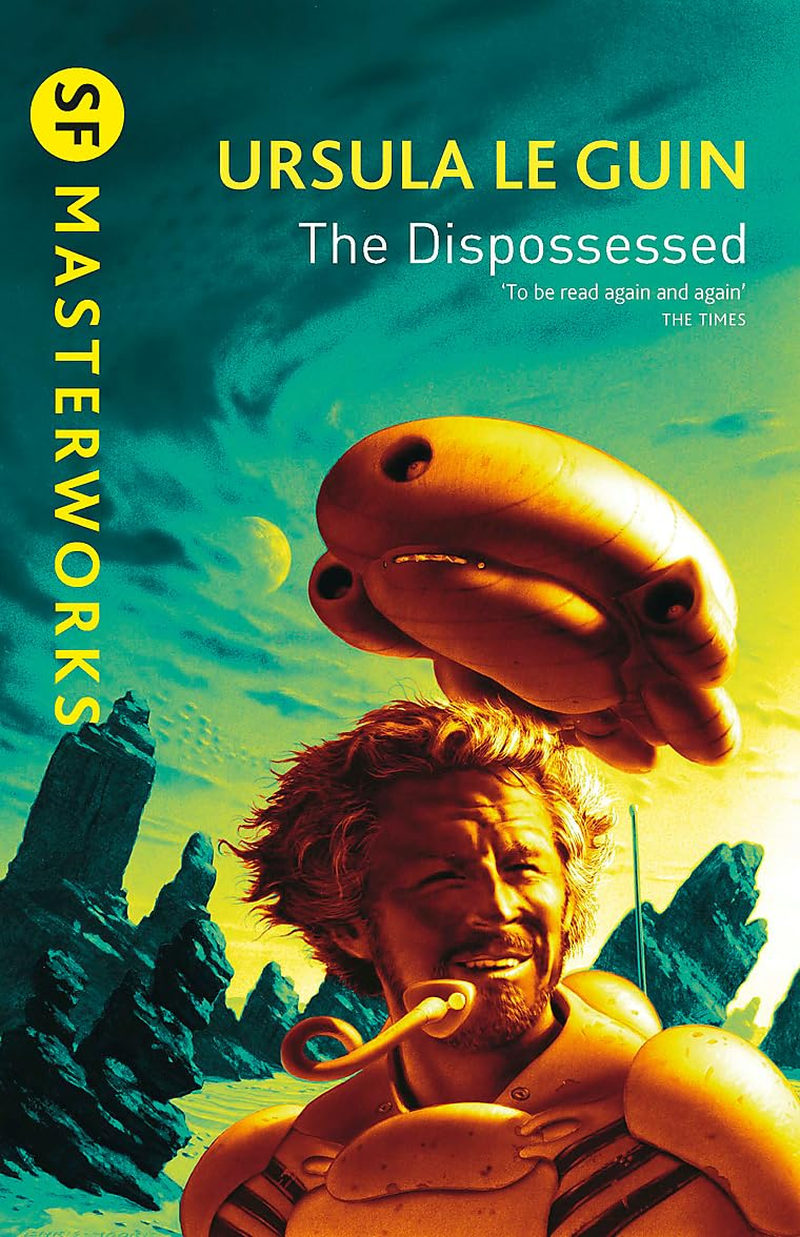
Overall I liked it, although I must admit it took me some time to read it. The book is dense and the pace of the action is slow. The brilliant setting acts as an excuse to introduce essay-like monologues and dialogues, presenting all the issues with the different political system of both planets. I don't mean this in a negative way, but by this succession of interesting speeches and discussions, leaves little room for actions that trigger that page-turning motivation of 'what will happen next?'.
I can certainly tell why Le Guin is a highly revered sci-fi author, and I’m now curious to experience her fantasy side.
📨 That’s all for now
Thanks for reading Playing Back an Improvised Life, a newsletter by Ferran Luengo.
If you like it, spread the voice and share with someone who you think might enjoy it.
If you want to keep in touch, feel free to follow me on instagram (@luenkun).
Want to work with me or start a conversation? email me 😀
Want to support me? You can do it through my Ko-fi page

Ferran Luengo AI Disclaimer: Since English is not my first language, I may have used AI tools to proofread the text, limiting their use to grammar only. Everything in this newsletter has been written by me
Add a comment: