2026 Nᵒ16 - The tip of the conducting iceberg
Some advice for upcoming Playback Theatre conductors

👋 Greetings, dear readers.
It is nice addressing you all while the sun is shining on the other side of the window. After a delayed spring in London, this is more than welcome and inspiring.
Last week, I was contacted by a young playbacker worried about conducting a performance for the first time, so they asked for tips. First times can be nerve-wracking, and conducting a Playback Theatre performance is not only challenging but a responsibility. I want to take the chance to open up my answer to all of you.
For those who are here just for the improv, the conductor in Playback Theatre is the one acting as a nexus between the audience and the performers. Think of them as a kind of MC or host, who is also the one to bring out the stories from the attendees while keeping a safe space.
Everyone’s path to conducting is different so I’ll share the stations I hit during my personal journey, one that’s still going.
Read
The first time I took on the role of conductor was after I had been acting for around three or four years. I remember reading over and over the chapter about conducting in Jo Salas’ book, Improvising Real Life prior to my conducting debut. There are many books and articles that you can find. I also suggest you to check the archive of the IPTN Journal for a journey through articles spanning decades.
Watch
Seeing other conductors in action is a good way to notice patterns and little things that you might want to adopt. When I started doing Playback, there were hardly any other examples since this art form was fairly new in Spain. I had the privilege of attending my first international gathering in Japan in 2017 and I learnt a lot there, watching many performances and styles of conducting.
Facilitate
I’ll admit that this is easy for me to say, since I have academic training in facilitation. I literally work as a facilitator, and that makes my approach to conducting quite similar. I’d say that if you are a facilitator, you are halfway there. If you are not, find chances to do so and try facilitating groups. Can be leading rehearsals or running workshops for your community. Getting familiar with working with groups is very helpful whenever we are facing a Playback Theatre audience.
Be yourself
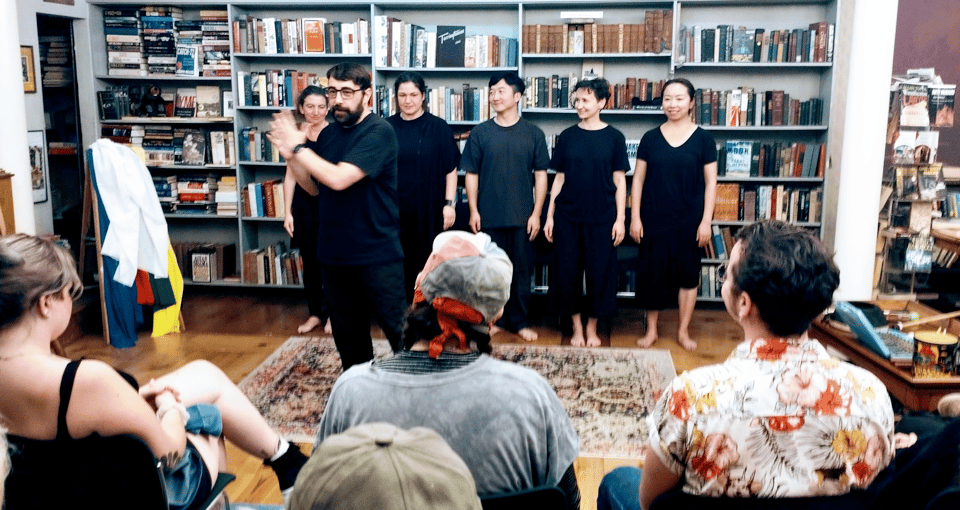
This sounds cliché, I know, but the closer you are to yourself, the more at ease the audience will feel with you, and the more likely they will be to open up and share. I’ve seen wannabe newbie conductors trying to adopt a persona to facilitate, adding an aura of 'guru-ness' to their facilitation that becomes very cringey. It’s true that Playback Theatre has a ritual that we need to hold, but it’s nothing liturgical. There are no walls, only lines on the ground. You need to be a peer to the audience, so don’t be afraid to address that a story resonates with you as a person as well. Don’t hesitate to say “Oh that happens to me as well, anyone else?” inviting the rest of the audience to raise their hands if so.
Listen and don’t overwhelm the teller
When listening to the stories, just listen and don’t try to ‘steal the thunder’. Don’t ask too many questions, especially the “How did you feel?” one. That’s a very good tip I got from fellow playbacker Gerry Orkin, it’s better to make assumptions and let the teller correct you than to make them feel as if they are in a therapist's chair. If you add something, make it conversational.
There are people who don’t feel comfortable making choices. If you have to ask the teller to choose someone to play them, give them time and don’t make them cast anyone else for other roles. Just casually present the possibility.
Recap and be open to everyone else
During the interview don’t forget about both the audience and the performers, looking at them every now and then.
One thing I do is, both for myself and the audience, I tend to recap the story and let the teller correct if I get something wrong. I personally do this because I mostly conduct in a third language and I want to make sure my neurodivergent brain got it right. I also like to come up with a title, but that’s just me. Some conductors ask the teller for a title, or they just don’t.
Choose an appropriate form
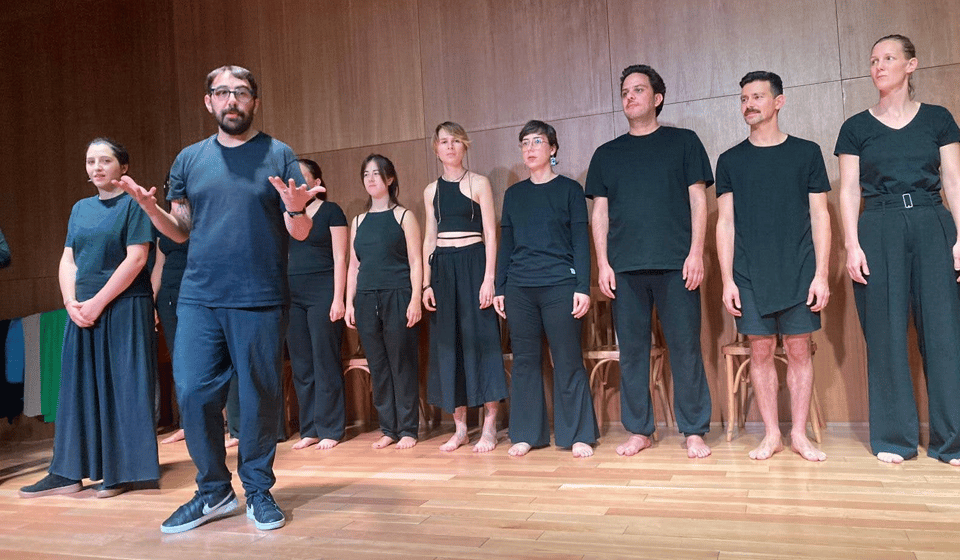
When it comes to choosing the form you want the performers to do, keep in mind what kind of story it is. The lighter the story, the more at ease you can be with your choice. The deeper the story—potentially touching on trauma—the more symbolic the forms need to be.
Don’t be afraid to call for a short form in the later stages of the performance with the teller in the designated chair. Sometimes there is not much more we can extract from the teller.
Whatever you do, please don’t tailor or steer the interview towards showcasing a specific form. Respect the teller’s process of sharing.
Properly wrap the reenactments
After a reenactment, first thank the performers. I stress the word performers to make it inclusive of the musician as well. That is a tip I took from British playbacker Steve Nash, and it went straight into my MO.
Check the teller’s reaction. Most of the time it is positive, even with tears involved. Let them breathe and don’t rush things before asking how it was. I personally don’t ask “Did you see your story?”. I choose to ask “Did the performers honour your story?”, as a reminder of the metaphorical and symbolic work that we do.
Only if you notice something is off should you might ask “Was there something missing?”. If there was, ask the performers to do a short form focusing on that aspect.
And there you go, these are my tips. Things that I keep in mind whenever I have to conduct. Probably something slipped from my mind, but you get an idea.
Of course, another conductor might read this and disagree, rightfully so. There are as many styles of conducting as personalities and people. This is what works for me.
Mind that there is no such thing as the perfect conductor nor the perfect Playback Theatre performance.
Love to you all! 🫶
📆 What is coming up
🇬🇧 1st to 4th of May - Two Islands Playback Theatre Gathering (Buckden, UK). Join playbackers from UK and Ireland on a long weekend of camaraderie, connection, and, of course, Playback theatre. Check the information.
🇬🇧 6th of May - Not GCSE Drama at Hoopla! Impro (London, UK). The most dedicated drama students are coming back to Hoopla for another exam. They are a nervous wreck, care to come and show support?
🇬🇧 8th of May - Acaprov at Shoreditch Balls (London,UK). After a delightful show in April, we wonder how our next musical will go. Care to find out? Get your tickets here.
🇬🇧 10th of May - True Heart Theatre 20th Anniversary Playback Theatre Performance and Jam (London, UK). Kind of self-descriptive. Join us in the celebration of the company. Come for the performance, stay for the hot pot. 😁 Info and tickets here.
🇬🇧 15th to 17th of May - Acaprov at The Brighton Fringe (Brighton, UK). I’m going to be in Spain during this year’s Brighton Fringe but I encourage you to enjoy a batch of improvised musicals at the Brighton Fringe by the hand of my dear friends of the Acaprov cast. Check dates and tickets.
📚 🎮 🎥 📺 The geeky dessert
Live-action adaptations of anime don’t have a good reputation. Worlds so colorful and over the top are often difficult to translate to the real world aesthetic. But what if it’s okay to skip the realism and simply embrace all the color and plasticity? That’s exactly what the showrunners of Netflix’s One Piece did. And surprisingly, it works.
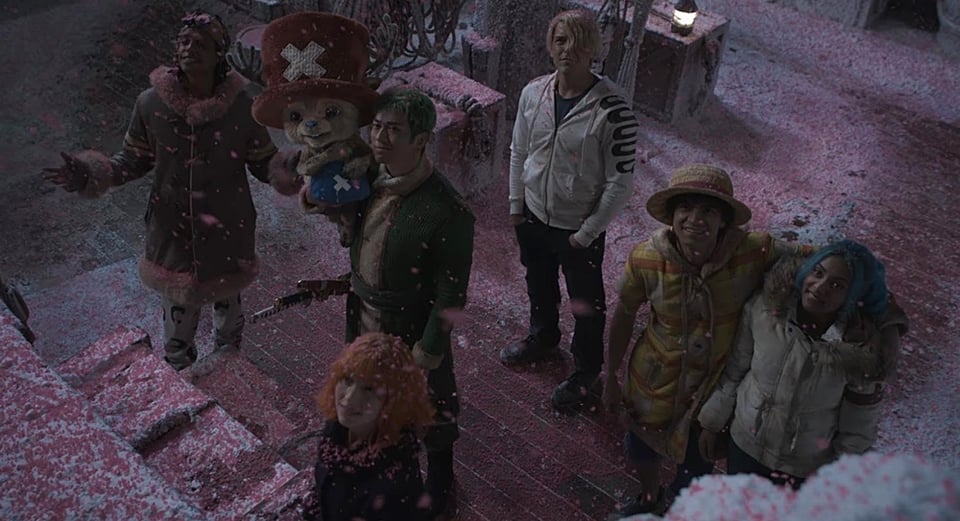
Last month, Netflix released the second season of the live-action adaptation of Eiichiro Oda’s manga, and it lived up to expectations after the long wait. The new batch of episodes introduced new adventures and beloved characters (Chopper 😍) that didn’t disappoint fans of the source material.
Yes, it’s campy and looks like a cosplay convention, but the show understood the assignment; it adopted a very clear code that makes it work incredibly well. I just hope I don’t have to wait another two years for the next season!
📨 That’s all for now
Thanks for reading Playing Back an Improvised Life, a newsletter by Ferran Luengo.
If you like it, spread the voice and share with someone who you think might enjoy it.
If you want to keep in touch, feel free to follow me on instagram (@luenkun).
Want to work with me or start a conversation? email me 😀
Want to support me? You can do it through my Ko-fi page

Ferran Luengo AI Disclaimer: Since English is not my first language, I may have used AI tools to proofread the text, limiting their use to grammar only. Everything in this newsletter has been written by me
Add a comment: