2026 Nᵒ04 - and keep telling
Uncovering how storytelling skills enhance improv and Playback Theatre, plus upcoming performance gigs.

Greetings, dear readers. I hope you had a pleasant week despite the state of the world’s geopolitics. Even though we are still in winter, it feels as though we are leaving the harshest part of it behind, something I’m grateful for, since I have to travel around London for my storytelling gigs and it’s harsh to move around with bags of props under bad weather.
Speaking of storytelling, in last week’s newsletter, I shared some tips for the craft. As I promised then, I want to share what I carry over from storytelling whenever I’m performing improv or Playback Theatre.
When improvising, knowing how to tell stories helps you to create a better structure of the scenes you are in, hinting which directions it may take. Narrating as a character is also a good choice to help creating a more grounding scene, you can draw from your own experience or take from fiction to make it your own. As long as you tackle your narration with honesty you will be able to connect those anecdotes (either real or not) with your scene.
Depending on the style of improv we are doing, we can allow ourselves to break the fourth wall. In long-form, narrative improv, it’s a valid option to present a character to the audience through a monologue. This will allow to set up the scene, describing an event relevant to the story, while adding three-dimensionality to the character.
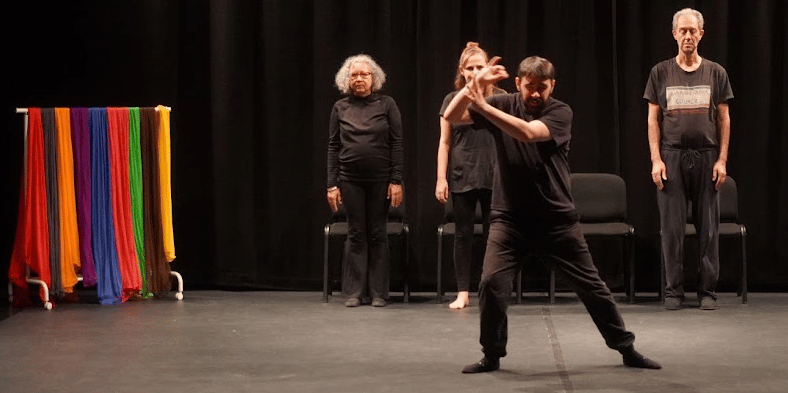
In Playback Theatre, on the other hand, storytelling is its raison d’être. Without storytelling, there is no Playback Theatre. However, I want to differentiate between the story told by an audience member to be played back, and the use of storytelling as a tool while reenacting that story.
Plenty of Playback Theatre forms allow space for storytelling during the reenactment. Some of them, such as monologues (solos) or three-part (or four-part) story, are pure storytelling from different perspectives. We can always “Rashomonize” a story to give it texture and depth through different approaches, while always trying to honor the story as it was originally told. Also, one of the perks of Playback Theatre, is that you don’t need words to tell a story.
Of course, I refer you to the tips I mentioned in last week’s newsletter to enrich your storytelling.
📆 What is coming up
🇬🇧 31st of January - Playback Theatre taster workshops (London, UK). We will be running a couple of Playback Theatre taster workshops throughout the last Saturday of January, running two different groups, one in the morning (which I’ll be co-running) and one in the afternoon. Book morning workshop. Book afternoon workshop.
🇬🇧 13th of February - Acaprov (London, UK). Right at the door of Valentine’s Day 💞 we’ll offer a new a cappella musical at Shoreditch Balls. Get your tickets.
🇬🇧 15th of February - Lunar Year Playback Theatre Performance (London, UK). I’ll be coaching next True Heart Theatre’s performance to welcome the new Chinese lunar year. More information and tickets here.
🇩🇪 14th-15th of March - Playback Theatre Level 2 Intensive (Berlin, Germany). I’m going the capital of Germany to offering a two days intensive. Looking forward to it. If you are around check it out.
🇩🇪 21th-22nd of March - Playback Theatre Level 2 Intensive (Hamburg, Germany). And also, I’ll wave the Winter goodbye while offering the same intensive in Hamburg.
📚 🎮 🎥 📺 The geeky dessert
Last year, I read a lot of theatre, but this year I want to dive into more fiction. I have a huge pile of recommendations, but in the little time I spend at home, I tend to reach for a movie or a game. However, I do have a lot of commuting time, and my partner gifted me the perfect device for it: a BOOX Palma 2. (This newsletter is not sponsored 😛)
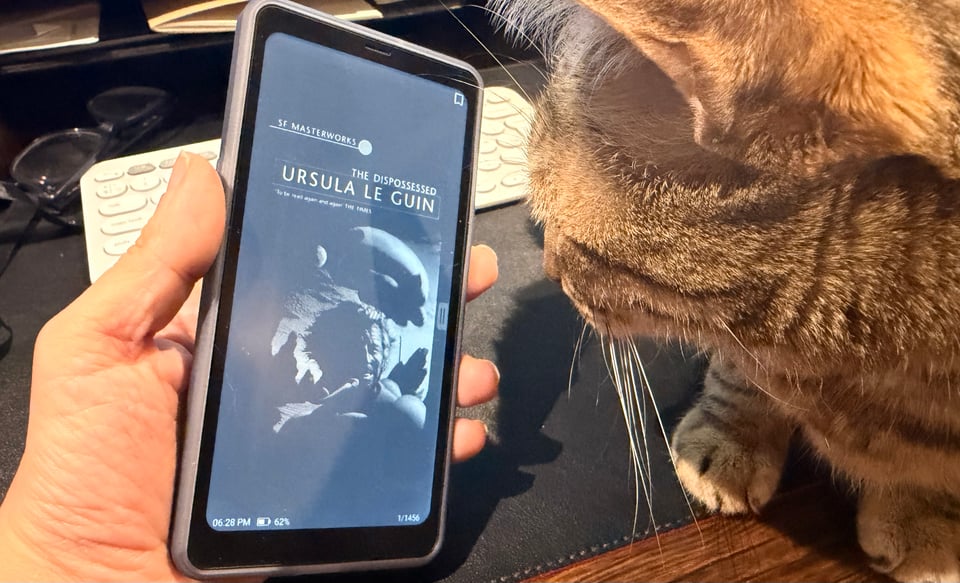
This device is an electronic ink reader the size of a mobile phone, making it much smaller than traditional e-readers. I’ve been reading on my commutes a lot thanks to it, even when I’m standing on a packed tube. The main perk of this device, unlike Amazon Kindle devices, is that I have absolute control over my content. My books won’t disappear just because a mega-corporation decides they should.
To gamify my reading habits, I created a profile on the Hardcover app to keep a record of what I’m reading. I opted for Hardcover over alternatives like Goodreads (which is Amazon-owned) not just because it looks nicer, but more importantly, because it allows me to import books by ISBN flawlessly. Follow me if you are on it!
📨 That’s all for now
Thanks for reading Playing Back an Improvised Life, a newsletter by Ferran Luengo.
If you like it, spread the voice and share with someone who you think might enjoy it.
If you want to keep in touch, feel free to follow me on instagram (@luenkun).
Want to work with me or start a conversation? email me 😀
Want to support me? You can do it through my Ko-fi page

Ferran Luengo AI Disclaimer: Since English is not my first language, I may have used AI tools to proofread the text, limiting their use to grammar only. Everything in this newsletter has been written by me
Add a comment: