2026 Nᵒ03 - Just tell
Diving into the art of storytelling, exploring Ray Bradbury's lost plays
Greetings, dear readers. Last week was a busy one for me, with many storytelling gigs across different parts of London. It made me realize that, despite doing it professionally and frequently, I rarely speak here about the actual art of storytelling. So today, I am going to offer my two cents on what I’ve learned from doing it profusely over the last years.
First things first: in order to tell, you have to want to tell. We, as narrators, are the link between the story and the audience. I use the word 'link' because it’s all about connection. It has always been that way with storytelling, you know, since the days of gathering around the fire. You need to establish an eye-to-eye link.
When storytelling, the threshold between acting and narrating is quite blurry. Actors and narrators tackle the text in a different way. You could be pretending to tell with the most amazing acting skills, but at the end of the day is simpler to just tell. Believe me, it’s very cringey to see someone pretending to be a storyteller, being all grandiloquent and shit.
Of course, contradicting myself, we have to be actors when storytelling, especially when it comes to characters. It comes from the need to differentiate between when I’m telling and when I’m being. If you’ve ever listened to an audiobook, you know what I mean. However, there is also the risk of scenifying too much with the characters, which can distort the storytelling experience.
It comes all to balance between being natural and performative. Of course, storytelling is scripted and the more you tell something, the more integrated with oneself is, giving genuine authenticity when delivered. So how can we apply this to improvised art forms?
To keep this short, stay tuned for more in next week’s newsletter, where I’ll share how this translates into my improv and Playback Theatre practice. Meanwhile, I’d love to hear your views. Are you a storyteller? What has your experience been? If you don’t have storytelling experience, would you like me to talk more about it? I thrive with your comments!
🎭 The Theatre bit
It came to my attention over the past few days that Ray Bradbury, author of renowned science-fiction titles like Fahrenheit 451 and The Martian Chronicles, wrote a few plays. I used to read him during my youth and I was oblivious to this fact. Definitely, I had to read them.
Unfortunately, getting ahold of them was very difficult, as most are out of print. Alas, I am resourceful, so I put a trench coat on and dug into the darkest digital back alleys, stepping through electronic puddles reflecting the light of neon Jolly Roger flags, and passing decadent clubs luring those eager for salacious relief to their doors. Finally, I found it: a digitized version of The Wonderful Ice Cream Suit and Other Plays for Today, Tomorrow and Beyond Tomorrow, dating from 1972.
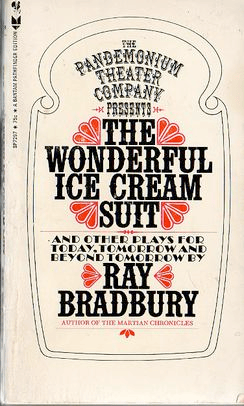
The book is introduced by Bradbury himself, where he narrates his relationship with theatre and its sense of family, as he founded his company “The Pandemonium Theatre”. An insightful and romantic view of the art form is shared in that introduction. Despite the lack of confidence, success and money, Bradbury doubles down on the freedom that theatre gave him. Take this quote for example…
“If you don’t have taste, if you don’t trust your intuition, if you don’t believe in your plays and their ideas to start with, you shouldn’t be in the theater.”
It’s inspiring and we all shall hold dear this advice.
After the introduction, I read the play that gives the book its title. The Wonderful Ice Cream Suit, curiously enough, contains no science fiction; instead, it’s quite a peculiar human play. Inspired by his early years in California growing up among the Latino community, Bradbury presents an ode to Mexican camaraderie. In the story, a group of working-class friends must share a single, pristine white suit to help themselves feel important.
The play is fun and light, yet it reminds me of Samuel Beckett in the way the characters interact. It draws heavily from Mexican culture, and music has a powerful presence throughout. It is done in a very tasteful way that steers clear of cultural appropriation.
I haven’t read the rest of the plays yet, but certainly I plan to do it.
📆 What is coming up
🇬🇧 31st of January - Playback Theatre taster workshops (London, UK). We will be running a couple of Playback Theatre taster workshops throughout the last Saturday of January, running two different groups, one in the morning and one in the afternoon. Book morning workshop. Book afternoon workshop.
🇬🇧 13th of February - Acaprov (London, UK). Right at the door of Valentine’s Day 💞 we’ll offer a new a cappella musical at Shoreditch Balls. Get your tickets.
🇬🇧 15th of February - Lunar Year Playback Theatre Performance (London, UK). I’ll be coaching next True Heart Theatre’s performance to welcome the new Chinese lunar year. More information and tickets here.
🇩🇪 14th-15th of March - Playback Theatre Level 2 Intensive (Berlin, Germany). I’m going the capital of Germany to offering a two days intensive. Looking forward to it. If you are around check it out.
🇩🇪 21th-22nd of March - Playback Theatre Level 2 Intensive (Hamburg, Germany). And also, I’ll wave the Winter goodbye while offering the same intensive in Hamburg.
📚 🎮 🎥 📺 The geeky dessert
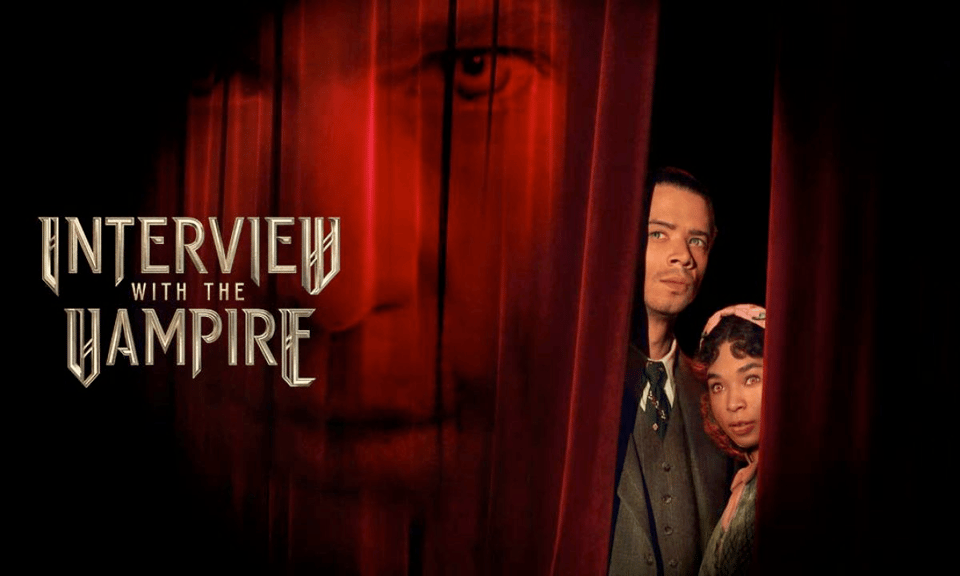
Another series we rushed through, thanks to the holidays, was the adaptation of Anne Rice’s Interview with the Vampire. I haven’t read the book, but I watched the movie adaptation back in the '90s. Unlike a two-hour film, this series has the room for a proper adaptation, spanning 15 episodes across two seasons. I enjoyed it so much that I’ve even added the book to my reading backlog to, hopefully, catch up before the third season and the adaptation of the second book, The Vampire Lestat, premieres this summer. I'm really looking forward to it! 🦇
📨 That’s all for now
Thanks for reading Playing Back an Improvised Life, a newsletter by Ferran Luengo.
If you like it, spread the voice and share with someone who you think might enjoy it.
If you want to keep in touch, feel free to follow me on instagram (@luenkun).
Want to work with me or start a conversation? email me 😀
Want to support me? You can do it through my Ko-fi page

Ferran Luengo AI Disclaimer: Since English is not my first language, I may have used AI tools to proofread the text, limiting their use to grammar only. Everything in this newsletter has been written by me
Add a comment: