Why "Fake" doesn't always mean what you think
We tend to think about "authentic" and "unreal" as two ends of a spectrum. That's not always true.
As I've been researching the history of fakes, I've really focused on two sides of this long, ongoing battle: Authenticity on one end of the spectrum, and unreality on the other.
These two forces have been battling it out for thousands of years, but the drumbeats of their struggle have become more rapid as the modern world developed: the industrial revolution, manufacturing, digitization, and now AI... these moments have all chipped away at our concept of what is real and what is not.
Before we get too too deep in all of it, though, I think it's worth defining these two poles, or at least what I mean by them.
§
Whatever authenticity is, most of us place a high value on it. We seek out experiences, friendships and influences that are genuine and sincere, and we laud people who think in exceptional, surprising ways or provide unique perspectives. Authenticity can mean placing value on the handmade or the carefully crafted, or it can mean appreciating things that are hard to replicate.
At its heart, authenticity is a kind of trust, built from a combination of honesty and originality—it's an agreement between two people that what flows between us is real and true.
At its best, this can be transcendent and moving. When creative work is both authentic and innovative, it is offers us a new way of seeing the world. An authentic piece of music reflects the life of the person who made it; an authentic meal tastes more true, somehow; an authentic artistic masterpiece gives us a glimpse of the spark of genius that created it. It feels unreproducible.
And so we praise the real and deride impostors; we prefer truth over lies. Collectors spend millions finding and gathering genuine, historic objects. Countless riches have been spent on the art of Leonardo da Vinci, the violins of Stradivarius, and the folios of Shakespeare. These works are lauded for their innovation and craft, venerated as relics, shown off to the public in museums and galleries, or squirreled away in private collections.
And it’s not just objects. We put great stock in honesty and authenticity in our relationships and our experiences, too. Being real is generally considered a positive personality trait, and we appreciate people who show us what they think and who they are—no disguises, no catfishing, no duplicity. And we treasure authentic experiences: moments that can only happen once.

Last week I went to see a performance of ha ha ha ha ha ha ha, a show by the Estonian clown Julia Masli. Looking like a cyberpunk alien baby built from discarded trash, Masli emerges from the dark and asks members of the audience what they need help with. Over the course of the show, she tries to address their issues. Each performance follows a similar structure, but the audience and the solutions make each one different. The New York Times called it "comedy filtered through a European tradition of absurdist clowning": it was weird and uncomfortable and uplifting and I highly recommend it.
And it was, undoubtedly, authentic.
In fact, I'd argue that at any theater show or a sporting event, a significant part of our enjoyment comes from the collective hope that we will all bear witness to some unreproducible moment. Perhaps the losing team stages an unlikely comeback, or somebody on stage improvises a moment of genius, or a funny incident takes place that gives birth to a viral clip. Anything that allows us to say I was there.
Let's look at the other side of the scale.
§
The English language is blessed with many different words to describe something that is almost, but not quite, the original. “Fake” is just one of the terms, and throughout my investigations, I'll be using it pretty widely to describe a whole category of things that are unreal in some way. (In fact, my definition and usage of "fake" may go further than you are used to! That's fine, we'll explore it as time goes on.)
As well as fakes, there are copycats and counterfeits, knockoffs, hoaxes, imitations, and inventions. We talk about dupes, replicas, reproductions, frauds, and fabrications. Objects, ideas, experiences can be falsified, simulated, spurious, bogus, or phony.
The menu of choices gets even longer if we use fake to describe a person rather than a thing. These words are as charming as they are menacing: we don't just have imposters, we have charlatans and mountebanks, quacks and pretenders.
So what do I mean when I say "fake"?
At its basest level, a fake is an idea, item, or good that is derived or copied from another source, and usually in such a way that is intended to deceive.
Like I said, my definition of “fake” is quite broad. That’s because there are good copies and bad ones; immoral copycats and acceptable—even useful—replicas. The difference is often in intent rather than execution, but sometimes it’s just a relatively arbitrary legal boundary.
§
Here’s an example. Go to a market in a developing country, and you will see shopkeepers selling pirated movies that were downloaded from the internet or secretly and shakily shot from the back of cinemas. Astonishingly few people confuse these knockoffs with the legitimate, original version of the movie, even though they sell by the bucketload (the copyright industry estimates that such losses cost $29 billion each year, I'm not so sure these should count as lost sales.) They aren’t sanctioned, but they’re not pretending to be the real thing either.
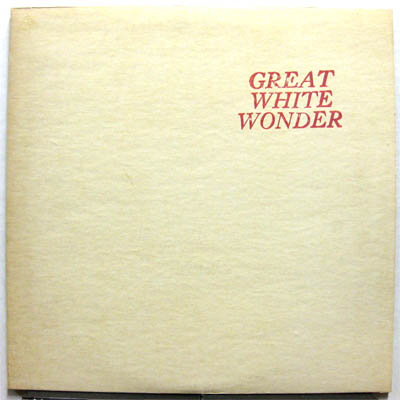
Drop into your local hipster-friendly specialist music store, meanwhile, and you might dig up a bootleg. These are also unsanctioned recordings, but they sometimes appear in official-looking packaging. Often they’ve become collector’s items. Bob Dylan’s Great White Wonder is one of the first major bootlegs in modern recorded music, and so famous and sought after that there were also pirate copies of the pirate copies. Where does the line get drawn?
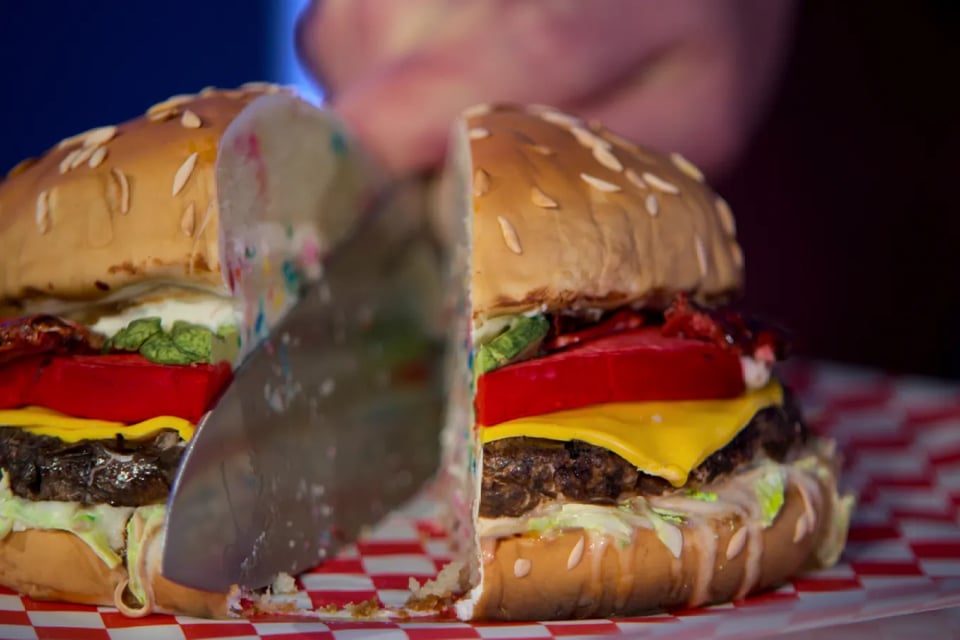
Sometimes it’s fuzzier than you think. Is the reproduction furniture in your living room a fake? What about the meat substitute in your veggie burger, or the oat “milk” in your coffee? What about the generic paracetamol tablet you take when your head aches or your joints feel stiff? After all, it’s a legally-sanctioned copycat of Tylenol, a medicine first concocted in 1955 by scientists at Johnson & Johnson. They are all copies. Can you be sure of their legal provenance?
You might not agree with where I’m drawing the line between fake and real, but I want you to bear with me for a while on this. Remember, we’re looking at authentic vs inauthentic. “Fake” is a wide category if you give it room to breathe.
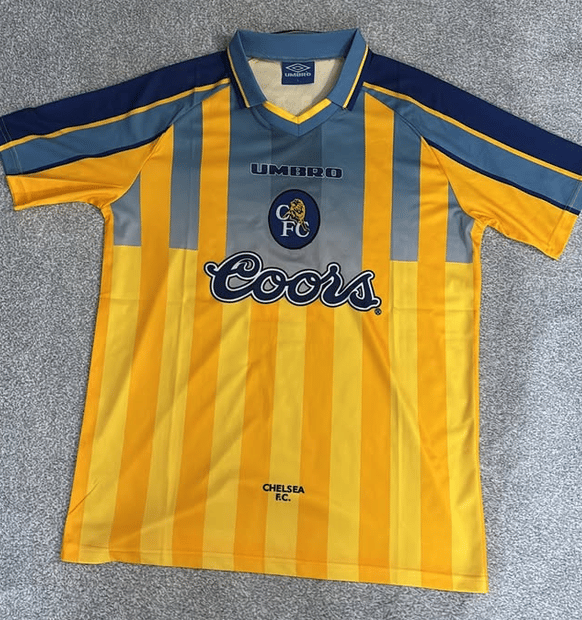
In this broadest sense, fakes allow us to get what we want when we want it. They can let us be who we want to be at a price we can afford. Women buy knockoff Fendi purses so that they can get the look without spending eye-watering amounts of cash; soccer fans wear unofficial replica jerseys so they can pledge their loyalty to their club without having to pay the premium slapped on official merchandise.
And the knowing deception goes both ways, up the chain and down.
Big companies rip off the work of independent designers and sell it around the world; small companies rip off the work of big companies and sell knockoff products for cheap on marketplace websites like Temu and Shein.
People keep buying from these businesses and on these platforms, knowing exactly what kind of Faustian bargain they are making to save a little money.
Ask somebody if they think fake is bad and real is good, and they’ll probably answer with a resounding yes. But these blurry lines, these shifts over time, these frameworks that mask intent… they mean that the answer is much, much more complicated.
The truth is that we are swimming in a sea of fakes, and we love it.

FAKE NEWS VOL 2: 47.26
GONG SHOW: The first AI music awards sound like a total shambles: SIQA's show featured a handful of people turning up to celebrate songs that pretend to be written by humans, people lipsynching to tracks that never involved a human, and all presided over by an AI voice that was meant to introduce folks to the stage but ended up talking over the human presenters.
(Variety / Louis LaRoche)
POWER DOWN: A viral warning British people of a mass blackout affecting the country's electrical grid was a hoax, according to fact-checkers. With the spate of digital service outages and air traffic collapse in the US, it seems like people had been prepped to be receptive to the deception. (Reuters)
MARS ATTACKS: Four NASA just completed a year-long stay inside a 1,700 foot, 3D-printed fake environment meant to simulate living on Mars. The CHAPEA program is meant to test what it would be like for astronauts to live on the Red Planet, with very limited resources and communication. Unclear how they test for the mental health impacts of knowing that you are in a harsh, unforgiving and deadly alien planet and most likely never going home, though. (Smithsonian)
§
My name’s Bobbie, and I’m digging deep on the historical battle between authenticity and fakeness. If you have thoughts, tips, or suggestions on what to look at, then let me know by emailing me via [email protected].

Add a comment: