
How everything became fake
And why a North Korean spy started my quest to uncover the long, strange history of unreality.
A couple of years ago I found myself in a very strange situation. I was on a video call with two men: One was Simon, the young CEO of a startup, and the other was Harry, a software engineer who wanted a job.
I'd bumped into Simon at a party a few months earlier in San Francisco, but this was the first time I'd met Harry. He was more or less what I'd expected from reading his resume: a regular-looking chap of East Asian descent, with short black hair and a bright, chatty persona. He was, he told us, a mid-career programmer living in Florida who wanted a job as a web developer.
In fact, Harry was none of those things, not really.
He wasn't a software engineer, and he wasn't in Florida. And he definitely wasn't called Harry. He was, I had determined, a North Korean spy probably based in China and attempting to sneak his way into a remote-working coding job so that he could steal money, intellectual property, or worse.
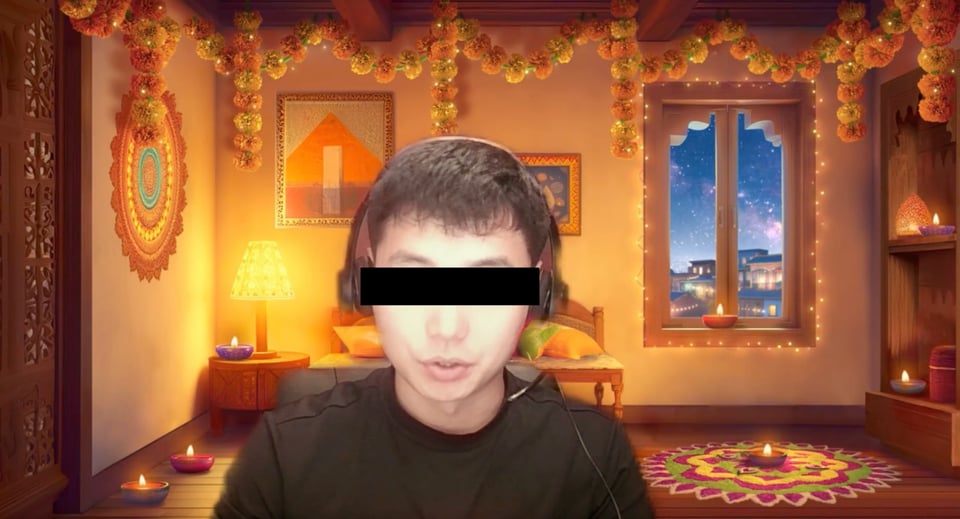
What Harry didn't know is that everyone else on the call was lying too.
I was a journalist investigating this growing scam out of Pyongyang, and Simon was a mischievous founder helping me root out the fraudsters. All in all, I spent months investigating these criminals and the middlemen who assist them, interviewing victims and experts, and eventually setting up a honeypot to draw in perpetrators and meet them, including Harry, for myself.
§
Elements reminiscent of this fraud have hit the headlines a lot recently: Nvidia CEO Jensen Huang was caught in a Chinese honeypot of his own; and the crypto exchange Binance was hacked and had more than $6 billion stolen by North Korean agents who faked their way in using job interviews. I'll get to all these weird incidents in time—although you can read the story I published about Harry and his friends last year in Wired magazine—but they have brought a fresh deluge of AI-powered duplicity to the forefront.
After I wrote about my bonkers encounters, reader responses flooded in. Most people were shocked and worried. Some were skeptical that it was really happening, others wondered if they might be next. Some angry respondents even suggested this was an act of war and discussed possible retribution.
A handful of people, though, had a very different and—to me—far more disconcerting response: They simply shrugged their shoulders.
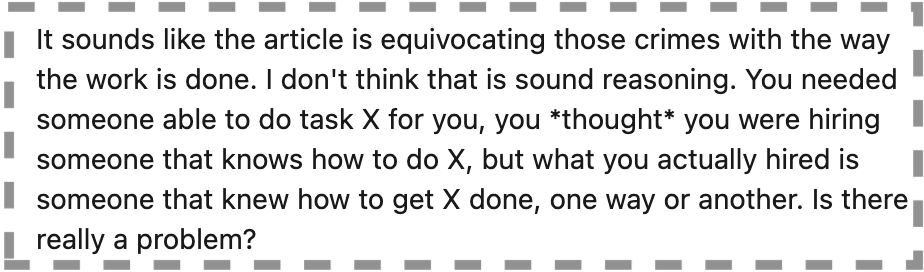
These folks were barely interested in what crimes were being committed. In fact, they didn’t think of them as crimes at all. So what if the North Koreans weren’t who they said they were? As long as they were doing the job—and often they were doing the job to beef up their cover stories, building apps or websites that Western companies needed—then maybe it didn’t matter.
“Is there really a problem?” one skeptic wrote to me (naturally, this was on LinkedIn.)
Reader, I was overcome with confusion. Yes, I could see the series of steps somebody might take to reach this odd conclusion, but such nonchalance in the face of international espionage left me utterly confounded. I struggled to understand why somebody simply wouldn’t care about the difference between what was real and what was fake.
What I knew was that reality's been under assault for a while. Maybe the first time you noticed it was in the 2016 election, when Donald Trump started blasting anything he didn’t like as “fake news” (while, at the same time, a plethora of fake news websites and Russian-sponsored troll accounts were feverishly amplifying his campaign on social media.)
Perhaps you spotted the breakdown during COVID, when our lives went virtual basically overnight and everything took on the eerie sheen of the screen. Or maybe it was when you first saw some of the perverse, awesome and awful things that AI could do. Within months of ChatGPT arriving, our TV screens, websites, and social media feeds were spilling over with AI-generated slop. At some point, I realized, we had fully entered into a bizarre mirror world stuffed with deepfakes, disinformation, and doppelgangers.
I wondered if the people who didn’t care about North Korea chose to not care because to do otherwise was an anxiety-inducing heavy lift. There’s so much cognitive effort in constantly sorting out what’s real from what’s not… maybe it’s easier to just let it all glide by.
But I couldn’t really get comfortable with that.
I just kept thinking "how the hell did we get here?"
§
As I considered the answer to that question, I looked back at the work I'd done previously and realized that I’ve been writing about fakes and frauds and the conflict between online culture and the real world for more than 20 years.
In fact, my very first bylined story at the Guardian in 2001(!) was about a strange case of a blogger who scammed thousands by inventing a “daughter” who suffered from an incurable disease. She wasn't an AI bot, because AI bots didn’t really exist then. But she was never real.
So, for the last year or so I've been doing a deep dive on the history of fakes, and trying to understand what's going on right now and where it all came from.
I'm still finding out, but I figured it was better to share what I'm learning along the way rather than hoard it all away like an idiot.
What I am discovering is that the conflict between what is authentic and what is unreal has been going on for hundreds, even thousands, of years. Today things are different, yes, but they are also the same in a few important ways.
As I try to wrap my head around this great, amorphous infoblob that modern (or postmodern) life has kindly bestowed upon us, I’m coming across so many strange and surprising stories. Some of them cast light on what's happening right now that I wanted to share them with you. Some of them are just weird and fun. Maybe following along will reduce the anxiety or lighten the cognitive load. Maybe it won’t.
But I’ve found it interesting to look at the various ways that people have fought against these explosions of unreality in the past.
So that's what this is. I’m planning to post once a week or thereabouts, and it will always be free to read.
Thanks for coming along.

FAKE NEWS VOL 1: 46.26
TWO HUANGS: It's hard to ignore the news that NVidia CEO Jensen Huang had to resign after it emerged that not only did he have secret girlfriends, but one of them was a Chinese intelligence agent. Getting duped has wiped $1 trillion of value off the company, and could burst the AI bubble all on its own. But personally I am endlessly amused by the fact that the name of the woman in question, Alice Huang, means that every article has some version of this little line from Wired: "(The two are not known to be related.)" We just can't be sure!
VIDEO NASTY: The FBI has detailed a new North Korean scam called "FaceStealer" which uses fake video calls to steal people's crypto assets. More than 900 people have fallen victim over the past 18 months, with more than $400m in cryptocurrency being stolen. (BBC)
COURT IN THE ACT: India’s Department of Telecommunications order the country’s internet providers to block 129 websites earlier this year based on fake directives that had been generated by AI. (Reuters)
If you have thoughts, tips, or suggestions, then let me know by emailing me via [email protected].

Add a comment: