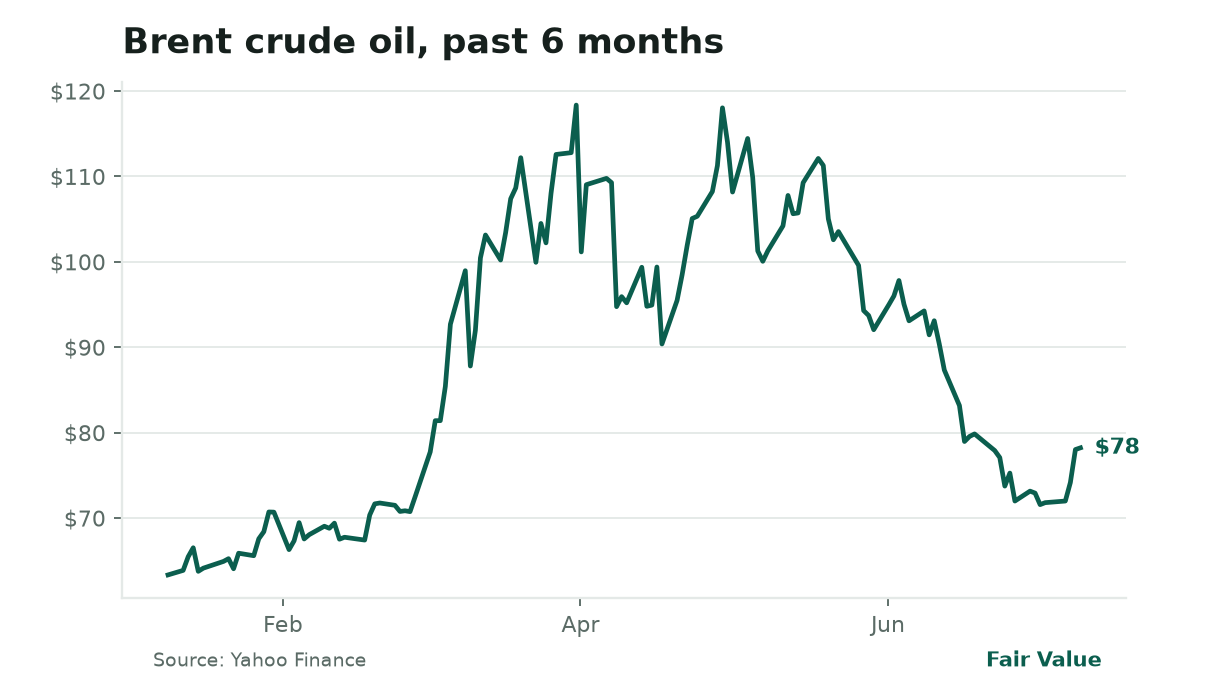
Strait of Hormuz disruptions choke global trade, Brent crude has climbed 9% this week to $78.08, but the bigger threat is to shipping: daily traffic through the Strait, handling 20% of global oil and 19% of LNG, has dropped to about 30% of pre-conflict levels. Diesel and jet fuel costs are rising, while container shipping rates for electronics, grain, and manufactured goods climb.
▸
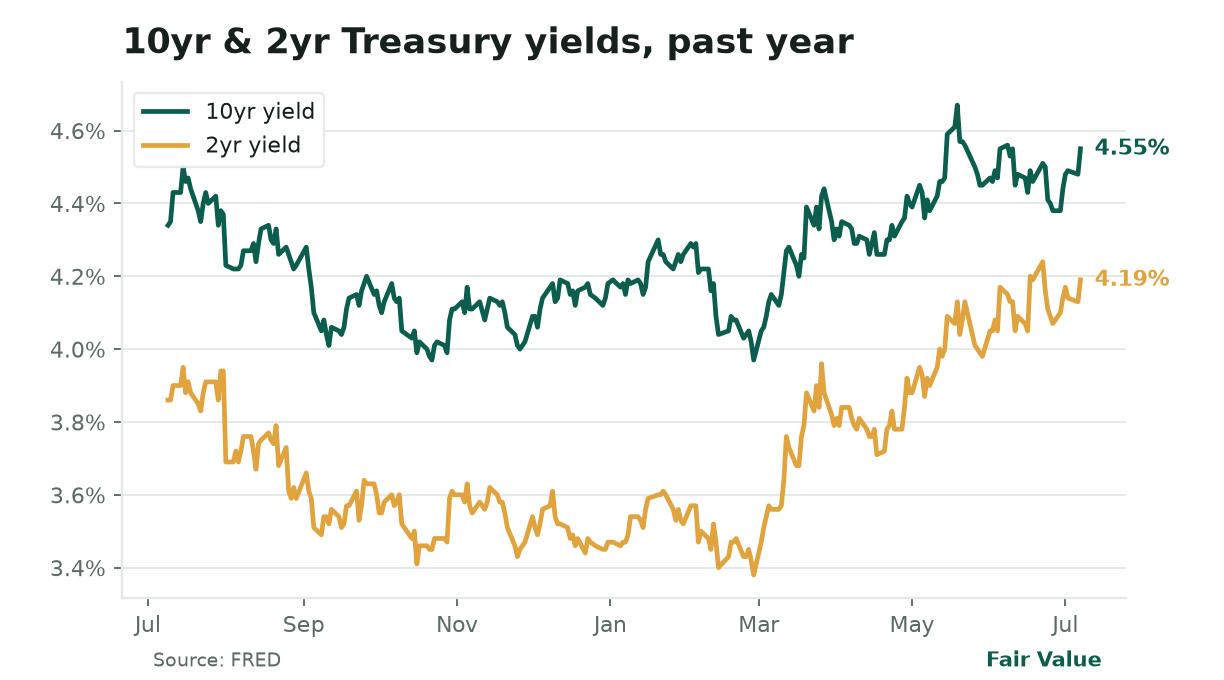
Bond markets price in Fed rate increase, The 10-year Treasury yield jumped to 4.57%, its highest since November 2023, after FOMC minutes showed sharp divisions over inflation persistence. Mortgage rates and credit card APRs are likely to follow yields higher.
▸
Apple’s $30B Broadcom agreement highlights AI’s scale, Even as Apple pushes ahead with in-house chip development, it has committed to Broadcom for wireless and AI components through 2031. The takeaway: No single company, even the world’s largest, can afford to go solo in AI’s capital-heavy arms race.
The big story
Strait of Hormuz crisis deepens, global trade seizes up
Oil prices grab headlines, but the more serious disruption is happening out of sight: commercial shipping has collapsed. Satellite data shows daily transits through the Strait of Hormuz, carrying 20% of the world’s oil and 19% of its liquefied natural gas, have plunged to about 30% of pre-war levels. Ships are turning off transponders to avoid detection after the U.S.-Iran ceasefire fell apart and airstrikes resumed, effectively creating a de facto blockade with far-reaching consequences beyond energy markets.
This isn’t just an oil shock. It’s a full-scale trade crisis.
Why this blockade is riskier than past conflicts
▸
A toll, not a war zone
Iran and Oman have started demanding "service fees" for passage, a thinly disguised toll. The U.S. opposes it, but the economic effect is the same: a shipping bottleneck. Only Saudi Arabia and the UAE have pipeline capacity (~5 million barrels/day) to bypass the Strait. All other Gulf exporters, Iraq, Kuwait, Qatar, have no alternatives. The disruption extends beyond oil: LNG tankers, container ships, and bulk grain carriers are stuck.
▸
Insurers pull back
War-risk underwriters, including Lloyd’s members, are dropping coverage for Hormuz crossings. For the few vessels still insured, premiums have jumped fivefold. Maersk and Hapag-Lloyd now charge "war risk surcharges" of $50-$100 per container on Middle East routes. Without insurance, no major carrier will sail.
▸
The ripple effects are just starting
▸
Retail gasoline is up ~10 cents per gallon this week, but diesel and jet fuel, critical for trucking and air travel, are rising faster.
▸
European natural gas futures (TTF) spiked to €49 per megawatt-hour overnight. Oxford Economics warns a prolonged LNG halt could push prices to €74 within weeks.
▸
Non-oil shipping costs, for everything from electronics to wheat, are climbing as ships reroute around the Cape of Good Hope, adding 10-14 days to deliveries.
▸
The Fed’s inflation fight just got harder
FOMC minutes released Wednesday revealed a growing split among policymakers over a possible July rate hike. The Hormuz crisis pushes the balance toward tightening: Brent above $78 will lift headline inflation, while shipping delays risk reigniting supply-chain price pressures for imports. Bonds have already reacted, the 10-year Treasury yield surged to 4.57%, up from 4.35% last Friday.
Key developments ahead
▸
Traffic levels: Pre-war averages saw 120 ships per day; sustained transits below 40 vessels could push Brent toward $85-$90.
▸
Insurance decision: Lloyd’s underwriters meet Friday to finalize Hormuz coverage rules. Higher premiums, or outright exclusions, would worsen the gridlock.
▸
Pipeline limits: Saudi and UAE bypass routes are running at 90%+ capacity. Any disruption (sabotage, maintenance) would send oil prices sharply higher.
This isn’t just an energy shock. It’s a supply-chain crisis with oil as the first domino. In 2019, a six-month Hormuz slowdown cut 0.3% off global GDP. Today’s economy, already strained by tight monetary policy and labor shortages, can’t afford the damage.
Oil surges on Hormuz crisis. Brent crude has climbed 9% this week to $78.08, with traders pricing in a prolonged Strait of Hormuz standoff. The spike reflects not just energy risks but broader trade disruptions, as shipping bottlenecks push diesel and jet fuel costs higher.
Bonds price in Fed hike risks. The 10-year Treasury yield jumped to 4.57% (highest since Nov 2023), while the 2-year hit 4.21%, both reacting to FOMC minutes showing a split over a July rate hike. The narrowing spread (0.35pp) signals markets see tighter policy ahead but doubt its durability, as Hormuz-driven inflation collides with growth concerns.
What's moving today
Markets split: AI optimism vs. geopolitical reality
Tech stocks ride the AI wave while bonds and commodities price in Hormuz fallout, creating a sharp divide: Nasdaq 100 futures rose 0.5%, the Dow held steady, and Treasury yields kept climbing.
Oil’s impact spreads far beyond the pump
Brent crude stayed above $78 after a 9% weekly gain, but the deeper issue is global shipping. Traders now assume a prolonged standoff, with Iran’s 50 million stranded barrels adding a $5-$10 "risk premium" to every barrel. The immediate consequences:
▸
RBOB gasoline futures up ~10 cents per gallon (retail prices follow in 5-7 days).
▸
Diesel and jet fuel climbing twice as fast, a direct hit to trucking firms and airlines.
▸
Maersk’s surcharges, effectively a tax on global trade, now apply to all Middle East-bound cargo.
Fed’s hawkish shift rattles bonds
FOMC minutes showed a divided committee, with "several" officials pushing for a July rate hike due to stubborn services inflation. The bond market reacted immediately:
▸
10-year Treasury yield: 4.57% (highest since November 2023).
▸
2-year yield: 4.21% (most sensitive to Fed moves).
Result. Mortgage rates, auto loans, and corporate borrowing costs will rise. The only upside? The U.S. Dollar Index (DXY) stayed flat at 100.97, as traders bet the Fed’s hawkishness will backfire by slowing growth later this year.
AI remains the sole bright spot
Broadcom jumped 4% in pre-market trading after locking in a $30B+ chip supply deal with Apple through 2031. The agreement, covering custom wireless and AI components, underscores a key reality: Even Apple, with its in-house silicon, can’t fully self-suffice in AI’s capital-heavy race. NVIDIA, up 20% over the past month, was unchanged on the news.
Crypto’s quiet accumulation trend
Bitcoin edged up 1% to $62,900, but the more telling metric is exchange balances:
▸
BTC supplies on exchanges hit 2017 lows.
▸
ETH supplies fell to 2015 levels.
Long-term holders are pulling coins off exchanges, either for cold storage or staking. Shrinking liquidity amplifies volatility if sentiment shifts.
The divergence can’t last forever
Markets are pricing AI-driven tech growth and geopolitical risk simultaneously. The tension isn’t about which narrative wins, it’s how long the split can persist before one side forces a reckoning.
The big picture
Bond markets send warning signals
The 10-year Treasury yield climbed to 4.57%, its highest level since November 2023, as traders ramp up bets on a July Fed hike. The move reflects a recalibration of risks, and the Hormuz crisis is the trigger.
The inflation chain reaction
▸
Brent above $78 → Higher transport costs → Persistent inflation.
Rate-hike odds rise → Bond prices fall → Yields surge.
FOMC minutes confirmed the divide: Policymakers are split, but hawks emphasize two risks:
▸
A labor market that’s still too tight (unemployment at 4.1%).
▸
Oil shocks reigniting inflation, which is happening now.
With Hormuz in chaos, both risks are active.
Yield curve sends mixed signals
The 10-year/2-year spread sits at 0.35 percentage points, no longer inverted (a recession signal) but dangerously thin. The bond market’s message: > "No recession yet, but the Fed’s room for error is shrinking."
Dollar’s unusual stability
Normally, rising U.S. yields would boost the dollar. Yet the DXY remains flat at 100.97, and the euro holds above 1.14. Traders are betting the Fed’s hawkish stance will overtighten the economy, forcing a policy reversal by year-end.
Impact on consumers
▸
Mortgages: The average 30-year fixed rate sits at 7.1%. If the 10-year yield stays above 4.5%, expect 7.5% by August.
▸
Credit cards: A July hike would push the prime rate to 11.75%, increasing costs for revolving debt.
▸
Savings: Short-term Treasury bills now yield 5.2%-5.3%, the safest high-yield option while waiting out volatility.
Oil’s $80 barrier, and the hidden costs beyond gasoline
Brent crude has jumped 9% this week to $78.08, but the broader economic damage comes from second-order effects:
▸
Gasoline futures up ~10 cents/gallon (retail prices follow in 5-7 days).
▸
Diesel and jet fuel rising faster, a direct hit to airlines (Delta and United report earnings next week) and freight carriers (FedEx, UPS).
▸
Shipping surcharges act as a stealth tax. Maersk’s $50-$100 per container "war risk fee" applies to all cargo, from electronics to agricultural goods.
That’s the optimistic scenario. The pessimistic alternative? Oil stays high, the Fed over-tightens, and stagflation takes hold, slow growth with high prices. Bond markets now assign a 30% probability to this outcome.
Around the world
Middle East economic warfare, why this crisis differs from 1973
The collapse of the U.S.-Iran ceasefire has triggered more than a military standoff, it’s an economic blockade with global consequences, different from the 1973 oil embargo in both mechanism and reach.
The Strait of Hormuz toll system
Iran and Oman have proposed "service fees" for commercial vessels, a de facto toll. While Washington opposes it, the result is the same: a shipping gridlock. Only Saudi Arabia and the UAE can bypass the Strait via pipelines (combined capacity: ~5 million barrels/day). All other Gulf exporters lack alternatives.
The unspoken insurance crisis
War-risk insurers, including Lloyd’s of London syndicates, are withdrawing coverage for Hormuz transits. Without insurance, no major shipping line will risk the route, regardless of cargo urgency.
LNG: Europe’s ticking time bomb
Qatar, the world’s top LNG exporter, ships 80% of its output through Hormuz. A prolonged blockade could drive European gas prices to €70 per megawatt-hour, double last winter’s peak. That would deliver a direct blow to EU industries already struggling with energy costs.
China’s strategic stockpiling
As Washington reimposes sanctions, Beijing is accumulating Iranian crude. Tankers are disabling transponders to conceal shipments, keeping ~1 million barrels/day flowing, and giving China leverage over global supply.
Key difference from 1973. The world today has larger oil buffers, but the shipping paralysis poses the greater threat. If Hormuz remains closed, expect:
▸
Higher costs for any goods shipped by sea.
▸
Delayed deliveries as vessels reroute around Africa (adding 2-3 weeks).
▸
Industrial slowdowns in Europe and Asia if energy prices spike.
China’s AI chip maneuver, and Washington’s response
Beijing is easing restrictions on Nvidia’s H200 AI chips, allowing domestic firms to purchase them, as long as they stay in China. The move is a temporary workaround for U.S. export controls, but the deeper signal is China’s push for AI self-sufficiency, even if it means relying on American technology for now.
U.S. tightens the noose
▸
New export controls now require licenses for sharing advanced AI models (e.g., Anthropic, OpenAI) with foreign entities.
▸
Rare earths chess match: The U.S. is investing $400 million in MP Materials’ California mine to reduce dependence on Chinese supply. Yet China still controls 80%+ of refining capacity, meaning the bottleneck isn’t mining; it’s processing.
Companies in focus
The race for AI infrastructure accelerates
Broadcom secures $30B Apple supply deal. Shares rose 4% in pre-market trading after the chipmaker finalized a multi-year agreement with Apple, valued at over $30 billion, to supply custom wireless and AI components through 2031. The deal highlights a critical reality: Even Apple, which designs its own silicon, can’t fully verticalize in AI’s capital-intensive landscape.
Micron locks in automotive chip demand. Gained 1% after signing long-term supply contracts with Ford and General Motors, part of $22 billion in customer commitments. The agreements coincide with Micron’s new Singapore fabrication plant and India’s first semiconductor facility, both slated to boost memory chip output.
AMD and Meta’s 6-gigawatt AI partnership. Traded flat Thursday, but its deal to provide Meta with 6 gigawatts of AI compute power via Instinct GPUs positions AMD as NVIDIA’s primary rival in data center infrastructure. Shipments begin in late 2026.
Beyond tech: strategic moves across sectors
Tesla expands robotaxi operations. Began rolling out its robotaxi service in Miami and teased the new Roadster, expected to launch "within weeks." Shares dipped 2%, but the focus is shifting from EV sales to services (autonomous ride-hailing, energy storage) as electric vehicle growth slows.
Vertex Pharmaceuticals bets $8.8B on rare diseases. Acquired Crinetics Pharmaceuticals to expand its endocrine and gastrointestinal disorder treatments. The deal follows AbbVie’s $10.9B purchase of Apogee Therapeutics, signaling Big Pharma’s intensified focus on high-margin, niche therapies.
ON Semiconductor acquires Synaptics for $7B. The deal strengthens its position in automotive and industrial chips, underscoring the scramble for specialized semiconductors as AI and electrification reshape demand.
Rocket Lab’s $8B Iridium acquisition. The satellite launcher will merge with Iridium Communications, combining space launch with satellite connectivity. The new entity will compete with SpaceX’s Starlink in global internet and IoT services, a bet on space-based infrastructure.
Levi Strauss raises guidance on DTC strength. Now forecasts 7-7.5% revenue growth (up from 5.5-6.5%) as its direct-to-consumer pivot gains traction. Shares climbed 3% in pre-market trading.
From Washington
Fed’s inflation dilemma sharpens as Iran crisis escalates
FOMC minutes released Wednesday exposed a deeply divided committee on inflation, and the Hormuz escalation has raised the stakes for the July 30-31 meeting.
Hawks gain ground
▸
"Several" officials (3-4 of 12 voters) now favor a July rate hike.
▸
Their argument: The labor market remains too tight, and oil above $78 risks reigniting inflation.
▸
Bond markets now price a 50% chance of a hike, up from near-zero last month.
Doves struggle to hold the line
Their counterpoints:
▸
Policy lags: Rate hikes take 12-18 months to fully impact the economy. The Fed has already raised rates 11 times since 2022.
▸
Geopolitical risk: A hike now could worsen a slowdown if oil prices stay elevated. But with gasoline prices rising, that argument is losing traction.
Stagflation risks reemerge
The Hormuz crisis introduces a stagflationary threat:
▸
Higher oil (inflationary).
▸
Slower growth (recessionary).
The Fed faces a lose-lose choice:
▸
Hike and risk a hard landing.
▸
Hold and allow inflation to reaccelerate.
Key dates ahead
▸
July 30-31 FOMC meeting: The decision hinges on:
▸
July 12 CPI report (forecast: +0.2% MoM).
▸
July 26 PCE inflation data (the Fed’s preferred gauge).
▸
Powell’s Jackson Hole speech (Aug. 22): If the Fed skips July, this will be the venue to signal a September move.
Bottom line. The Fed is boxed in. Oil is doing its inflation-fighting work for it, but if Brent tops $85, all bets are off.
Worth knowing: **Oil’s "risk premium" and why it’s here to stay**
Oil prices spike during Middle East crises, but why do they stay elevated even after immediate threats fade? The answer lies in the risk premium.
How it works
Assume oil trades at $70 based on supply-demand fundamentals. When Hormuz tensions flare, traders price in a probability that 20% of global supply could face delays. That uncertainty adds, say, $10, not because barrels are missing, but because the risk of disruption is now embedded. That $10 is the risk premium.
Why it’s sticking now
▸
Hormuz is a logistical nightmare, not just a chokepoint
Even without attacks, delays and insurance hikes add costs. Vessels are rerouting around Africa, adding 10-14 days to voyages.
▸
Market memory
Traders recall 1973 (embargo), 1990 (Gulf War), and 2019 (tanker attacks). Each time, oil stayed high for months. History suggests this premium won’t vanish quickly.
▸
No quick fixes
Saudi/UAE pipelines can bypass the Strait, but capacity is limited (~5 million barrels/day). The rest of the world’s oil remains hostage to shipping lanes.
Current assessment
Brent trades at ~$78, with $5-$10 of that pure risk premium. If the Strait reopens smoothly, that premium could evaporate. If tensions drag on, it could grow, pushing oil toward $90.
Why this matters
▸
Gasoline prices lag oil by 2-3 weeks. Today’s premium means higher pump costs are coming.
▸
Airfares and shipping rates are tied to jet fuel/diesel, which are more sensitive to supply scares than crude.
▸
The Fed watches oil closely. A sustained premium could keep inflation elevated, and interest rates higher for longer.
What to watch this week
▸
Thursday, July 9:
▸
U.S. Treasury auctions — ($72B in 17-week bills, $39B in 10-year notes). Weak demand = higher yields, rising borrowing costs.
▸
Weekly jobless claims (8:30 a.m. ET). — Surprise jump = cooling labor market, the Fed’s top concern.
▸
Friday, July 10:
▸
Canada employment report (8:30 a.m. ET). — Forecast: +11.2K jobs, unemployment at 6.6%.Weak data could delay the Bank of Canada’s next hike.
▸
University of Michigan consumer sentiment (10:00 a.m. ET). — Falling confidence = potential pullback in spending.
▸
Monday, July 13:
▸
China trade data (overnight). — Slowing exports = weakening global demand, bad for multinationals.
▸
Tuesday, July 14:
▸
U.S. CPI (8:30 a.m. ET). — Forecast: +0.2% MoM.The single most critical data point for the Fed’s July 30 decision.
Not financial advice. Disclaimer: Fair Value is not investment advice, and no content should be construed as a recommendation to buy, hold, or sell any security. Always consult a financial advisor before making investment decisions.
Data sources: Bloomberg, FactSet, Federal Reserve, Lloyd’s List Intelligence, Oxford Economics, U.S. Energy Information Administration.