Wages outrun inflation, keeping Fed policy firm. Average hourly earnings hit $37.64 in June (4% annual growth), while core CPI stayed at 3.5%. The 0.5% difference pushed the 10-year Treasury yield to 4.73%, its highest since January, and lifted mortgage rates to 6.66%, a one-year high.
▸
Copper shortages risk slowing AI and green energy. Winter storms in Chile, which provides 25% of the world’s copper, halted major mines just as demand from data centers and EVs climbs. Prices could jump, delaying key infrastructure projects.
▸
Institutions now lead crypto markets. Spot trading is 72% institutional, cutting volatility in half. Bitcoin held near $63,100, but the bigger shift is in tokenized assets like Treasuries, now totaling $36 billion.
What’s moving markets
Two forces are clashing: wage growth that complicates the Fed’s inflation progress, and a copper shortage running into AI’s soaring demand for raw materials.
The Fed’s wage challenge
Friday’s jobs report sparked a bond selloff. Average hourly earnings rose to $37.64, 4% above last year’s levels, while core inflation stayed at 3.5%. That 0.5% gap leaves the Fed cautious: higher wages could boost consumer spending and reignite price pressures just as inflation shows signs of easing.
Treasuries reacted sharply. The 10-year yield jumped to 4.73%, its highest since January, while the 30-year neared 5.26%. Mortgage rates followed, climbing to 6.66%, adding about $200 to the monthly payment on a $300,000 loan compared to six months ago.
The effects spread widely. Credit card rates remain high, corporate borrowing costs rise, and savers see lower deposit rates as banks cut payouts when risk-free Treasuries yield nearly 5%.
Copper’s supply squeeze
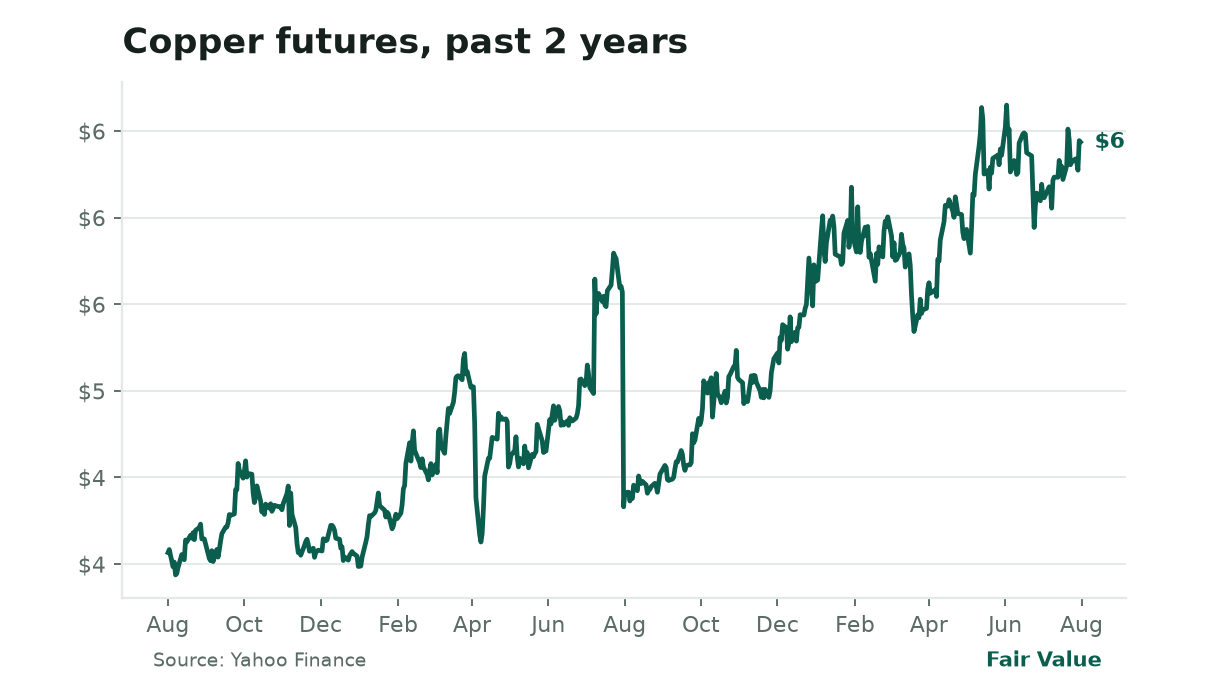
Chile’s winter storms are disrupting the AI infrastructure push. The country produces 25% of the world’s copper, but flooding and landslides forced Lundin, Antofagasta, and state-owned Codelco to pause operations. Copper is critical for data centers, electric vehicles, and renewable energy grids, all sectors now scrambling for supply.
Chile’s storms hit AI’s raw material. Copper prices surged 18% in 2026 to $4.35/lb as Chilean supply disruptions (25% of global output) collide with data-center demand. Prolonged shortages could delay AI infrastructure and EV production.
The timing worsens the strain. Data center operators are racing to secure materials for AI expansion, while U.S. tariffs on Chinese copper imports could tighten the market further.
Crypto’s institutional turn
Retail traders no longer drive crypto markets. Institutions now make up 72% of spot trading volume, reducing volatility by nearly half. Bitcoin held steady at $63,100 and Ethereum at $1,860, but the deeper change is in tokenized real-world assets: Treasury-backed tokens alone now total $36 billion.
The big story
Why your next raise could keep mortgage rates high
The Federal Reserve is constrained by wage growth. June’s jobs report showed average hourly earnings at $37.64, up 4% from last year, while core inflation sits at 3.5%. That half-point difference risks a wage-price cycle, forcing the Fed to keep policy tight.
How the gap feeds inflation
When paychecks grow faster than prices, workers spend more. That extra cash can push demand higher, lifting prices in turn and creating a loop: higher wages → more spending → rising prices → calls for further wage hikes. The Fed’s job is to break this cycle before it speeds up.
Bond markets are betting on delay. The 10-year Treasury yield jumped to 4.73% on Friday, its highest since January, while the 30-year reached 5.26%. These moves signal a central bank with few good options, cutting rates risks reigniting inflation. Mortgage rates now sit at 6.66%, their highest in a year, adding $200 to the monthly cost of a $300,000 loan compared to early 2026.
The wider impact
Higher yields ripple through the economy. Companies face steeper costs to fund expansion. Credit card rates stay elevated. Even savers lose as banks trim deposit rates when Treasuries offer nearly 5% risk-free.
Friday’s bond-market reaction was a warning: wage growth is a lagging indicator. By the time the Fed acts, the damage to mortgages, corporate debt, and consumer spending may already be set.
The big picture
Markets are sending conflicting signals: bonds flash caution while stocks rally. The wage-inflation gap ties these trends together.
Bonds show strain
The 10-year Treasury yield climbed to 4.73% on Friday, its highest since January, while the 30-year approached 5.26%. Mortgage rates followed, hitting 6.66%. Credit spreads widened slightly, a sign lenders are growing cautious.
Stocks ignore the warning
Equities brushed off the bond-market caution. The S&P 500 rose 0.7%, the Nasdaq added 1%, and the Dow gained 0.5%. Big Tech led the way: Amazon surged 15.3% after earnings, Alphabet rose 6.7%, and Microsoft climbed 3%. Yet the rally stays narrow, mega-cap stocks thrive while smaller companies lag.
Commodities split
Oil prices firmed Friday, with Brent crude up 1.2% to $90.12 and WTI rising 1.3% to $84.67. Copper drew focus as Chilean storms disrupted production. Gold slipped 1.2% to $4,049, pressured by a stronger dollar and rising real yields.
Crypto evolves
With institutions now driving 72% of spot trading, volatility has halved. Bitcoin and Ethereum trade in tight ranges, but the market’s behavior has shifted: it now moves more in line with traditional assets.
Around the world
Middle East: Oil routes face prolonged disruptions
The Strait of Hormuz and Bab al-Mandeb, key channels for global oil shipments, remain under threat. Iran’s six-month blockade of Hormuz has cut shipping traffic by 77%, while Houthi attacks on Saudi tankers in Bab al-Mandeb further restrict energy flows. Shipping costs and insurance premiums are rising, affecting grain and manufactured goods too. The Baltic Dirty Tanker Index has jumped 37.6% in 30 days.
Chile: Copper crisis deepens
Winter storms forced production stops at Chile’s largest copper mines, run by Lundin, Antofagasta, and Codelco. Copper is vital for AI data centers and electric vehicles, any extended shortage could delay projects and raise costs.
South Korea: $14 billion tech investment
Seoul launched a $14 billion sovereign wealth fund targeting AI, semiconductors, robotics, and biotech. Managed by the Korea Investment Corporation, the fund will draw from state bank share sales and inheritance taxes.
Japan: Yen intervention possible
The yen weakened to multidecade lows, prompting a U.S. Treasury warning about potential currency intervention. The decline reflects the Bank of Japan’s loose policy, rising U.S. yields, and a shift to the dollar amid risk-off sentiment.
Corporate moves
Amazon’s $200 billion capex bet delivers.. Shares rose 15.3% Friday after earnings beat expectations. The company’s $200 billion in 2026 capital spending is fueling cloud and AI growth.
Apple’s decline continues.. The stock fell 7.3% Friday, capping a 7.2% weekly drop. Weak iPhone sales and cautious guidance concerned investors.
Meta’s AI division shows progress.. Shares gained 3.3% Friday after Reality Labs stabilized revenue, a bright spot in an otherwise 9.2% monthly decline.
Coinbase’s crypto slowdown persists.. The stock dropped 10.6% Friday, extending its monthly loss to 8.2%. Bitcoin and Ethereum stagnation reflects fading retail interest.
Micron’s memory-chip slump worsens.. Shares fell 5.9% Friday, bringing the monthly decline to 20.3%. Falling memory prices and rising AI R&D costs are squeezing profits.
Westinghouse plans nuclear return.. The company filed confidentially for an IPO, signaling renewed investor interest in nuclear power.
KKR nears $5 billion healthcare deal.. The private equity firm is in advanced talks to acquire medical-device maker Integer Holdings.
From Washington
Fed divide grows
July’s policy meeting revealed a hawkish split: three officials pushed for a quarter-point rate increase, the most dissent since 2017. Chairman Warsh dropped forward guidance, calling future moves “data-dependent.” Markets now see a 61% chance of a September hike, up from 50% a month ago.
Treasury addresses dollar stability
This week, the department warned banks about potential intervention in the dollar-yen exchange rate, which weakened to multidecade lows.
Under the hood
The wage-inflation gap: Why it matters
When wages rise faster than prices, workers have more spending power, potentially pushing inflation higher. The Fed’s role is to prevent this cycle from gaining speed.
The numbers are clear: average hourly earnings grew 4% year-over-year to $37.64, while core CPI remains at 3.5%. That 0.5% difference explains Friday’s bond rout, the 10-year Treasury yield spiked to 4.73%, and the 30-year neared 5.26%. The Fed is boxed in, and markets are pricing in the fallout.
Worth knowing: Decoding the jobs report
Each month, the Bureau of Labor Statistics releases the Employment Situation Summary, highlighting three key metrics:
▸
Non-farm payrolls: Net jobs added or lost (159,000 in June 2026).
▸
Unemployment rate: Percentage of jobseekers without work (4.2%).
▸
Average hourly earnings: Worker pay ($37.64, up 4% annually).
Why it moves markets
The labor market drives economic activity. Strong hiring and rising wages can support growth, but also fuel inflation. The Fed watches these figures closely, and markets react: a strong jobs report can weigh on stocks if it hints at higher rates ahead.
Today’s takeaway
June’s wage-inflation gap has kept the Fed on hold, affecting everything from mortgage rates to retirement accounts. The next report could decide whether September brings another rate hike.
This week’s calendar
▸
Monday, August 3: — Palantir (PLTR) and Snap (SNAP) report, key for AI and digital advertising trends.
▸
Tuesday, August 4: — Earnings from Pinterest (PINS), Etsy (ETSY), Pfizer (PFE), and Energy Transfer (ET), a check on consumer spending.
▸
Wednesday, August 5: — Shopify (SHOP), Disney (DIS), Uber (UBER), and Roku (ROKU), insights into e-commerce and gig-economy health.
▸
Thursday, August 6: — Rocket Companies (RKT), mortgage demand at 6.66% rates.
▸
Friday, August 7: — July jobs report, potential trigger for a September Fed rate move.
Not financial advice.Data sources: Bureau of Labor Statistics, Federal Reserve, CME Group, Bloomberg, CoinGecko, Chile Ministry of Mining, Korea Investment Corporation, Bank of Japan. Not financial advice.