
IONA - Tailwind Tales #28
CompanionOS, ESA Projects, and CES Las Vegas
You Can't Buy Autonomy 🤖
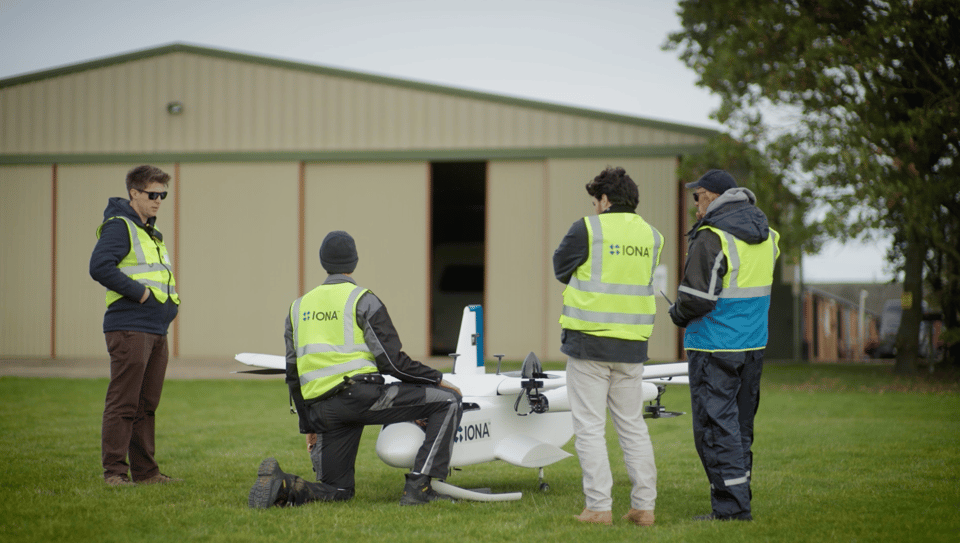
IONA is reshaping the world with the Operating System for B2B logistics. We help carriers adopt autonomy and robotics, starting with a drone delivery service for long ranges and up to medium-weight goods, fully integrated into their stack and into the airspace. Under $1 per parcel, up to 120 miles around their depots.
Foreword
The last quarter has been the most productive stretch. We hope you had a great summer, and we come back to you with plenty of exciting news!
Snapshot
V3 in production, ahead of a showcase at CES in Las Vegas.
New pricing model that uses a TCV / RPO logic, more suitable to a ramping up in volume post-implementation.
New materials and docs aligned company-wide. It maintains consistency across teams.
The Good
One set of data models runs the whole company 📀
We developed workflows in August that align the entire company on data models and a common logic. It maintains consistency but also reduces our staffing shortage, because a single person can now manage much more complexity.
In summary:
For the tech, it took the form of a new plugin and tools that we developed. As a regulated tech, we have workflows and checks: they become automations with guardrails, therefore compliance audit ready!
For the business and ops, we aligned with scheduled scrapes of the data, turning everything into clear KPIs. We instantaneously know the cost to serve at any step of maturity for the network, and that made us update our pricing model as well.
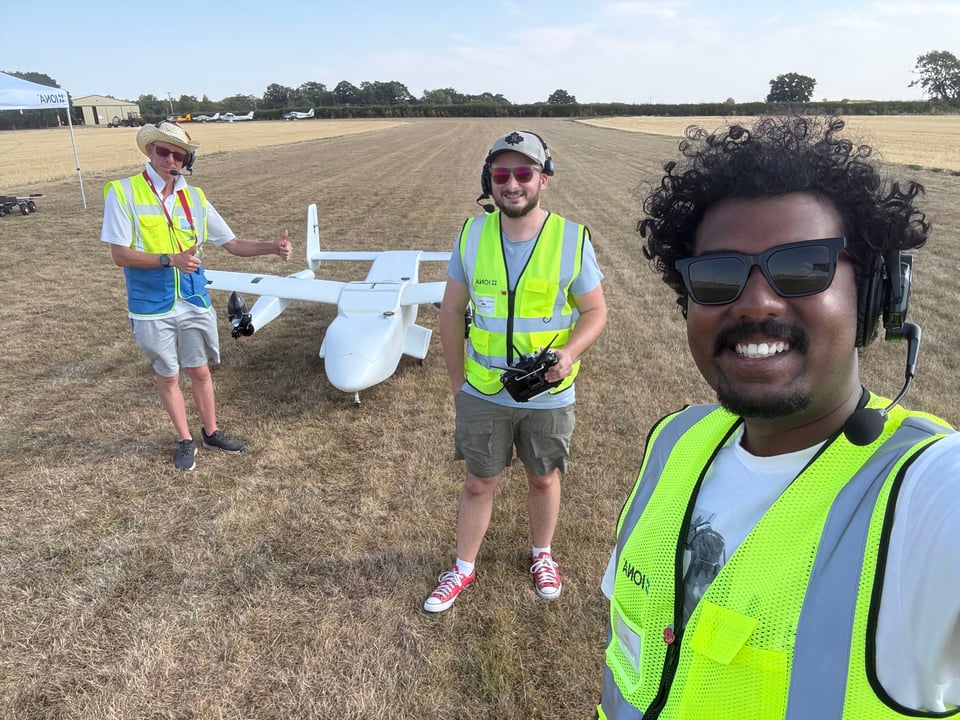
The V3 is in production ⚙️
We also built a small development airframe, the dev quad, to fly more and capture more data. That drone is Open A3, so it mimics the large one in every way but sitting outside the thresholds that limit certain tests and missions. We move faster, and implement the successes. Also, it's the proof that CompanionOS can run distinct robots or drones.
NAVIS and Cosmogony have now trained for months on real operational data. The Sonnet was autonomous already, but the objective is to automate the full chain over time: maintenance, checks, new implementations.
It led to updates on our material 📝
We wrote memos, connected our financials to the new models, and rebuilt the deck. We also paused our website, which now only says "March 2027", ahead of the upcoming announcements at the CES in January.
4 years ago we made a bet on how the world would align on the rules for cyber-physical systems in open environments. It led to CompanionOS, making us the first live and authorised solution for B2B logistics.
Signals
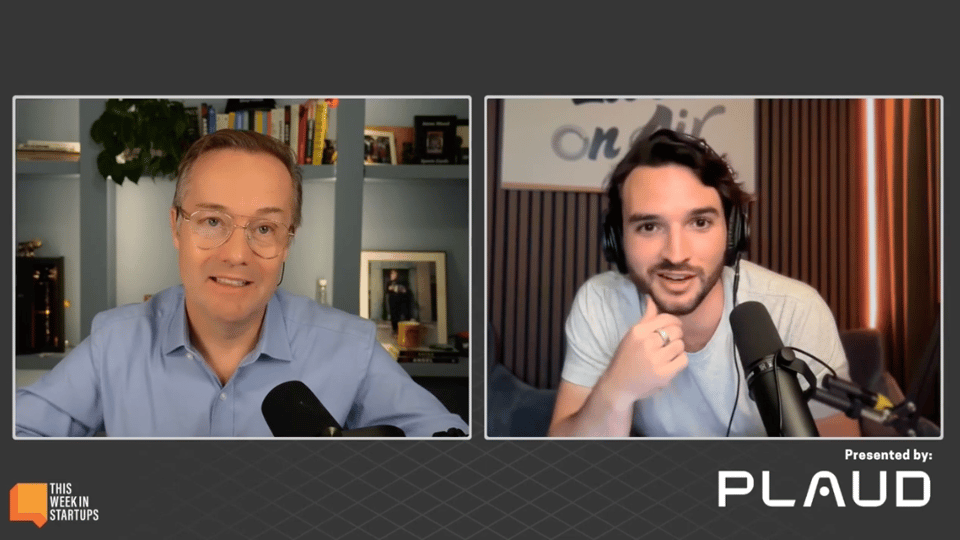
I was on This Week in Startups 📸
Jason Calacanis had me on to explain how IONA differs from the drone delivery companies people already know. Worth a listen if you want the short version of the thesis. Thanks again, Jcal!
Air delivery adoption is growing exponentially 🚀
Walmart passed 1 million drone deliveries. Wing is targeting 8k daily deliveries by the end of the year. Amazon is extending Prime Air to more than 500 cities. DoorDash has announced its own programme, DoorDash Air.
All of it is the 'micro-order segment': around 5 lbs, short range. The segment after is 'everyday delivery' with longer ranges and bigger parcels: that is the one we built for. In figures, the micro orders are 3% of the transactions in the world, compared to 95% for small to medium packages.
Strategy
BVLOS is not autonomy 🤔
Often use as synonyms, so today let's look at the meaningful difference that exists between BVLOS and 'Scalable Autonomy'.
BVLOS means beyond visual line of sight: the point where the pilot can no longer see the aircraft, so the flying has to be automated. It is a way of flying, not a capability, just like IFR for general aviation. You still need active pilots, just not in the cockpit. That is a large efficiency gain on what exists today, but your output is still tied to your headcount.
The step after it is the one that matters for IONA, and we usually name it 'Scalable Autonomy', as it touches costs and operations as a result of regulatory milestones.
A fleet that runs with just a few supervisors watching a network. They don't have to be in the same location or country, and could manage a surge in demand without any change to the size of the team.
At that point output is decoupled from input, and the unit cost of labour tends towards zero. Once the system is built that way, every hour of operation widens what you are permitted to do.
More aircraft in parallel, and more complex missions. Not only can your network of drones operate organ delivery between two Los Angeles hospitals, but they also do so while crossing paths with another drone from the fleet going to Walmart, and a few others delivering parcels to El Segundo.
Between updates I write on Substack. If you want to go deeper on tech and business topics, this is the right place.
Fun Stuff
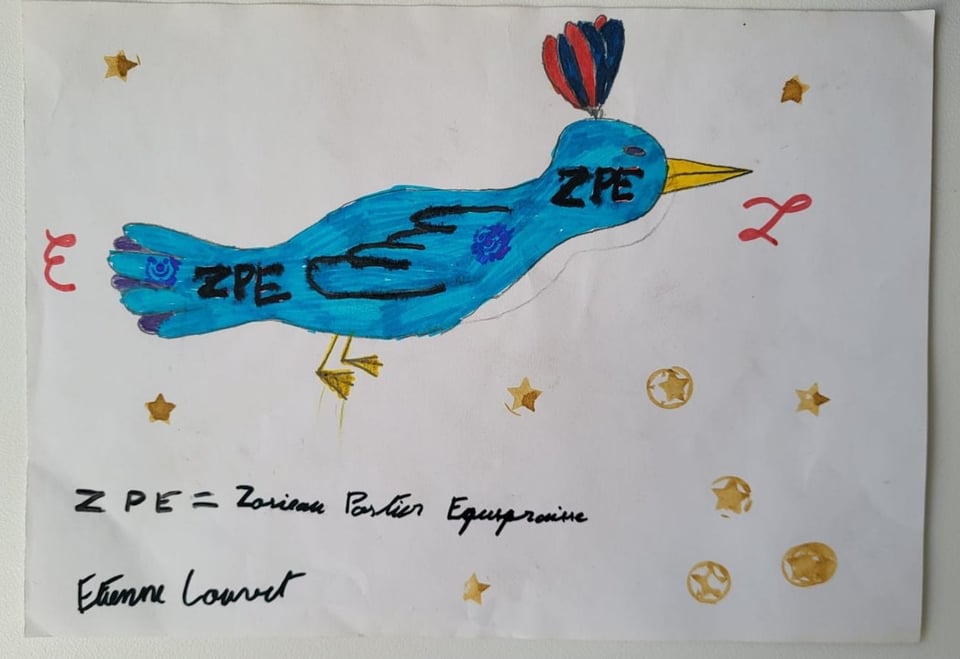
My first business plan was a bird delivery company 👶🏻
As long as I can remember, I was fascinated by autonomy, and from quite an early age I was drawing dreamt cars, closer to an RV, that would be autonomous and enable people to be free from any geographical constraint.
What I didn't remember is my first business plan for IONA: I was 8, and it started as a bird delivery company for fast services. The goal is the same and only the tech changed: stubborn on the vision, flexible on the details.
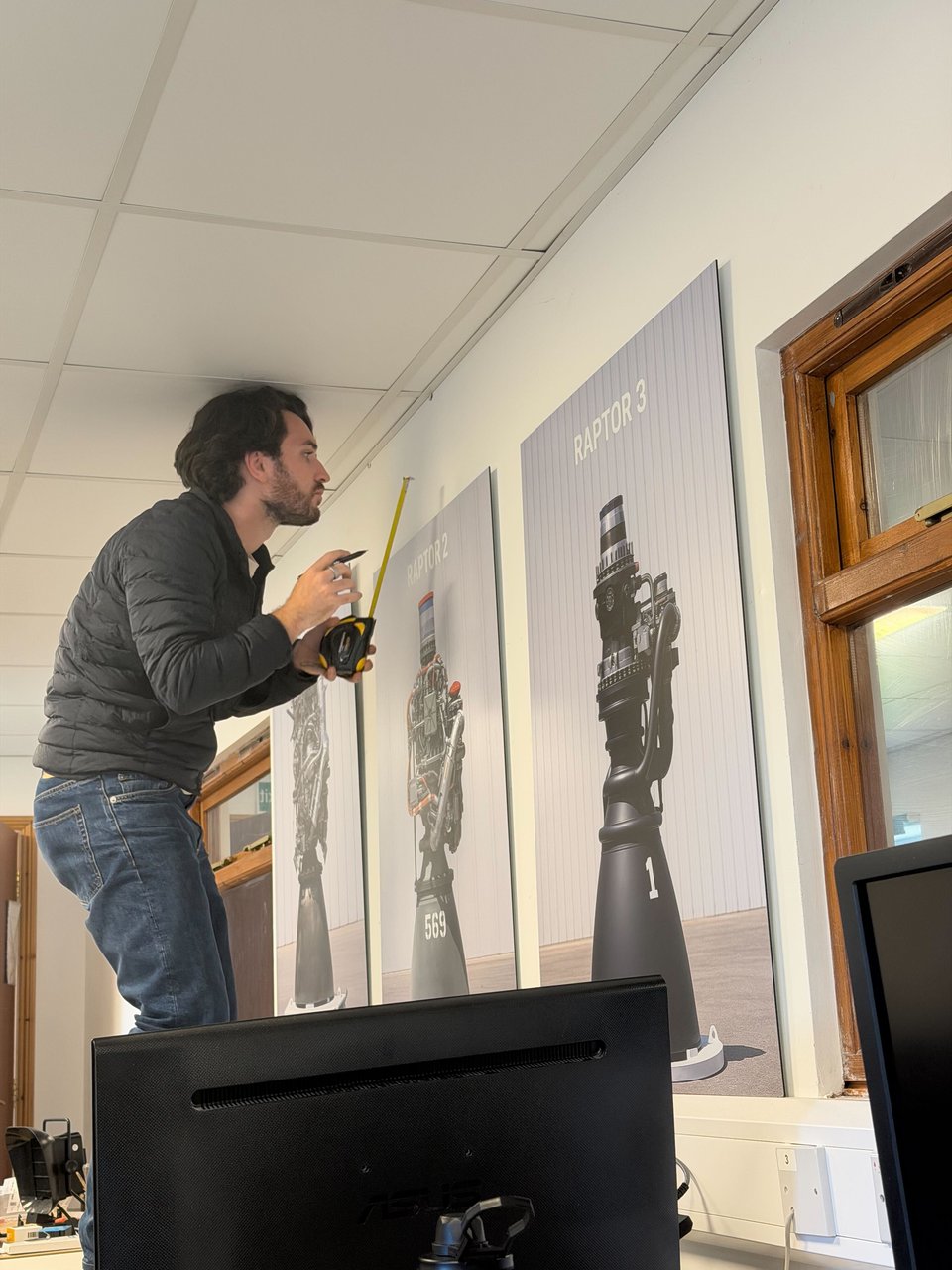
The office grew, and the wall has our mantra on it now ❤️
"Simplicity is the ultimate sophistication", illustrated by SpaceX's famous Raptor engines.
Congratulations! ❤️
Jean from the Software team is now engaged! He moved from South Africa to Dublin for us, and watching people build a life here as well as a career is a real delight.
The End
It's 2026 and many of you started to read our updates in 2023!
IONA is like good music; in a few years you'll tell your friends "I knew them before they were a thing". To maximise this storytelling potential, we strongly recommend you follow us on LinkedIn!
Thanks,
Etienne