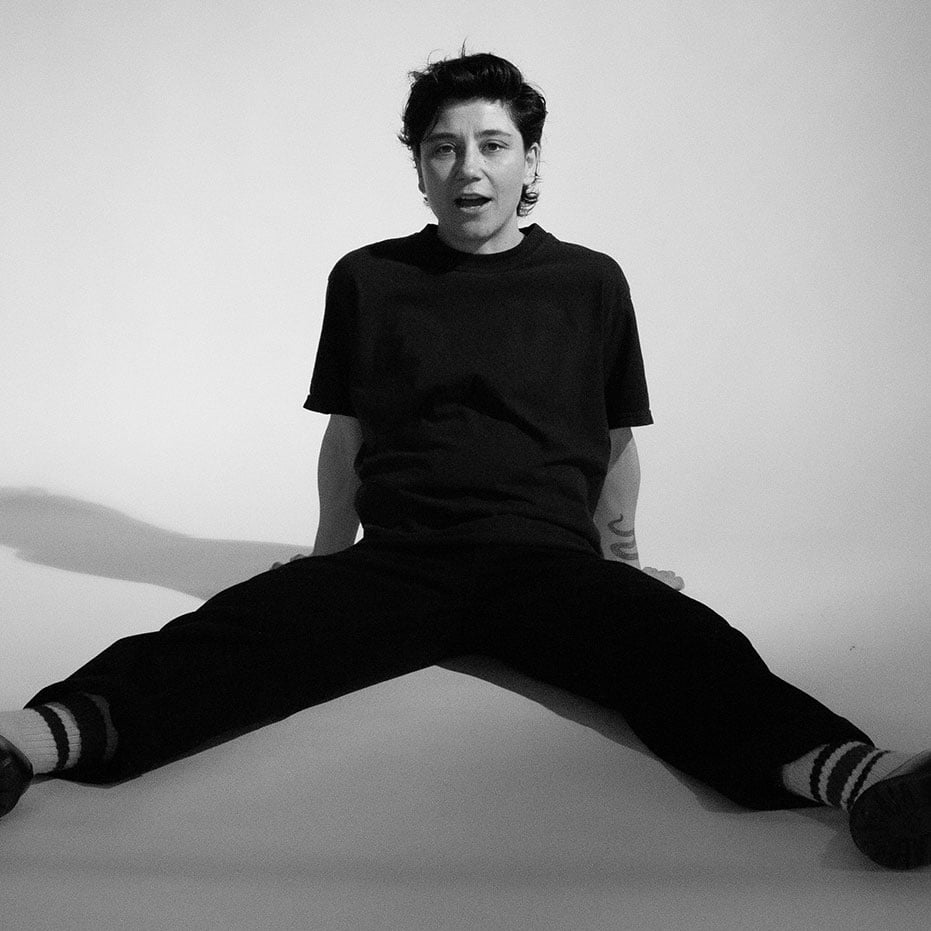
At the Precipice of My Masculinity
The Personal Origins of Butch Is Not A Dirty Word
The origins of Butch Is Not A Dirty Word were deeply personal. Before it became a magazine, an archive, or a body of photographic work, it began with a rupture in my own understanding of myself.
A complex series of events involving a very punk-rock-esque dyke skateboarding tour in 2008 brought me from Melbourne, Australia, to the West Coast of the USA. To say that queer culture varies between these two contexts is a vast understatement. Prior to my travels, I didn’t even know what a butch lesbian really was, and I certainly had never seen a femme one floating around, in Australia the gender expression of every single lesbian I knew mirrored that of Avril Lavignes, and in Portland, OR their were butches AND femmes and every other kind of dyke in between, and they were all having a very sexy time. The specifics of this story aren’t important right now…
But what is important to note is that this experience forced me to confront how much shame I had internalized around my own butchness and masculinity. Some from mainstream culture, and some from my local lesbian culture itself. What disturbed me most was realizing that this shame and these beliefs had not originated within me. I had absorbed them so completely that they had at some point come to masquerade as my own, shaping not only how I saw myself, but how I saw other butches. My butchphobia was off the charts.
That realization was the beginning. Once I understood this, I was angry. I felt that I had been lied to, not necessarily by any one person, but by a culture that had taught me what queer and female masculinity were supposed to mean before I had ever been given the opportunity to define them for myself.
I wanted to create the thing I wished I had encountered earlier.
Butch Is Not A Dirty Word emerged from that desire: to create contemporary representation that centered butch identity on its own terms. I was drawn to the magazine as a form because of the visual language; it offered a space where an identity could be given aesthetic, cultural, and narrative value. When you put someone on the cover of a magazine, it means something! I didn’t know exactly what I was building at the time. The project emerged gradually, one lily pad at a time, each step revealing the next and somewhere along the way, I crossed the threshold into fully embodying my own masculinity.
But crossing this threshold did not resolve everything. It opened an entirely new set of complexities.
As my outward presentation changed, so did the way I was read within lesbian culture. Suddenly, I was perceived as a viable sexual object. I was desired and fetishized in equal measure to being resented. At times, I found myself becoming a kind of punching bag for other people’s frustrations with patriarchy, as though my proximity to masculinity made me responsible for the systems associated with it.
Untangling where my responsibilities began and ended became a complicated process. I had to separate masculinity from patriarchy: to understand what I had inherited and needed to unlearn, what forms of masculinity I wanted to embody, and what belonged to other people’s projections onto me. There was conditioning I needed to confront within myself, but there were also assumptions about masculine people circulating within lesbian culture that deserved to be questioned.
Over time, I began to understand butchness not as a destination I had finally reached, but as a vantage point through which I could examine gender itself, how we inherit it, perform it, resist it, project meaning onto it and, eventually, find ways to move beyond the limitations it places upon us.
This has been a long and complicated process, and one that continues to evolve. But I feel I have found my way toward a kind of wholeness. I know who I am beyond my gender. In many ways, I think of myself now as post-gender, and within that, I feel free.
Butch Is Not A Dirty Word maps that journey through my own lens and through the experiences of the butches I have photographed, interviewed and come to know over the past decade. The work is inseparable from my own experience, and it does not claim to offer a definitive account of butchness. It is one perspective, from one particular vantage point: that of someone who came of age between two eras, between the inherited histories of butch lesbian identity and the rapidly evolving language and possibilities of contemporary gender.
Perhaps the project has always existed somewhere in that space: between what we inherit and what we choose to keep, between the identities that give us a place in the world and the freedom to eventually move beyond them.
