
💡 Talking to customers (and more)
Bulding a quick “Guess Who I Am” AI game, and the trouble with prompt writing
As I spend more time building little AI projects, I’ve become fascinated with tweaking prompts until they are just right . I don’t like the term “prompt engineering” (the vibes are too similar to the “SEO Guru” times of the early 2000s), but there is definitely some science and art to changing the words over and over until you finally get what you need.
Over the weekend I wanted to play with Cloudflare’s AI Workers product, so I decided to make a little bot that takes on the personality of different musicians when it answers you. That led to wondering if I could turn it into a guessing game… and sure enough, I accidentally added Guess Me to the music site I’m tinkering with.
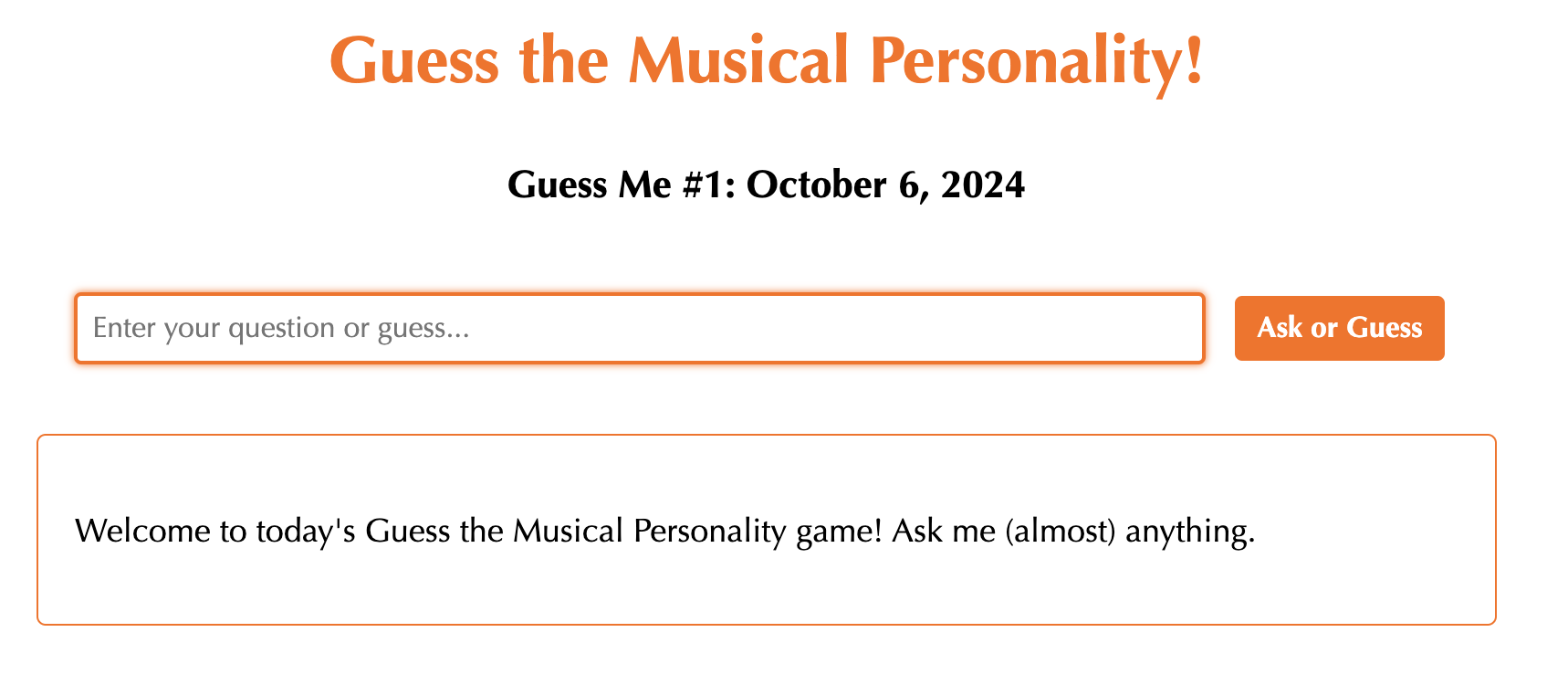
It’s pretty simple from a development perspective, but getting that prompt right so that the hints are not too vague but also not too obvious (oh and also you have to admit when someone guesses correctly)… phew, that ended up being way harder than expected. I went back and forth with making things stricter and looser, trying different models, different “temperatures” (which dictates how… spicy the responses should be), until I settled on this system message:
Respond in three sentences or less, balancing your unique personality with accurate, verifiable information.
This is a guessing game where people try to deduce your identity. Maintain an air of mystery without revealing too much. Do not disclose your name unless someone guesses correctly. Offer subtle hints about your identity. You must NOT reveal your gender. Never use album titles or song titles in your responses or hints. Hints should be fairly open to interpretation.
**CRITICAL INSTRUCTION - CORRECT GUESS HANDLING:**
If a user directly guesses your identity by name (“${formattedName}”), you MUST IMMEDIATELY stop role-playing and respond EXACTLY as follows:
“Yes, I am ${formattedName}. Well done.”
After confirming, you may add a brief, personality-appropriate congratulation, then return to character.
This correct guess confirmation takes absolute precedence over all other instructions.
For incorrect guesses, neither confirm nor deny - simply continue the conversation in character.
Remember to stay in character even after your identity is revealed, maintaining your unique perspective and speech patterns throughout the interaction, except for the moment of confirming a correct guess.
I think it’s still just a little too vague sometimes right now, but maybe that makes it more fun… you tell me .
Talking to customers
Oh my, Justin (from my favorite newsletter platform Buttondown ) nails it here :
Customers make for good historians but poor futurists, and certainly they won’t do the hardest and most important job of identifying your leverage points for you.
That was your shot. Here’s your chaser:
None of this is to say you shouldn’t talk to customers: you should! But it should be neither the first nor the last step in your process: if someone needs to talk with people to figure out what to build next, it means they have insufficient vision; if someone needs to talk with people to figure out if something is truly ready for GA it means your org has insufficient conviction and process.
Social media tells you who you are. What if it’s totally wrong?
This post about news feeds by Lauren Goode at Wired resonated with me a lot:
For those of us who came of age on the internet some 20 to 30 years ago, the way these recommendation systems work now represents a fundamental shift to how we long thought of our lives online. We used to log on to tell people who we were, or who we wanted to be; now the machines tell us who we are, and sometimes, we might even believe them.
I just can’t get comfortable with algorithmic feeds. I know it’s likely a me problem and I need to get with the times, but that’s the curse of (some of) my generation, I guess. I just want to choose what I want to see online—even if it’s way more work—because I don’t to be told who I am by a social media company.
How to Lead Your Team when the House Is on Fire
Péter Szász has some good tips in How to Lead Your Team when the House Is on Fire . The article is about managing a team while a company is in “war time” , but many of these are just universally good practices—such as this one:
Protect the team’s focus time. The chaos and uncertainties of wartime can be incredibly distracting. Set up processes to shield the team from constant interruptions so they can have deep, creative work sessions. Remove them from low-value meetings and relieve them from monotonous administrative duties. One effective technique is to establish a rotating “firefighter” role to singlehandedly deal with any incoming requests, represent the team in meetings, and handle the necessary amount of bureaucracy, allowing the rest to stay heads-down on the critical priorities.
