
You Don’t Have to Figure It All Out Alone
What a cohort teardown and an SEO deep dive taught us about growth.
Well, hello, and welcome to this week’s edition of the eCommercer.
This week’s about something most founders (including me) wrestle with — that point where being essential turns into being indispensable. It sneaks up on you. One day you’re keeping things moving. The next day everything’s waiting on you before it can move at all.
So in this issue, I’m looking at the hidden price of founder dependence the stuff that quietly slows you down, limits your options, and makes growth feel heavier than it should.
And on the podcast, I’m joined by Nate Woodbury who shared a YouTube strategy is simple, sustainable, and it grows your reach without piling more work on your plate. In other words the kind of marketing that doesn’t make you more of a bottleneck.
Have a great week, wherever you are in the world.
Until next time,
Thought For The Week By Dante Michels, Founder of Rather Green →
Founders Don’t Grow in Isolation
This year I joined the cohort, and what’s surprised me most is how valuable it is just being in the same room with people who are building businesses at different stages, in different ways, but facing the same underlying challenges.
There’s something reassuring about hearing someone else describe a problem you thought was unique to you — and then realising they’ve already tried three approaches you hadn’t even considered.
One of the highlights for me so far was when the whole group reviewed my website (in the friendliest way possible). It was one of those moments where everyone sees something slightly different — one person looked at the journey, another at the messaging, someone else at the structure, and a couple of people focused on the practicalities that only come from having made the same mistakes themselves.
What really stood out was how quickly the conversation moved from “here’s what you could fix” to “here’s what we’ve tried, here’s what actually worked, and here’s what to avoid entirely.” It wasn’t theory. It was real experience, shared openly, which is not something you get very often as a founder.
I walked away with a far clearer understanding of where my structure was slowing us down and what changes would have the biggest impact. It saved me weeks of trial and error, not to mention the energy that usually goes into guessing instead of knowing.
More than anything, it reminded me that you don’t have to build in isolation. Sometimes the fastest way forward is to let other founders see behind the curtain and offer the kind of honest, practical feedback you’d never get from a blog post or a podcast.
This Week’s Episode of the eCommerce Podcast →
Seeing the Parts of Your Store You’ve Stopped Noticing
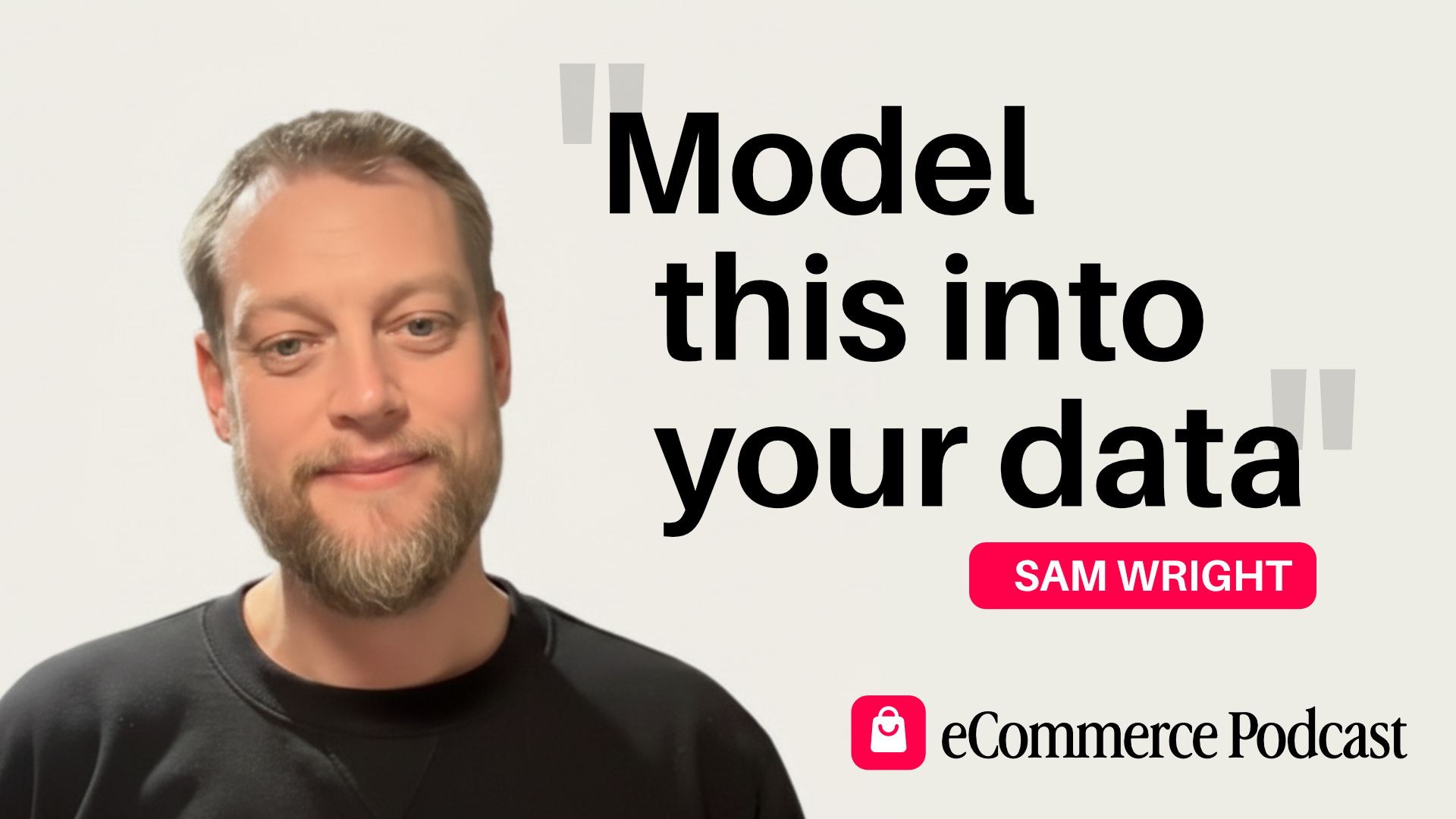
This week I spoke with Sam Wright from Blink SEO about something most eCommerce businesses overlook without realising it: the structure of their store.
Sam shared a simple stat that forces you to rethink how your store is organised:
Around 35% of search impressions for eCommerce brands come from collection pages.
Not product pages. Not your content. Collection pages.
And most stores haven’t touched theirs since the day they launched.
Why structure slips without anyone noticing
Sam works with large-catalogue Shopify stores, and he sees the same pattern Dante described in a different form: things grow organically, without anyone taking a step back to intentionally shape the structure.
The store keeps selling, so the problem feels invisible — until growth starts dragging.
The opportunity most stores are missing
Customers search in very specific ways:
Sofas
→ Blue sofas
→ → Blue four-seater sofas
→ → → Blue four-seater corduroy sofas
But Shopify’s filters aren’t indexable. So if you don’t create actual collection pages at this level, you’ll never show up where the demand truly sits.
The practical way Sam’s team decides where to go deeper? Search Console impressions.
If your “blue sofas” page is getting impressions for “blue four-seater sofas”, that’s the indicator: create the sub-collection.
How this ties back to founder life
Just like Dante’s website review session, this isn’t about someone handing you theory — it’s about someone showing you the blind spots you can’t detect from inside your own business.
The AI shift you can prepare for now
Sam also pointed out that as AI search matures, the stores that win will be those with rich, human-centred product data — not just attributes like size or material, but use cases, personas, and context.
Imagine someone asking:
“Show me a coffee machine under $200 that makes coffee like you’d get in Italy.”
Those are the brands with detailed product data — not just technical specs — who show up.
Start building this into your tags, metafields or PIM now. You’ll feel the benefits immediately and be ready for the next wave of AI-led discovery.
The funny thing is, whether it’s a cohort room full of founders or a Search Console report full of data, the lesson is the same:
Growth gets easier when someone else helps you see the structure you’ve stopped seeing.
Get the foundations right, and everything else moves faster.
Sam’s Links:
Company: Blink SEO → https://blinkseo.co.uk
Freebie of the Month →
Map every interaction your customers have with your business and discover where you're missing opportunities to show genuine appreciation. This free audit includes a simple template, worked examples from three different e-commerce businesses, and ready-to-use templates for handwritten notes, thank you emails, and shipping notifications - everything you need to start turning one-time buyers into repeat customers through authentic gratitude.
Be A Guest →
Got an eCommerce business with stories worth sharing?
Come be my guest on the eCommerce Podcast, where I chat with founders about the wins, the disasters, and everything in between. Your story could be the one that helps another founder grow smarter (or avoid your mistakes).