
What Happens When 57% of Google Searches End Without a Click
Plus: why platform shifts keep rewarding the brands that move first →

Well, hello, and welcome to this week's edition of the eCommercer.
Every few years, something big shifts in the digital landscape and a whole generation of marketers finds themselves scrambling. The rules they spent years mastering suddenly stop working. The playbook that delivered reliably now delivers diminishing returns.
Hands up if you know what I mean?
Like when cookies literally started crumbling, I watched experienced marketers panic while others spotted an opportunity. And it seems that we're seeing it again with AI-powered search, and I wonder if our§ response will be any different.
The thing is, these moments of disruption tend to reward the same type of business. Not the biggest. Not the best funded. But those able to respond well and quickly.
Have a great week, wherever you are in the world.
Until next time,
This Week's Episode of the eCommerce Podcast →
LLM Traffic Converts 5X Better Than Google for eCommerce
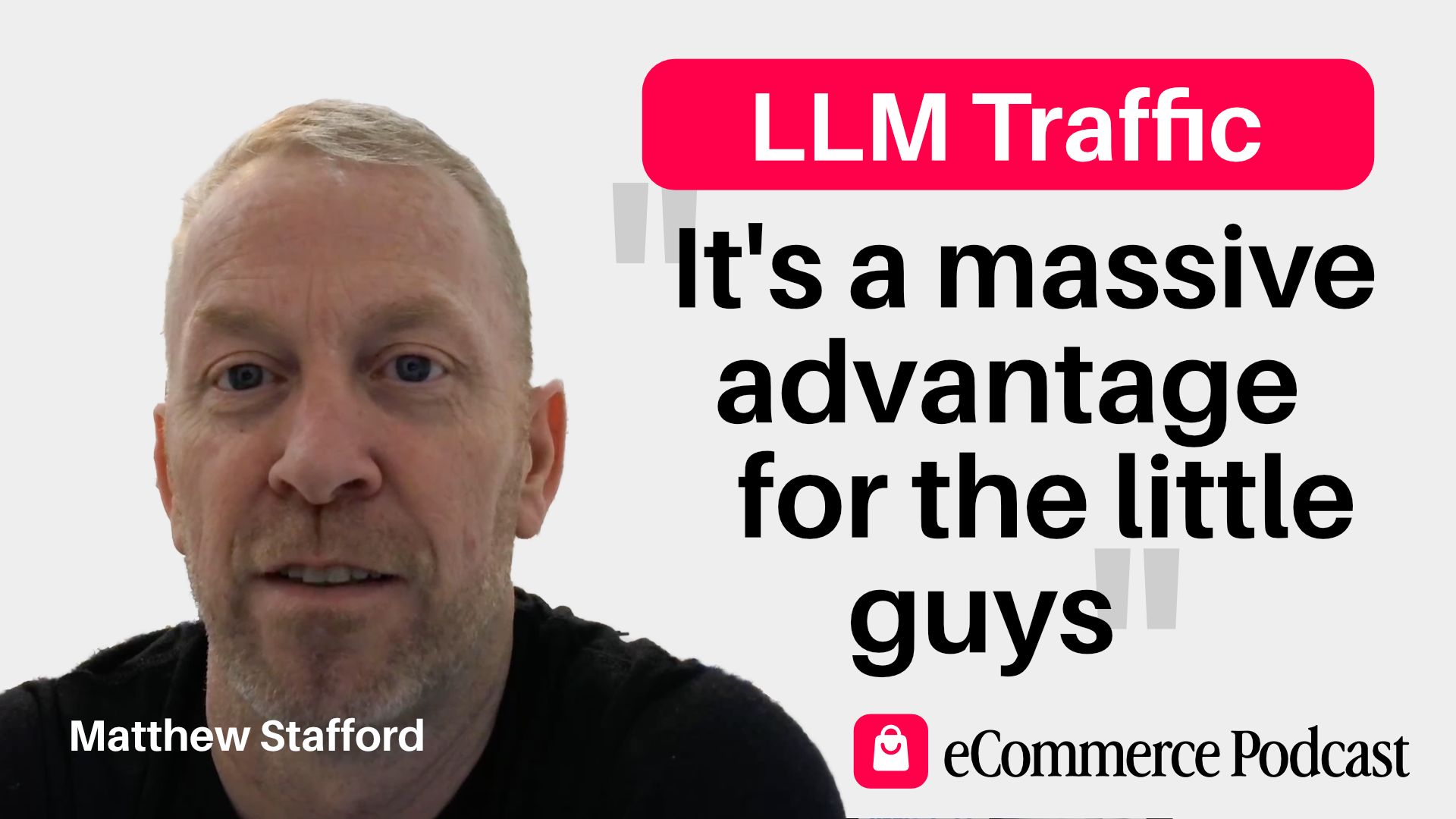
Matthew Stafford, in this week’s episode, tells us that 57% of Google searches now end with no click at all. People are getting answers directly from AI overviews or heading straight to ChatGPT and Claude instead.
Every client Matthew works with has seen organic traffic drop 20-30% this year. But where it gets interesting is that the brands that have started optimising for LLMs aren't just recovering lost traffic, they're converting it at rates that make their old Google numbers look pedestrian. We're talking 5X higher conversion rates from AI referrals.
The shift makes sense when you think about it. People use LLMs as trusted advisors. They share their preferences, their context, their concerns. When that trusted advisor recommends something, people buy. It's a fundamentally different relationship to scrolling through ten blue links.
So what actually works for getting recommended by AI assistants? Matthew's approach starts with buyer-intent FAQs, which are questions someone would only ask if they were seriously considering a purchase. Not "What's your shipping time?" but "Is this safe for sensitive skin around the eyes?" Create these for each product, starting with your top 20% that drive 80% of revenue, and you’re off to the races.
The other piece that struck me is how this levels the playing field. Large organisations need committee approval, legal sign-off, and a review of brand guidelines. By the time they've figured out their LLM strategy, smaller brands could have six months of consistent optimisation under their belts.
One hour every Monday. Same optimisation work. Small, consistent actions that compound over time. As Matthew put it: "Nothing changes if nothing changes."
Matthew's Links:
Company: Build Grow Scale → https://buildgrowscale.com
Related Episode →
The Brands That Win Platform Shifts
This connects to something Jeff Greenfield shared in our conversation about surviving the cookieless future. He made the observation that the largest advertisers often have the most simplistic measurement strategies. They default to last-click attribution even though they know it's wrong, simply because they're doing so much across so many regions that they can't move quickly.
Meanwhile, smaller brands can adapt immediately.
Jeff compared it to Y2K, when companies desperately needed Fortran programmers who commanded thousands per hour. The marketers who'd been around long enough to remember pre-digital principles suddenly had knowledge the newer generation didn't.
We're in a similar moment now. A whole generation of marketers grew up on hyper-targeted tracking. When the rules change, they're lost. But for those willing to learn the new landscape, whether that's impressions-based thinking for cookieless marketing or LLM optimisation for the AI search shift, there's a genuine opportunity.
The pattern is consistent: platform shifts reward speed over budget.
Episode: https://www.ecommerce-podcast.com/survive-and-thrive-in-a-cookie-less-world
Freebie of the Month →
I've put together a complete workbook that walks you through all seven areas of the Slingshot framework — with specific questions, metrics to track, and space to capture your lessons and goals.
It's designed to take about half a day. Block the time. Treat it like a board meeting with yourself.
Be A Guest →
Got an eCommerce business with stories worth sharing?
Come be my guest on the eCommerce Podcast, where I chat with founders about the wins, the disasters, and everything in between. Your story could be the one that helps another founder grow smarter (or avoid your mistakes).