|
Well, hello, and welcome to this week's edition of the eCommercer.
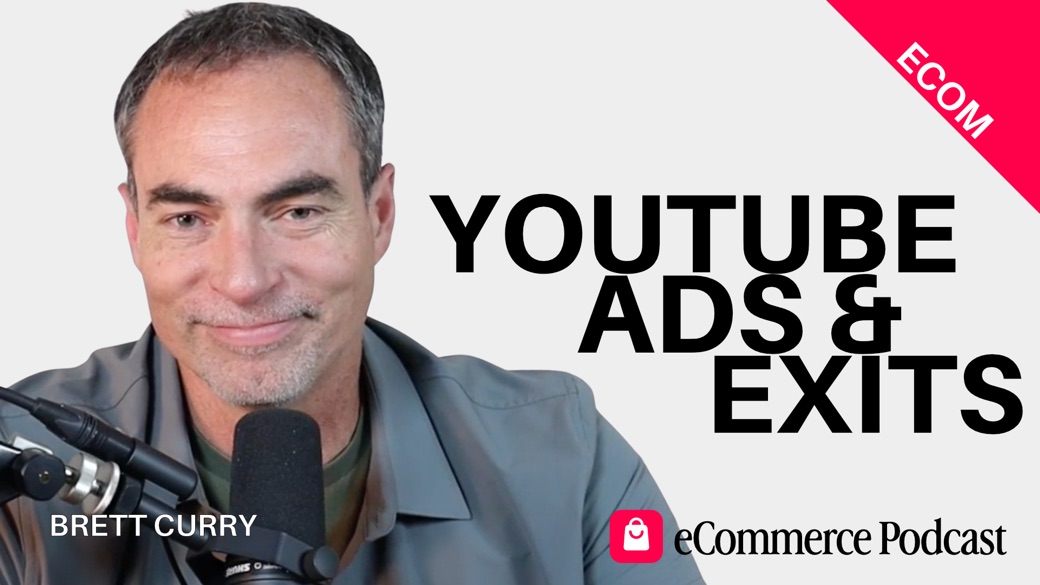
This week's episode is a slightly odd one, and I mean that in the best possible way. My good friend Brett Curry runs OMG Commerce, one of the most respected Google and YouTube ad agencies in ecommerce, and he also hosts a podcast of his own called the eCommerce Evolution. So we did something I've never done in all these years of recording. We sat down, hit record once, and put the same conversation out on both our shows. Two podcast hosts, one studio, no real plan. Brett's battery died halfway through his opening sentence, which felt about right.
But out of all the chat, there's one idea I keep turning over in my head, and it's worth more than anything else we covered.
The same business, worth nearly three times as much
Brett asked me what I look for when I'm buying an ecommerce business, and somewhere in there we talked about the thing I wish someone had told me twenty years ago.
Imagine you've got a supplement company making a million dollars in profit. On a standard ecommerce multiple, you'd sell that for somewhere between two and three million. Fine. That's the going rate.
Now change one thing. Don't change the sales. Don't change the customers. Don't change the product. Just change how people pay you. Take those same customers and turn them from one-off buyers into subscribers, or better still, into paying members of your brand.
Suddenly that business isn't worth three million. It's worth eight.
Same sales. Same people. The only difference is the mechanism. And the reason the number jumps is that an investor looks at recurring revenue and sees something predictable. They believe that money will still be there next month, and the month after. As Brett put it, a friend of his recently did a private equity deal and the thing they cared about most wasn't the AI, wasn't the team, wasn't even the brand:
| | Really, all the private equity company cares about is the durability of the revenue.
Brett Curry · OMG Commerce |
That's it. Durable revenue sets the multiple. One-off buyers are fragile. Members are durable. So three turns becomes five, and five becomes eight, and you've done nothing harder than rethink the way you ask people to pay.
The 5% nobody dares to touch
The other thing I look at is pricing, because almost every business I look at has the same blind spot. They haven't put their prices up in years, and usually it's out of fear. They're convinced that the moment they nudge the price, customers will bolt.
The maths says otherwise. Ninety-nine times out of a hundred, when I run the numbers, the money we make from the increase dwarfs whatever we lose in customers. For us, a 5% price rise tends to mean something close to a 40% lift in net profit, depending on your margins. You lose a handful of people. You make a lot more money. And most founders never even test it.
It sits inside something I first heard from Jay Abraham when I was eighteen. There are only three ways to grow a business. Get more customers. Get them to buy more often. Get them to spend more each time. Push any one of those up 10% and you grow 10%. Push all three at once and you don't grow 30%, you grow around 33%, because they compound. Price is just the quietest of the three, and the one most people are too nervous to pull.
So if you're sitting on a brand you'd quite like to sell one day, the work starts now. Not the year you put it on the market. Get the recurring revenue building and the prices honest, and you're making the business better to run today and worth more whenever you choose to walk away.
We also get into YouTube ads in 2026, which is Brett's real home turf. Half of all YouTube is now watched on a telly, it's the number one podcast platform, and your best Facebook ads can sometimes be repurposed straight onto it if they tick five specific boxes. Worth a listen if YouTube is on your list this year.
|