
Submitting Yourself

Two years ago, you made a big deal about promising to have a new book under contract. Last year, you were all proud of writing something different. Now that it’s another birthday newsletter (HB, BTW), what’s this year’s big proclamation?
Wait, was I supposed to do that? Is that an annual thing? Now I’m at the age where I have a variety of annual things to remember and, cruelly, way less memory.
After last September’s newsletter, I liked the novel I had written but I wasn’t done writing; that version of the book was, frustratingly, unfinished. I didn’t know where to go next and couldn’t see things clearly. I asked some of my favorite writer-friends to critique the book late last year, and they gave me good, necessary guidance. But I still didn’t feel like I’d found my footing until freelance- and Simon and Schuster-editor Chantelle Aimee Osman got hold of it. After her thorough, excellent feedback, I found the story I wanted to read, and then I wrote it.
And now I’m on the verge of submission.
What’s that mean?
That means my agent has it, and she’s reviewing it to make sure my novel isn’t some fevered dream with the line, “The quick brown Ed jumps over the lazy dog” written sixty thousand times. I mean, obviously, that sentence is in there, but only, like, twice (spoiler).
After my agent reads it and decides it’s ready – likely after a final round of edits – she’ll send it to acquiring editors at publishing houses, who will decide if they want to buy it and give us money. The hope is that it’s sent out to those editors in a couple of weeks.
How do you feel about going on submission?
Submission is either crushing or exhilarating for writers. Your book is in front of editors who, with a single acceptance, can genuinely change the direction of your career or - let’s be real - your whole life. And submission typically involves, even for relatively successful writers, a lot of rejection – a very necessary part of the artistic process, but also a very sucky one.
I equate it to skydiving, or eating Taco Bell. You’re terrified and excited, but then you do it and the excitement takes over. And then reality starts to seeps in, and you realize you’re plummeting to your death, and you’re suddenly not sure if this was such a good idea.
You’re being dramatic. Going on submission isn’t as bad as Taco Bell.
I mean, I was on submission so long ago that it was pre-Covid. Back then, you could just walk up to someone and cough right in their face, and it was totally acceptable! That was back in 2019, and that book was They’re Gone. After They’re Gone was published in 2020, an editor with Thomas and Mercer reached out to my agent about me, and we sent my next book exclusively to her. And that led to a two-book deal for No Home for Killers and When She Left.
So I haven’t tried to sell a book for seven years or so, but I remember what submission is like. The entire process is an extended make-or-break moment, but one outside of our control, and us writers don’t handle those kind of moments well. Our book is something we’ve entirely controlled, down to the first comma and final period. The first few times it’s in someone else’s hands are always uncomfortable. Imagine you’re at a doctor’s office and you take off your pants in front of the doctor and nurse and they immediately start whispering to each other.
That’s what it feels like when someone else first has your work.
Did that…did that happen to you at the doctor?
Anyway, here’s how I handle being on submission. I follow the advice I give other writers – write something else while you’re waiting. Waiting is interminable. You might hear back within a week, or it could be months. Maybe even longer. And that time will eat at you until time’s teeth are crushing your bones.
Through the process, first-time writers often discover, and experienced writers are reminded, that publishing operates in a way that many find galling. This is generally because, in most of our shared experiences, working hard in life usually leads to reward. In school, you study and your grades will improve. Once employed, perseverance often ends in promotion. In writing, a novel that took you years may end up in a drawer. And the truth is, you may never sell that novel (or any novel), regardless of how hard you work. Writing (and not only because of commerce) just doesn’t work that way, not if you want to go the traditional publishing route.
You need reward during this waiting period, so write something else. Write something you believe in, and something others believe in nearly as much as you do. This will sound antithetical to some of you, but you need outside validation, someone else’s excitement about your work, an editor eager to share a short story or a review or an essay or a poem you’ve created.
There’s another reason for doing this other work – it can help your submission. One of those editors your agent contacted may read your essay in CrimeReads, or your review for the Independent, or your short story in Ellery Queen, and that could spur them to read your novel next. Maybe they’ll feel that your novel’s not quite there, but it’s close, and this other piece helps them realize your potential. Or maybe this other writing leads to a platform, a chance to write more and grow your audience.
All of this helps you as a writer, in the two ways that matter most – your craft, and your career.
So all that said, how are you feeling, birthday boy?
You go into submission feeling that anything can happen, which it can, and that it could happen right away, which it might. An editor may get your agent’s email, read or request the novel, quickly fall in love, share it with others in the publishing house, convince them to agree to buy it, and make an offer that leads to acceptance or auction. I’ve seen that happen, within days.
But generally, after your novel is sent to editors, a week or two passes, and your expectations settle, and the self-care begins.
So how do I feel? Excited. A little scared. This book, as I’ve said before, hits different for me, but in ways that feel both necessary and right. I found myself, and that’s a wonderful, albeit often fleeting, feeling.
I know enough to know the limitations. I fully believe I wrote a good book, but good books don’t necessarily get published. Even when you find the right path, you don’t know exactly where this path leads, or how long you will walk. And when the path ends, you can only hope you’ve reached that place where all writing and art is intended to end, with that human, vulnerable, tender and simple connection – someone has read your work and told you that, to them, it matters.
EA
Subscribe now
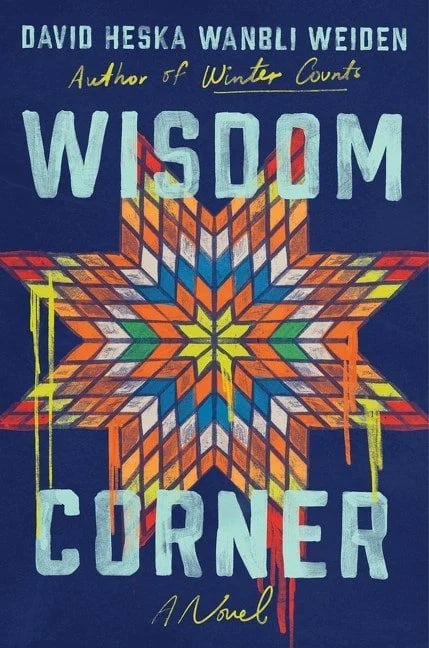
Just a reminder that on Friday, September 18, from 7-8 pm, I’ll be chatting with David Heska Wanbli Weiden about his new novel, Wisdom Corner, at Solid State Books. Wisdom Corner follows David’s award-winning, widely praised debut, Winter Counts! Tickets are available HERE.
It's giveaway time! The winner of a copy of David Heska Wanbli Weiden’s Wisdom Corner is:
Congrats, and I'll send you an email soon!
I like to make everything in this newsletter, and life in general, about me, but I need to take a moment to congratulate one of my closest friends, Jennifer Hillier. Her new novel, Heart of Glass, hit #5 on the New York Times bestseller list this week!
This is her first trip to the Times and, honestly, I’ve never met a writer who deserves this success more. Not only because of how hard she works - most of us work hard at this - but because Jenny is one of the nicest, most generous people I’ve ever met. She’s been one of my closest friends and trusted confidants for over a decade, and her novels are informed by remarkable emotional observation - the kind of writing I love - that has built a devoted readership.
Simply put, my life is better because of her, and it’s been truly lovely to see so many readers, similarly touched by her and her writing, celebrate this success with Jenny on her sold-out book tour, and in post after post after post on social media. Congrats, homie! Love ya, and never once doubted you.
Add a comment: