
In Which I Finally Listen to Good Advice
Four phenomenal episodes, plus the basic technique that finally got my going on my dissertation again.

The Drafting the Past newsletter is free to all. If you would like to help keep the podcast and newsletter going, you can support Drafting the Past on Patreon.
A quick dissertation update below, on how I finally applied the advice I've always gotten, with annoyingly good results.
But first, have you missed any of the recent podcast episodes?
Andrew Edwards Wants to Make You Feel Something About Money: In his first book, Money and the Making of the American Revolution, Andrew takes a deep dive into the role—and meaning—of money as a cause of the Revolution. I talked with Andrew about how he turned a potentially dry topic into an engaging, sometimes even funny, narrative history. Plus, I loved hearing about his circuitous path to a career in history!
Sonya Bonczek Gives Us the Scoop on Book Publicity: I hear a lot of uncertainty from authors about book publicity, and as a podcast host, I get a lot of emails from publicists! To pull back the curtain, I invited Sonya, the director of publicity for UNC Press, to talk about what, exactly a publicist does, and how authors can be the best champions of their books.
Richard Bell Boils and Distills: Rick wrote a book about the global dimensions of the American Revolution that I absolutely devoured. It was so much fun to hear from him about how the book came together from a series of talks in libraries, nursing homes, and even pubs. Rick was a delightful guest who thinks deeply about writing and communicating history.
Matthew Delmont Works on Pacing and Character: I’ve been waiting years to do this interview! I admire Matt’s writing voice, and I’ve been astonished by the amount of great work he produces. I talked with him about his latest book, Until the Last Gun is Silent, a history of Black Americans during the Vietnam War that pairs two unexpected main characters to tell a moving story.
If you got something out of any of these episodes, do me a favor and pass it along to a friend who might benefit!
Don’t you hate it when all the advice was right?
As most of you probably know, I’m deep in my own dissertation, planning to defend before the end of 2026 (hold me to it, listeners!). But I had been stuck for a while, for a variety of good reasons and then some less good ones, mainly that it seemed so daunting to start back up again.
At the end of February, I took a deep breath and decided to apply the advice I’ve heard over and over again: work a little every day.
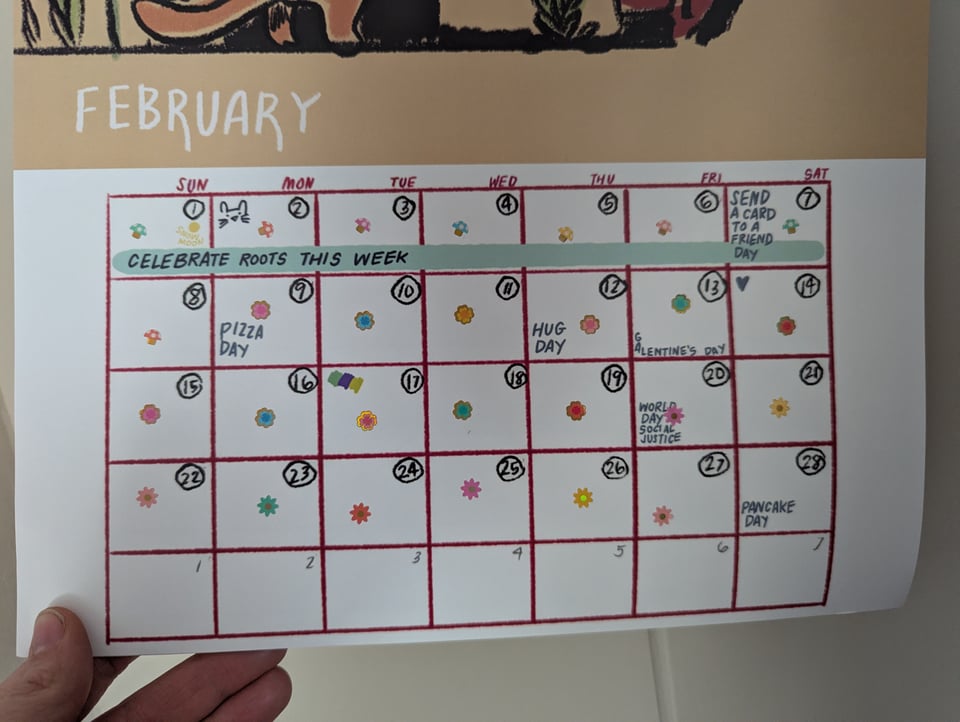
I bought myself a calendar and some cute stickers so I could mark off each day that I worked. I set my alarm for 5:30 a.m., so that I could get up before my husband and toddler and do some work before all the other distractions of the day took over. I told myself all I had to do was the work in front of me each day. No other goals or timelines. Just chip away, bit by bit. Read a source. Write a paragraph. Track down a footnote. Whatever the day’s work was.
Something strange happened. It worked. I loved it.
I told myself I only had to work Monday-Friday, but I was finding it so rewarding that I kept going on the weekends. I loved seeing my little stickers lined up on the calendar. I felt buoyed by the work that was finally getting done, and focusing just on each day’s task took the pressure off.
I’ve gotten up and worked on my project for 44 days straight. I powered through some lingering tricky parts and finished chapter 4. I’ve been working through sources and making notes for chapter 5, and I get to start drafting again tomorrow. I still get overwhelmed by how much is left to do, but I try to take a breath and think, “What do I need to do today?”
In case you’re rolling your eyes because this does not seem possible—or desirable!—for you, trust me, I get it. I could not have done this six months ago. I had to work out some mental and physical health issues to even make it feasible. And I definitely don’t think everyone needs to write every day. I always say that if Drafting the Past has a thesis, it’s that there’s no one correct way to write history!
But if you’re stuck? Maybe it’s worth trying. Tiny mushroom stickers might help.
-
I did a very similar thing- I do better with long chunks of writing time so I found a three hour block once a week to write and set that aside just for writing. I didn’t have to work on it outside of that unless I wanted to. That Worked wonders to make sure I got my thesis done by making some progress each week. I’ve done the 20 minute minimum block too and often that is enough to get me going writing and I end up writing for longer than. Slow progress is still progress!
-
I love this practice, especially as a stay-at-home parent! Something about just looking at my dissertation before everyone else wakes up helps me stay present as a parent later in the day - I already wrote (even just a little bit), so I don't have that feeling in the back of my mind that I need to be writing instead of enjoying time with my kiddo. I've fallen out of the habit, but this post is encouraging me to pick it back up again!


Add a comment: