⚡ How Google Uses Waymo to Build Its Next : what you need to know
Sundar Pichai's new $692 million compensation package ties directly to Waymo's private valuatio...
October 10, 2026
Sundar Pichai's new $692 million compensation package ties directly to Waymo's private valuatio...
The Deep End
How Google Uses Waymo to Build Its Next Major Market Monopoly
Sundar Pichai's new $692 million compensation package ties directly to Waymo's private valuation rather than traditional Google shares. Google raised $5 billion in debt to rapidly scale its taxi fleet before a public listing. This strategy lays the foundation for Google's next major platform monopoly inside transport.
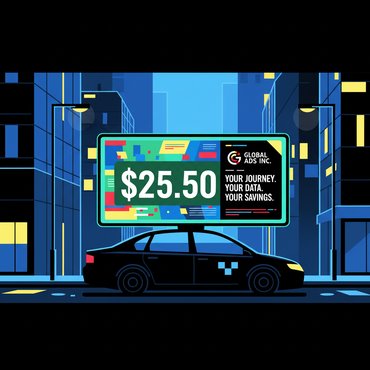
Google targets autonomous vehicles as its next dominant platform. Sundar Pichai's new $692 million pay package ties compensation to Waymo's valuation. Waymo recently secured $5 billion in debt to expand its fleet across cities. This massive loan accelerates expansion without diluting existing corporate equity.
Data feedback loops give early autonomous operators a massive competitive moat. More active vehicles generate superior training data, making rival entry nearly impossible. Passengers inside self-driving cars represent a captive audience for Google's ad ecosystem. Google aims to monetize physical transportation just like digital search traffic.
Key Takeaways:
- Pichai's $692 million pay package ties directly to Waymo's upcoming initial public offering valuation.
- Waymo raised $5 billion in debt to accelerate fleet growth without diluting stock value.
- Evaluate autonomous transport ecosystems early to identify emerging ad and media distribution channels.
The Periphery
How The New York Times Lawsuit Will Reshape AI Copyright Rules
The New York Times spent $20 million targeting five distinct types of unauthorized AI scraping. OpenAI and Microsoft claim training LLMs constitutes fair use. The court must determine whether real-time data retrieval directly destroys publisher subscription models. This analysis breaks down the key legal arguments driving future media licensing.
The New York Times lawsuit against OpenAI reaches a critical court deadline on November 20. Discovery uncovered internal documents showing tech vendors trading publisher data without consent. Legal teams racked up $20 million in costs over 100 depositions. The outcome will decide if tech firms must pay for news content.
Key Takeaways:
- The NYT suit targets five illegal scraping practices because AI models replace direct news subscriptions.
- Thomson Reuters won its key case as commercial AI competing with publishers breaks fair use.
- Audit your website terms of service to block unauthorized AI web scraping immediately.
Why Four-Hour Battery Storage Now Beats Gas Turbines Globally
Rapidly expanding manufacturing scale crushed battery costs across 43 global energy markets. Four-hour grid storage now beats open-cycle gas turbines everywhere on price. Falling cell costs will push storage prices down another 33% by 2035. This analysis shows how shifting energy economics eliminate the financial justification for new gas peaker plants.
Four-hour battery storage is now cheaper to build than gas turbines in every major market. Wood Mackenzie analyzed 43 global regions and found batteries winning on pure economics. Gas turbine shortages and volatile fuel prices continue to drive peaker costs higher. Power grid operators must re-evaluate their generation planning immediately.
Key Takeaways:
- Manufacturing scale drove four-hour battery storage costs below gas turbines in 43 global markets.
- Middle East solar LCOE will drop below $20/MWh -- cheap storage enables massive grid adoption.
- Audit long-term power generation plans to replace planned gas peakers with battery storage capacity.
Why Artificial Intelligence Will Bypass Traditional Newsrooms for Raw Data
AI models extract raw intelligence directly from primary sources rather than published articles. Camera feeds, social posts, and municipal alerts now feed algorithms directly. This structural shift bypasses traditional newsrooms for routine breaking coverage. Learn why blocking web scrapers fails and where human investigative reporting retains essential value.
Traditional media lost its monopoly on breaking news distribution. Twenty years ago, one reporter covered a city fire for local papers. Today, social feeds, traffic cameras, and civic alerts broadcast the event instantly. AI models process these raw data streams directly without reading news articles.
Key Takeaways:
- Direct sensor feeds allow AI to bypass newsroom reporting for daily event coverage.
- Paywall blocking strategies fail -- language models simply pivot to unblocked municipal and public data.
- Pivot newsroom resources away from breaking coverage toward high-impact investigative reporting.
Why Targeting Circadian Rhythms Delivers New Outcomes for ADHD Patients
Delayed biological clocks affect up to 80% of individuals with ADHD, worsening focus and daytime executive function. Shifted melatonin secretion and blunted cortisol rhythms drive chronic sleep delays rather than simple poor hygiene. This analysis explores how bright light exposure and low-dose melatonin reset delayed circadian phases, yielding measurable reductions in core ADHD symptoms.
ADHD is largely a biological clock disorder. Up to 80% of ADHD patients suffer from severe sleep disruptions. Melatonin release happens 90 minutes later in adults with ADHD. Morning bright light therapy shifts these delayed internal clocks earlier.
Key Takeaways:
- Delayed melatonin release of 90 minutes drives severe sleep-wake misalignment in adult ADHD.
- Morning bright light therapy advances internal biological clocks, reducing hyperactive symptoms significantly.
- Implement fixed wake times and morning light exposure to align delayed circadian rhythms.
The Firehose
AI Agent Architectures
- How Compiled Rust Agent Architectures Scale Fleets at Lower Costs
- How Open-Source Local AI Agents Bridge Personal Data and Automation
Worth Exploring
- How Temple University Built a Murrow Award-Winning Student Newsroom
- Why AI Optimization Differs From Genuine Human Intelligence and Autonomy
The Unintended Consequence
Why Adding a Second Child Exponentially Increases Household Chaos
Transitioning from one child to two alters family dynamics through exponential relational complexity. Adding a second child creates six distinct internal relationships, multiplying daily chaos and infection vectors. This analysis breaks down why second-child parenting eliminates remaining personal freedom. It shows how hand-me-down parenting forces sharp focus under extreme time constraints.

Moving from one child to two does not simply double parent workload. A four-person family expands from two internal connections to six distinct relationship vectors. Parents lose the last remnants of personal time and independence. Solo breaks disappear completely as both parents handle individual children simultaneously.
Second children receive hand-me-down parenting rather than customized attention. Parents skip hyper-vigilant tracking and custom meal prep for the younger sibling. This shift forces older siblings to learn empathy and share family focus. Severe time scarcity compresses priorities, forcing parents to focus only on essentials.
Key Takeaways:
- Adding a second child drives exponential chaos by creating six unique family relationships.
- Hand-me-down parenting forces second children to build independence earlier than firstborn siblings.
- Schedule strict shift-parenting routines to protect brief periods of personal focus daily.