💡 Why Kage matters for offline web experiences
Discover how to build resilient web pages that never break, even without internet.
June 15, 2026
The web is busy eating itself: Amazon’s CEO is tattling on Anthropic to the feds, the government is deliberately crippling its own statistical data, and some genius has invented a tool to freeze websites in amber before they all disappear. Meanwhile, developers are still building software as if the internet isn't a perpetually failing house of cards.
The Deep End
Kage: Offline Websites, Zero JavaScript, Single Executable
Web pages disappear. Links break. Analytics trackers follow you. Kage offers a solution. It clones websites into script-free, offline versions. The tool uses a real browser to capture content. It bundles sites into portable files. This ensures your knowledge base remains accessible for decades, free from web rot.

Web content is fragile. Pages vanish or break. Traditional "Save As" creates broken files. Kage solves this problem. It uses headless Chrome to render pages. It then strips all JavaScript. The tool localizes assets. This creates a functional, static mirror. You get a fully offline browsable site.
Kage packs these mirrors into self-contained files. These can be ZIM archives or single executables. ZIM files are open standard. They display on various readers. Self-contained binaries run on any machine. This lets you share content easily. Critical information remains accessible, anytime, anywhere.
Key Takeaways:
- Kage transforms dynamic websites into static, script-free offline copies.
- Web assets like CSS, images, and fonts are localized for full portability.
- Pack cloned sites into single ZIM archives or self-running binaries.
The Periphery
Why UI Perfection Builds User Trust and How to Achieve It
Users judge app quality by its UI. Imperfect frames erode trust and suggest deeper code issues. This analysis reveals how 'every frame perfect' applies beyond technical stacks. Learn specific UI flaws like flashes and jank. Discover how to build user confidence through consistent, precise interface design.
Designers and developers often focus on the start and end states of a UI. This approach misses critical moments in between. Research shows users build trust through smooth, consistent interactions. Any visual glitch, like a white flash or janky animation, signals an imperfect experience. These small failures accumulate, costing user confidence and suggesting deeper problems.
Key Takeaways:
- Users assess app quality through UI; 'every frame perfect' builds essential trust.
- Small UI inconsistencies, like flashes or jank, erode user confidence quickly.
- Prioritize precise animations and consistent transitions to maintain user trust.
US Administration Bans Statistical Noise: Data Utility or Privacy at Risk
A new Commerce Department order bans "noise infusion" from federal statistical products. This decision jeopardizes data utility, privacy, or both. Learn why differential privacy was the optimal method, how this ban impacts data accuracy, and the unavoidable trade-offs agencies now face. Expect future data releases to be either less useful or inherently insecure for millions of Americans.
The US Commerce Department just banned "noise infusion" from Census Bureau and BEA statistical products. This ruling directly targets differential privacy, a method used since 2020 to protect confidential data. Experts warn this ban will force a painful choice between data utility and individual privacy.
Key Takeaways:
- US government banned "noise infusion" for federal statistical data products.
- This ban removes differential privacy, the best tool for privacy/utility balance.
- Assess data methodologies; expect future statistical data to be less precise.
Amazon CEO flagged Anthropic AI risks, triggering government export ban
Amazon CEO Andy Jassy reportedly warned the US Treasury about Anthropic AI models. He claimed they could aid cyberattacks. This led to an immediate government export ban on two Anthropic models. Learn how corporate rivalries influence AI regulations and what this means for enterprise AI adoption. Understand the security risks models pose to your organization.
Amazon CEO Andy Jassy reportedly alerted US officials to Anthropic AI model risks. He claimed researchers used Anthropic's Claude Fable 5 to gather cyberattack information. This directly led to a government export ban on Fable 5 and Mythos 5. This incident highlights the intense security and corporate competition within the AI sector.
Key Takeaways:
- Amazon CEO Jassy raised security concerns about Anthropic AI models to US Treasury.
- This triggered an export ban on Anthropic's Fable 5 and Mythos 5 models immediately.
- Assess your enterprise AI models for potential security vulnerabilities and misuse risks.
Integrating Claude AI with Apple's Foundation Models Framework
Anthropic now offers Claude integration within Apple's Foundation Models framework. This package allows developers to utilize Claude's large language model capabilities directly from Swift applications. It abstracts Claude's API, aligning it with Apple's native LanguageModelSession interface. Developers gain access to advanced AI features for iOS and macOS apps. This includes larger contexts, frontier reasoning, and server-side tools like web search.
Apple developers can now integrate Claude AI directly into their applications. Anthropic has released a Swift package for this purpose. It makes Claude available as a server-side language model within Apple's Foundation Models framework. Developers can use the same LanguageModelSession API for both Apple's on-device models and Claude. This simplifies AI model switching within their apps, offering greater flexibility. This integration allows for advanced AI functionality in iOS and macOS apps. Developers can leverage Claude for tasks requiring larger context windows or more complex reasoning. Additionally, server-side tools like web search and code execution are available. Requests go direct from the app to Claude's API, bypassing Apple's servers. This maintains data privacy and allows billing directly to Anthropic accounts.
Key Takeaways:
- Anthropic's Swift package integrates Claude AI with Apple's Foundation Models.
- Developers use a unified API for both on-device and server-side AI models.
- Leverage Claude's advanced reasoning and server-side tools in Apple apps.
The Firehose
More to Explore
The Unintended Consequence
curl Project Halts Vulnerability Reports for Maintainer Well-being
The curl project announced a full pause on vulnerability reporting for July 2026. This "summer of bliss" prioritizes maintainer mental health and work-life balance. It highlights the unsustainable pressure open source maintainers face. Learn why this decision matters for project longevity. Discover implications for both users and the broader open-source community.
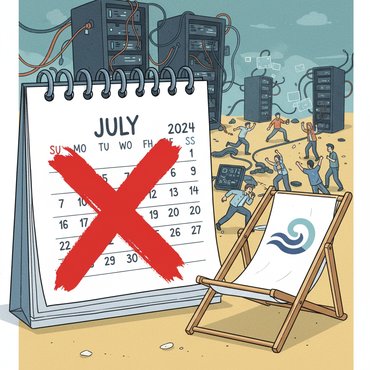
The curl project will not accept vulnerability reports during July 2026. This is a deliberate pause for maintainer well-being. Their HackerOne submission form will close. The security email address also becomes inactive. Any issues found must wait until August 3rd, 2026.
Maintainers face immense pressure from constant vulnerability reports. This break allows them to rest and focus on other development. This decision pushes the 8.22.0 release date. It also highlights the need for sustainable open-source development practices. Other open-source projects should consider similar initiatives.
Key Takeaways:
- curl project will halt all vulnerability reports during July 2026.
- This move prioritizes maintainer mental health and combats burnout.
- Re-evaluate your project's support demands to prevent maintainer burnout.