💡 Distinguish stress from burnout & boost well-being
Uncover the signs & strategies to reclaim your energy and thrive at work.
July 14, 2026
AI promises a productivity boom, yet it's quietly tripling coordination burdens for engineers, eroding privacy through widespread drone surveillance, and forcing publishers to unify just to figure out how to monetize content that AI itself is likely to generate. It seems the more 'efficient' we become, the more organizational friction and existential questions we create.
The Deep End
Stress vs. Burnout: Know the Critical Workplace Distinction
Many confuse everyday stress with true burnout. Burnout is a chronic, work-specific syndrome, not temporary overwhelm. Understanding the difference prevents misdiagnosis and helps target real solutions. This distinction clarifies emotional detachment, performance decline, and the ineffectiveness of typical stress relievers for burnout. Recognize the signs early to protect your mental health.

Many people casually use “burnout” interchangeably with being tired or stressed. This mislabels a severe condition. The World Health Organization (WHO) defines burnout specifically as a syndrome from chronic, unmanaged workplace stress. It is not occasional overwhelm from a busy week, but a pervasive state.
Burnout manifests as intense cynicism about work and reduced professional efficacy. Stressed individuals still maintain engagement and performance levels. Burnout victims feel detached and perform minimally. Your usual stress-relief methods also fail against genuine burnout. Even a vacation likely will not fix it.
Key Takeaways:
- Burnout is chronic, work-specific, and distinct from temporary stress or fatigue.
- Burnout leads to cynicism, detachment, and reduced efficacy in one's job.
- Address systemic workplace issues for genuine burnout; vacations offer temporary relief.
The Periphery
AI Boosts Output, Triples Coordination Burden on Engineering Teams
AI makes engineers 3x more productive, tempting leaders to slash headcount. This creates a hidden cost: individual coordination burden triples. The article explains why AI magnifies management layers, not development efficiency. It shows how cheaper execution shifts project bottlenecks to critical decision-making processes. Understand why fewer people means more—not less—complex organizational friction.
AI offers a seductive promise: cut engineer headcount by two-thirds. A team of 10 could match the output of 30. This model increases individual engineer code output drastically using AI copilots. McKinsey estimates 20-40% acceleration from these tools.
Key Takeaways:
- AI significantly increases individual engineer output, speeding up code generation.
- Reducing team size with AI triples coordination burden per person, creating new bottlenecks.
- Prioritize robust coordination structures as AI scales engineering team output.
FAA Rule Change Opens Skies for Widespread Drone Surveillance and Commercial Use
New FAA rules will expand drone flights beyond human sight. This shift enables new commercial applications like package delivery. It also facilitates ubiquitous surveillance by law enforcement and private security. Civil liberties advocates warn of significant privacy erosion. This article details the rule changes, their implications, and necessary public action.
The US Federal Aviation Administration (FAA) is overhauling drone flight regulations. This change will allow drones to fly beyond visual line of sight without special waivers. Previously, operators needed specific FAA approval for such flights. Now, broad categories will gain easier access with significant implications.
Key Takeaways:
- New FAA rules will permit widespread drone flights beyond visual line of sight.
- Easier approvals for drone operations accelerate commercial use and surveillance.
- Submit public comments to the FAA regarding privacy concerns before October 6.
Airbnb Engineers Outline 2026 Agentic AI Production Pipeline
Learn how Airbnb's senior staff engineers are building production-grade LLM agents. This deep dive reveals their 2026 methods, offering a concrete blueprint. Understand the required tooling, adoption metrics, and the critical human role in AI-driven development. Spotify's chief architect states his team uses similar tools across 20 million lines of code.
Airbnb’s senior engineers share their strategy for deploying LLM agents in 2026. They move beyond basic prompting to full agentic loops. Their method involves a human engineer navigating multiple AI agents. This process materializes code changes with increased speed and scope.
Key Takeaways:
- Human engineers transition to navigating multiple AI agents for code generation.
- Rapid adoption of agentic tooling drives significant increases in developer productivity.
- Implement robust code review practices for all AI-generated code changes.
Metrics Corrupt Missions: Prioritize Value, Not Just Scores
Gamification and engagement metrics often distort core objectives. Wells Fargo created millions of fake accounts by incentivizing metrics over value. This analysis shows how to interrogate your metrics. Ensure they support your mission. Avoid chasing scores that destroy customer trust. Learn strategies for measuring true impact.
Companies often obsess over gamification and engagement metrics. These include clicks, time on site, and streaks. Yet, these numbers can become dangerous targets themselves. Goodhart's Law warns that measuring a target changes its validity. Publishers chase measurable activity when they should pursue audience trust.
Key Takeaways:
- Gamification metrics often corrupt true objectives, leading to unintended negative consequences.
- Goodhart's Law states a measure ceases to be good once it becomes a target.
- Interrogate all metrics regularly to ensure alignment with core organizational values.
The Firehose
AI Development & Impact
- AI Agents Reinvent Developer Workflows: A Practical Blueprint
- Why AI Hype Obscures Real Progress and Value Capture
- Build Trust with AI Chatbots: Five Core Dimensions for Success
- AI Agents Revive Legacy Code, Accelerate New App Development
- AI's Bitter Lesson: Why 'What' Beats 'How' in Prompting
- Human-Centric AI Will Outperform Centralized, Frozen Models
Workplace Productivity & Focus
- Challenge Unrealistic Deadlines With Structured Tradeoff Analysis
- Focus is Fragile: The Math Behind Constant Distraction at Work
- Good Tools Vanish: Prioritize Invisible Efficiency Over 'Fun' Challenges
Personal Growth & Mindset
- Boost Reading Volume: Replace Screen Time, Cultivate Constant Access
- Non-Linear Careers: How to Build Authority Through Diverse Experience
- Ancient Wisdom Meets Modern Psychology: The Paradox of Effortless Action
- Confidence Comes From Action, Not Achievement. Doubt Never Disappears.
AI in Media & Marketing
- Hacker News Debates AI Content Flags: Preserve Authenticity or Risk Noise?
- Publishing Alliances Unite for Stronger Advocacy and AI Strategy
- AI-Native Email Marketing: Automating Campaigns with LLMs
Design Systems & Strategy
The Unintended Consequence
Advertising's Crisis: Why We Pay to Avoid Most Modern Ads
Advertising became something people willingly pay to avoid. This analysis reveals why modern advertising prioritizes data over creativity. Audiences reject ads that interrupt instead of entertain. Learn how this shift damages publishers and changes consumer behavior. The article shows why creative quality drives real engagement and sales.
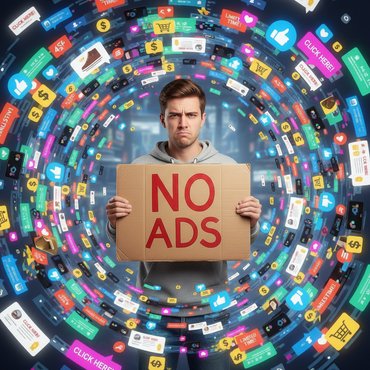
Sir John Hegarty, co-founder of BBH, states people pay to avoid advertising. This is not a clever line. It is a devastating diagnosis of the entire industry. Millions pay for ad-free streaming. They install ad blockers. They skip, mute, and fast-forward through ads. The industry measures impressions and clicks. It ignores if anyone actually liked the ad.
Advertising once aimed to charm and persuade. Now, much of it relentlessly stalks consumers. Targeted ads follow users across the internet. This digital loitering replaces genuine persuasion. The industry became intoxicated with data. Creativity is hard to quantify. A click is easy to count. This shift damages both advertisers and publishers. Bad advertising teaches audiences to associate ads with irritation.
Key Takeaways:
- Consumers actively pay to avoid ads, signaling a major industry crisis.
- Data-driven advertising prioritizes metrics over creative engagement, damaging brands.
- Prioritize original, entertaining content to earn attention, not just track users.