How the Creative Arts Can Uphold Human Rights
This newsletter edition shows how the creative arts is a powerful way to uphold human rights, and how art is a key part of challenging corrupt politics.
After the midterm elections in the USA, the world and our own country was amazed. Across the USA, the American people completely rejected the kind of hateful politics that have been completely warping our government. We made our voices heard through our vote!
Even though billionaires did everything they could to influence and rig the outcome of the elections (including pouring millions of dollars into their chosen candidates’ races), they couldn’t change what happened. Rather than thinking about ideology or culture wars, American people voted for the candidates who actually care about lowering costs, stopping war, restoring our healthcare, and ending corruption.
And for the first time, many women took leadership roles in office across the USA. That includes Keisha Lance Bottoms, the first Black woman to be a governor in any state (she’s now the governor of Georgia!).
I’m still amazed by just how powerful the voice of the people can be. It showed me that you can’t underestimate the impact of millions of people, people who are tired of division and chaos, and who want real change.
The creative arts had a big role in these wins, too, now that I think about it. Even during the most repressive years of the Trump administration, when everyday people were facing subpoenas for simply expressing their criticism of Trump’s regime, people gathered together and shared how they felt through art. Art and creativity were a tremendous part of how people found hope and courage in those times.
Things were getting truly scary as Trump gained power and started flouting the checks and balances our government has had for years. He would attack anyone who challenged or questioned him, including tons of federal officials, scientists, representatives, and anyone who stood in his way. Unfortunately, rather than pushing back, a lot of powerful groups in our country, such as the business and tech world, capitulated and went along with the Trump administration’s wishes.
The result meant that you could be doing things that are well within your rights, such as signing petitions, heading to a protest, or even just sending a letter to your representatives, and you had no clue when you would be targeted. One man who questioned the government’s violence against a refugee received a subpoena searching for his personal information, and he got a visit from DHS (Department of Homeland Security) agents. Fortunately, the ACLU fought and won this man’s case in court, since he really didn’t do anything wrong. He just questioned our government.
Despite how scared a lot of us were becoming as we faced these threats, we still kept fighting against the authoritarian world the Trump administration was trying to create. Some of those battles were direct, such as protests and sending clear demands to our representatives. But we also resisted through art.
Street Art, Music, Exhibits, and More
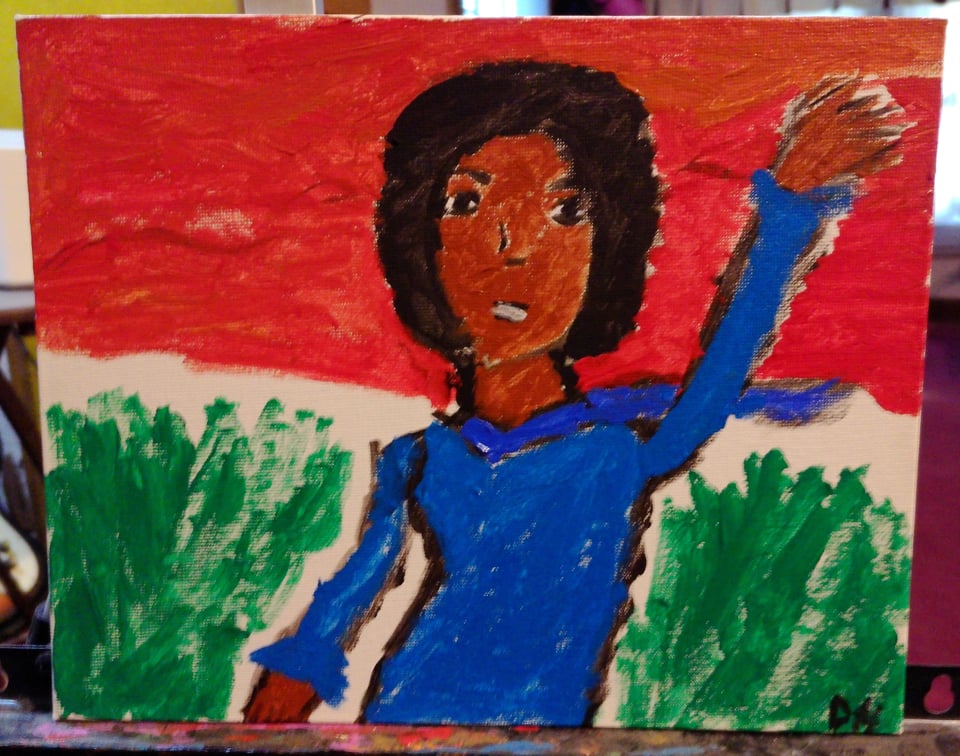
I took part in an exhibit based on the theme of not being afraid, one created by West Windsor Arts and Art Against Racism. There were many artists like me who were there to share works of hope, honesty, love, and courage during that event. We knew that in spite of the frightening times around us, we could still be brave.
The Not Afraid Art Show gave me a lot of hope, because I saw that artists were still creating and resisting the scary, hateful things happening in the world. Many of us came from different backgrounds, but we all had that purpose in common.
People used art to uphold our human rights in other ways, too. In the streets of my city, I saw a sidewalk that had the words, “Love thy neighbor. F___ ICE!!!”. I grinned, because it doesn’t get any clearer than that. It showed me that everyday people didn’t approve of the inhumane violence that ICE was showing towards immigrant communities.
Musicians like Leon Hendrix, Carole King, and Bruce Springsteen also stepped out to perform in support of democracy and freedom. They used their music to give people encouragement and show that we can resist the authoritarian rule.
Through art, people were able to challenge the way cruel political schemes were trying to destroy our communities. One thing about art is that it can hit you at a very visceral level. You don’t have too many words or misconceptions getting in the way.
Art also tends to cross the barriers that people may have towards different perspectives. You may not relate to someone’s politics, but when you see their art, and how it tells their story, you come away with a deeper understanding.
As we saw in this election, it ultimately wasn’t about just the politics alone. On a human level, people were exhausted with corruption and cruelty, and they wanted to bring empathy and humanity back to how we relate to each other. When you come right down to it, most people don’t want to live in a world where a mighty few crush the population, engage in senseless wars, hoard all the wealth for themselves, and cause needless drama.
Although this is just the beginning, I know we’re on the right track, and artistic creation will continue to be a powerful tool for upholding our human rights. Personally, I’m going to keep exploring ways to use my own art as a vehicle for change and inspiration.
One of my role models in this is Nina Simone, who used her own music and art as a part of the Civil Rights Movement. Her voice and her songs, such as “To Be Young, Gifted, and Black”, instilled pride in Black people as we battled for our rights.
Nina felt that an artist has a duty to reflect the times that they live in, as she mentioned in this video: Nina Simone on An Artist’s Duty. And she certainly reflected what was happening around her through her powerful songs.
I’ve recognized that this is something I do as an artist, too. My art often goes into different things I’ve experienced or observed in the world around me, such as the challenges of the technological age, or the agendas that tyrants have for dominance and control. It’s not that I’ll always be consciously thinking about those things, but it naturally shows up because most artists are perceptive observers.
Creative People Have Power
As we move forward, there will still be some challenges we face, because Trump is still the president for now. He may or may not be willing to concede to what the people actually want. But we’re making important progress, and art will be a big part of the path forward.
In fact, sometimes that’s why authoritarian environments fear artists and creative people the most. In their eyes, we’re dangerous because we can speak directly to people’s spirits through our art. We can open their minds and help them realize they should be free to express themselves, too.
As Toni Morrison wisely said: “I want to remind us all that art is dangerous. I want to remind you of the history of artists who have been murdered, slaughtered, imprisoned, chopped up, refused entrance. The history of art, whether it's in music or written or what have you, has always been bloody, because dictators and people in office and people who want to control and deceive know exactly the people who will disturb their plans.
And those people are artists. They're the ones that sing the truth. And that is something that society has got to protect. But when you enter that field… it's a dangerous pursuit. Somebody's out to get you. You have to know it before you start, and do it under those circumstances, because it is one of the most important things that human beings do.”
You just read issue #21 of Creative Destiny. You can also browse the full archives of this newsletter.
