
The Dead Internet Almanac Dispatch: Week of July 13
Weekly dispatch from The Dead Internet Almanac
The Dead Internet Almanac Dispatch: Week of July 13
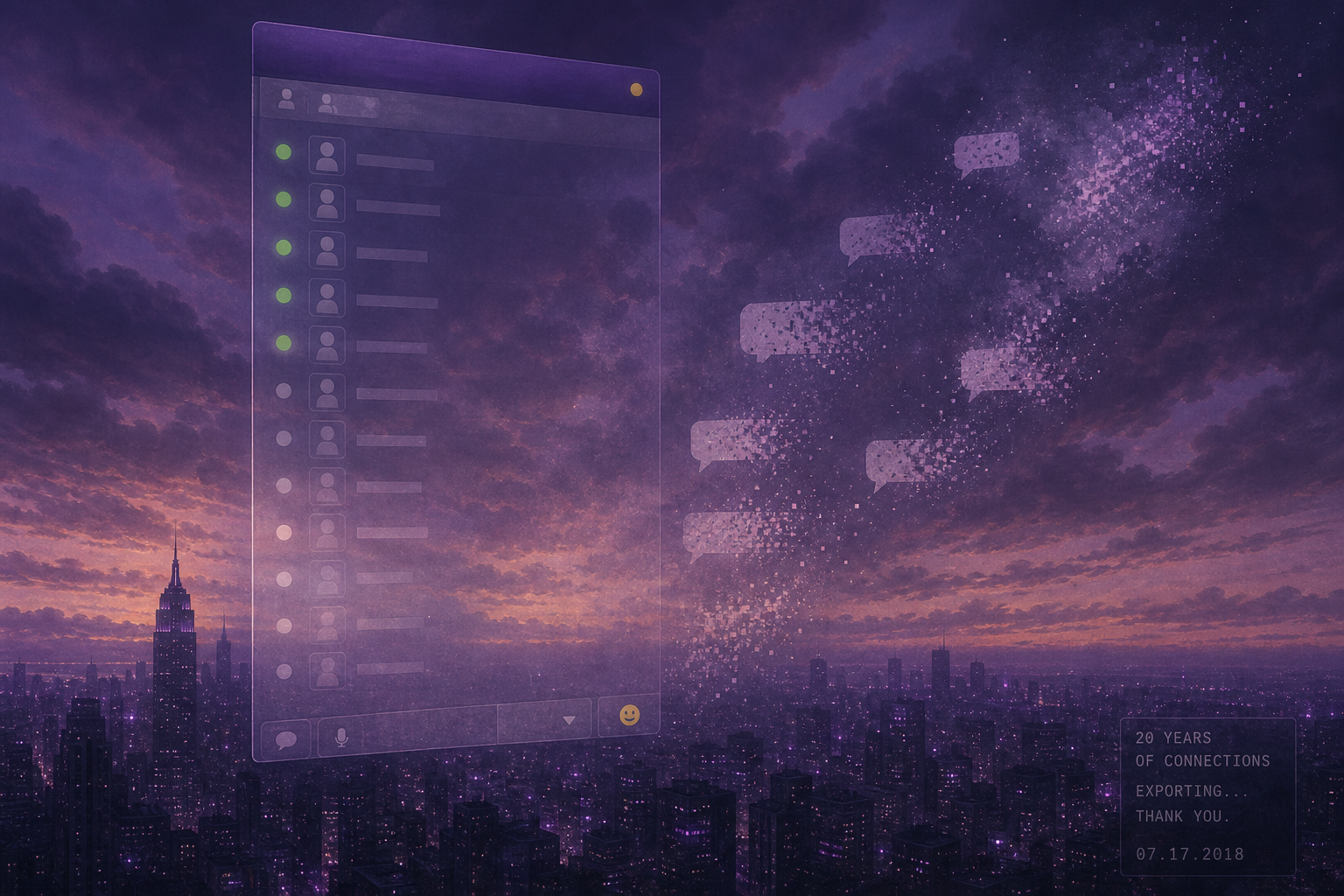
This week kept returning to old kinds of presence. A worm made unpatched web servers visible by their noise. Windows 95 turned a finished build into a future household gesture. Mozilla took custody of a browser world that had nearly been absorbed. Instagram began, almost accidentally, with a dog and a test photo. Then Yahoo Messenger closed the room behind a generation of buddy lists, away messages, buzzes, webcam invitations, and chat logs people had six months to save.
Start Here
Start with Yahoo Messenger because it carries the week’s most human vanishing act. The account could survive, the brand could be redirected, and old installers could remain on hard drives, but the public room stopped answering. A contact list without presence becomes a strangely honest artifact: names, habits, and private interruptions preserved after the green dots go out.
Also in the Almanac
🪱 July 13: Searchlights on Port 80
Code Red made vulnerable Microsoft IIS servers look like weather, turning ordinary public web boxes into a fast-moving map of infection, repair, and shared exposure.
🪟 July 14: Before Start Became a Button
Windows 95 reached release to manufacturing before the retail spectacle arrived, fixing the little lower-left ritual in place before people knew it would become muscle memory.
🦎 AOL Cut Netscape Loose. Mozilla Kept Walking.
Mozilla’s nonprofit birth turned a browser-war aftershock into a custody transfer, giving open-source browser work a legal home after Netscape’s old front-door feeling had thinned out.
🐕 A Dog at the Edge of the Grid
Instagram’s first remembered photo is small enough to feel like a system test and large enough, in hindsight, to mark the start of a whole visual economy.
Now in Audio
📄 July 3: The Birth Announcement in a Filing Cabinet
Listen instead: Podcast episode
📺 July 10: Ten Feet from the Web
Listen instead: Podcast episode
From the Cache
- Old ICQ numbers still have the texture of assigned seats: not usernames, not handles, but little numerical addresses people once memorized like phone extensions.
- Netscape plug-in directories read like lost toolboxes, full of helper apps that promised the browser could become anything if you installed enough small moving parts.
- Early webcam pages often refreshed on stubborn intervals, turning ordinary rooms, campus lawns, and office fish tanks into slow public clocks.
On the Desk
A hidden file turns a car-crime game into a fight over ratings, locked content, and who gets blamed when a secret becomes searchable. A red console asks players to put their faces into a failed future, while an MSN Messenger sign-in window brings the chat-client wars back to the surface. The Amiga arrives as a machine that made art, video, sound, and multitasking feel briefly close enough to touch. Later in the week, Google Play Games drags the ghost of Google Plus through mobile achievements and friend graphs, where social layers could feel mandatory even when nobody asked for them.
Forward this to one person who remembers when the web felt handmade.