
The Dead Internet Almanac Dispatch: Week of August 3
Weekly dispatch from The Dead Internet Almanac
The Dead Internet Almanac Dispatch: Week of August 3
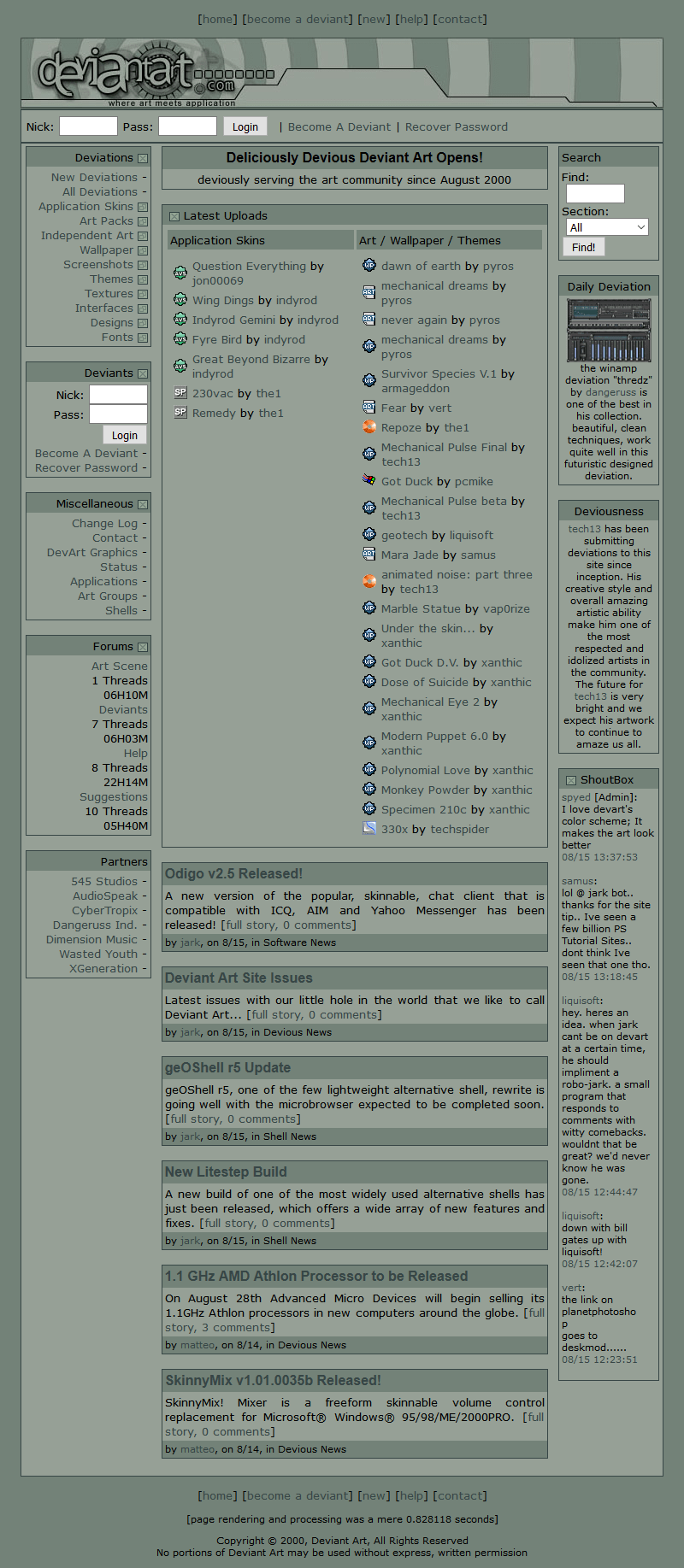
This week kept finding places where the machine became social by accident. A mall computer counter made personal computing feel buyable. A search box exposed private lives because “anonymous” still left patterns behind. A codec deal pushed web video toward a future outside plugin windows. A stage appearance made browser politics audible in a room full of Mac loyalists. Then DeviantArt opened as a gallery for skins, fan art, comments, favorites, and all the small rituals that made an interface feel owned. The thread is not just hardware or software. It is the old web learning that every tool eventually becomes a place where people leave themselves.
Start Here
🎨 August 7: Where Art Met Application
Start with DeviantArt because it gives the week its clearest attic door: desktop skins, green-black navigation, profile pages, comments, favorites, fandom, and a living archive that later had to argue over AI tools and who gets to use artists’ work. It is a surviving platform carrying several dead internets inside it.
Also in the Almanac
🛒 August 3: Radio Shack Sold the Future in a Mall
The TRS-80 story begins at the counter, where a computer came with a monitor, cassette storage, and a BASIC prompt close enough for ordinary shoppers to imagine bringing home.
🔎 August 4: A Search Box Became Evidence
AOL’s search-log release turned private curiosity into a public dataset and made one lesson painfully visible: deleting a name is not the same as hiding a life.
🎞️ August 5: The Codec Company Google Bought for the Open Web
Google’s On2 purchase sits at the hinge between plugin video and native web video, where codecs, patents, browsers, and “open” started sounding like everyday user experience.
🍎 August 6: The Browser Truce That Got Booed
At Macworld, Microsoft’s investment in Apple turned a business rescue into public theater: Internet Explorer on the Mac, Steve Jobs onstage, Bill Gates on a giant screen, and a room that knew exactly how to boo.
Now in Audio
💾 July 27: $50,000 for the Future Prompt
Listen instead: Podcast episode
🕹️ July 31: A Start Menu Game Needed a Server
Listen instead: Podcast episode
🛒 August 3: Radio Shack Sold the Future in a Mall
Listen instead: Podcast episode
From the Cache
- Microsoft’s 86-DOS purchase remains one of the strangest receipts in platform history: a small operating-system deal that became the prompt line under generations of beige-box computing.
- The old Microsoft Internet Games were not huge worlds. They were tiny Start Menu rooms that still needed matchmaking servers, strangers, and a company willing to keep the lobby lights on.
- Browser badges once acted like little compatibility prayers: best viewed in this, download that, install this plugin, and maybe the page would finally behave.
On the Desk
A standards rebellion waits in the wings, armed with archived mission pages, a wasp mascot, and the stubborn belief that one website should not need separate lives for rival browsers. A Windows XP countdown turns a network vulnerability into a domestic ritual, the kind of gray dialog people remember even when the port numbers fade. A beige desktop box steps onto a hotel stage and becomes powerful partly because other companies can copy it. Then a browser release gathers CSS, applets, ActiveX, partner sites, and launch-party optimism into one noisy preview of the web that wanted to move.
Forward this to one person who remembers when the web felt handmade.