Bond vote strategy
In two thirds of states in the country, you need to get vote approval for a new bond. It's a big deal whether the voters in your district approve the bond or not--it can mean the difference between deferring maintenance, stretching an already stretched budget, or having the funds needed to do the work that needs doing. It impacts everything in fiscal affairs.
Lang and VanCeylon, who’ve published brand new research on this topic, are interested in what determines a successful school bond vote: what makes people more likely to vote for them, and how does that compare to state bond measures, if such a thing exists in your state (which it doesn't in NJ). Here’s a bit about their study, what they found, and what it means for people on the ground concerned about school bonds.
1. Context/methods
Historical sidenote: why referenda? If you want to know more about why we have bond referenda, you can check out my previous post called “Railed,” or this tiktok video that went kinda viral.
The researchers didn't just look at local bonds. They looked at local bonds in comparison to state bonds. Methodologically, this is quite interesting, since a lot of the research we've gotten about the subject just looks at approval rates. The comparison creates more data and stuff to hold onto.
The data they used were exit polls during elections, which are these surveys that some people take after they vote.
It's important to note that they use Rhode Island as their case study. Rhode Island isn't exactly representative of states around the country, but for our purposes, politically, it's not too far from New Jersey, where I work.
2. Findings
They find that voting for a recent Democratic gubernatorial candidate, is the largest determinant, on the order of 35-42%. That means that, if your town voted for the democratic governor, then those voters will be 35-42% more likely to vote for the school bond than others who didn't vote for the Dem governor.
They found some interesting differences though:
30-54 year olds are more likely to vote for a local bond over the state initiative. They think this has to do with people having kids who will benefit directly from the bond. Specifically, they're 21% more likely to vote for it than those 55 and older. They found that having kids in school increased the likelihood of supporting the school bond by 22-29%.
Less wealthy and less educated voters more likely to reject the local bond versus the state referendum. Specifically, households making less than $100k are 18-22% less likely to vote. They calculated that the school bond cost families $300 more, while the state bond only cost them $7 more, so it's rational I suppose.
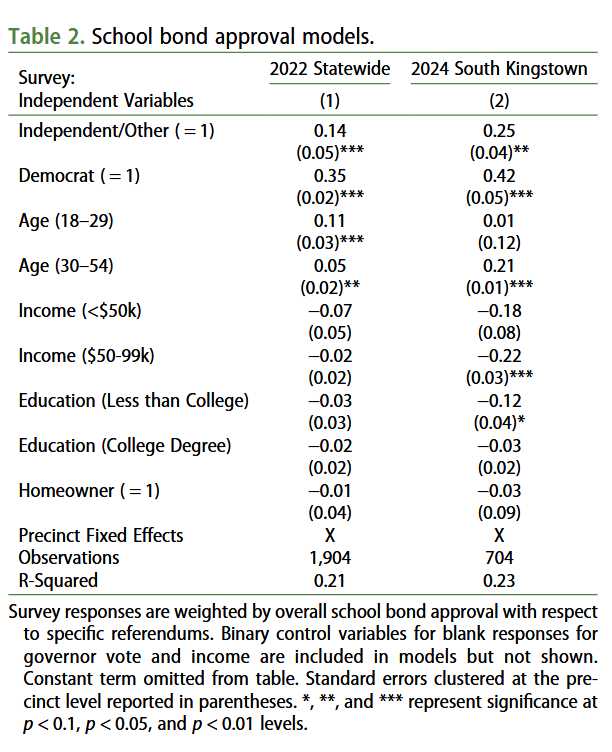
They think this has to do with costs associated with the bond, but is that right? Maybe local politics is more vivid for people, a la the homevoter hypothesis?
3. Strategic reflections
So overall, middle class people with kids in school who voted for a Democratic governor recently are your key voters in bond votes.
Strategically, this is important because you could spend time doing turnout among your strong base of supporters to make the difference in your school bond vote rather than waste time on people who won't for it anyway.
When you get research results like this, it might change how you think about getting the vote out for school bond votes.