
Angels, spirits and signs.
The town is good. Everybody in it is good. It's just a nice local town. Everybody minds their own business, and they do what they have to do and then go along to go home.
Ten days adrift at sea today
Who’ll be the last man?
The widows weep at home and pray that
Theirs will be the last man
A hunger creeps for men asleep
And when I wake I bare my teeth
The blood and bile, o’er deck they seep
For I become the last man, for I become the last man.
~ Widow’s Bay (2026)
Hello and welcome to the Dog Days of Summer, and welcome back to another edition of Sunday Scaries.
According to the Old Farmers’ Almanac, the Dog Days of Summer run from July 3 to August 11 each year, while the dog star Sirius, the brightest star in the sky, rises with the sun. “The term ‘Dog Days’ has been used for millennia to describe the hottest, most sweltering weeks of the Northern Hemisphere summer,” says the Almanac. “Ancient peoples linked it with both astronomy and folklore, often viewing it as a time of drought, disease, or unrest.”
Dog Days bright and clear
foretell a happy year;
but when they come with rain,
our hopes are held in vain.
Based on what we’ve seen in the weather over the last few days, we have a hell of a year ahead.

Run for your children and your sisters and brothers
Leave all your love and your loving behind you
Can't carry it with you if you want to survive
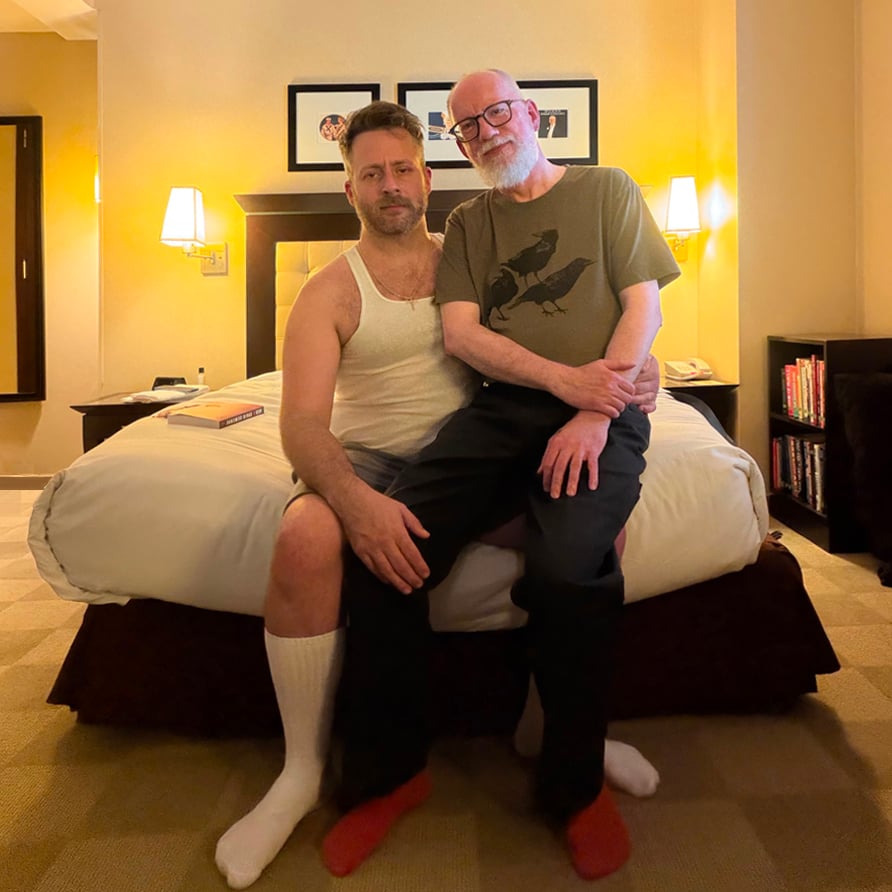
When last we spoke, I was freshly back from my cross-UK trip and soon to be off to New York. Apart from the oppressive heat that blanketed the city for most of my stay, it could not have been a better time to be in NYC: in my short visit, I visited acclaimed author Nino Cipri and signed some stock where he works, at the beautiful Astoria Bookshop in Queens; I watched the Knicks win the NBA championship against the Spurs in my hotel’s rooftop bar and then celebrated on Fifth Avenue with thousands of New Yorkers; I joined the Puerto Rican Day parade so that I could get to Barnes & Noble; I found copies of my books at the gorgeous NYPL Stavros Niarchos Foundation Library; I had dinner with my editor Nick Whitney at La Dong, a Michelin Bib Gourmand, and also visited the calm and cool Soho Press offices; and I spent a lovely birthday afternoon with the delightful @joel_someone, NSFW king of New York (Butt Magazine interview - trigger warnings galore), before dinner with multitalented SFFH author Sam J. Miller and our launch of the fifth anniversary edition of RED X. Plus a bit of clothes shopping and a few delicious meals. All in all, an absolute candy box of treats.
And now I’m back. Widow’s Bay has wrapped up its season with its twisty Storm-of-the-Century finale (surprisingly appropriate), Drag Race All Stars has entered its semi-finals, and horror of all kinds continues to make its mark on screens large and small as well as on bestseller charts and awards lists. As always, I am so far behind, the books will be movies and the movies will be streaming before I get to them all.
Subscribe nowOne film I was excited to finally see was Robbie Banfitch’s Tinsman Road, the follow-up to his divisive (and, in my opinion, sensational) found-footage horror debut The Outwaters. For me, The Outwaters was one of the most visually and sonically striking, formally adventurous, viscerally gruelling horror experiences of this new century, so I started Tinsman Road with some trepidation. From its first moments, it takes a sharp turn away from the elements that defined its predecessor. Where The Outwaters was capacious and expansive, Tinsman Road is intently focused and claustrophobic; where The Outwaters was sun-drenched and hallucinogenic, Tinsman Road is grey and gloomy and determinedly naturalistic. Once again, Robbie Banfitch and his mother Leslie Ann Banfitch play a mother and son with the same names as themselves (though not the same mother and son from film to film, and hopefully not a representation of their actual selves). In this iteration, queer filmmaker son Robbie returns to his mother’s home in rural New Jersey many months after his sister Nicole’s disappearance into the woods near the titular Tinsman Road. He finds his mother broken and lonely, struggling to be chipper and affectionate but awash with grief and fear about her daughter’s possible death. She doesn’t want to believe her daughter is dead but at the same time is convinced that her spirit is present in various parts of the house, and perceives certain occurrences—flickering lights, a willful music box—as evidence of a haunting. She sees that Robbie, as always, is filming his observations and conversations and wants him to make a documentary about angels.
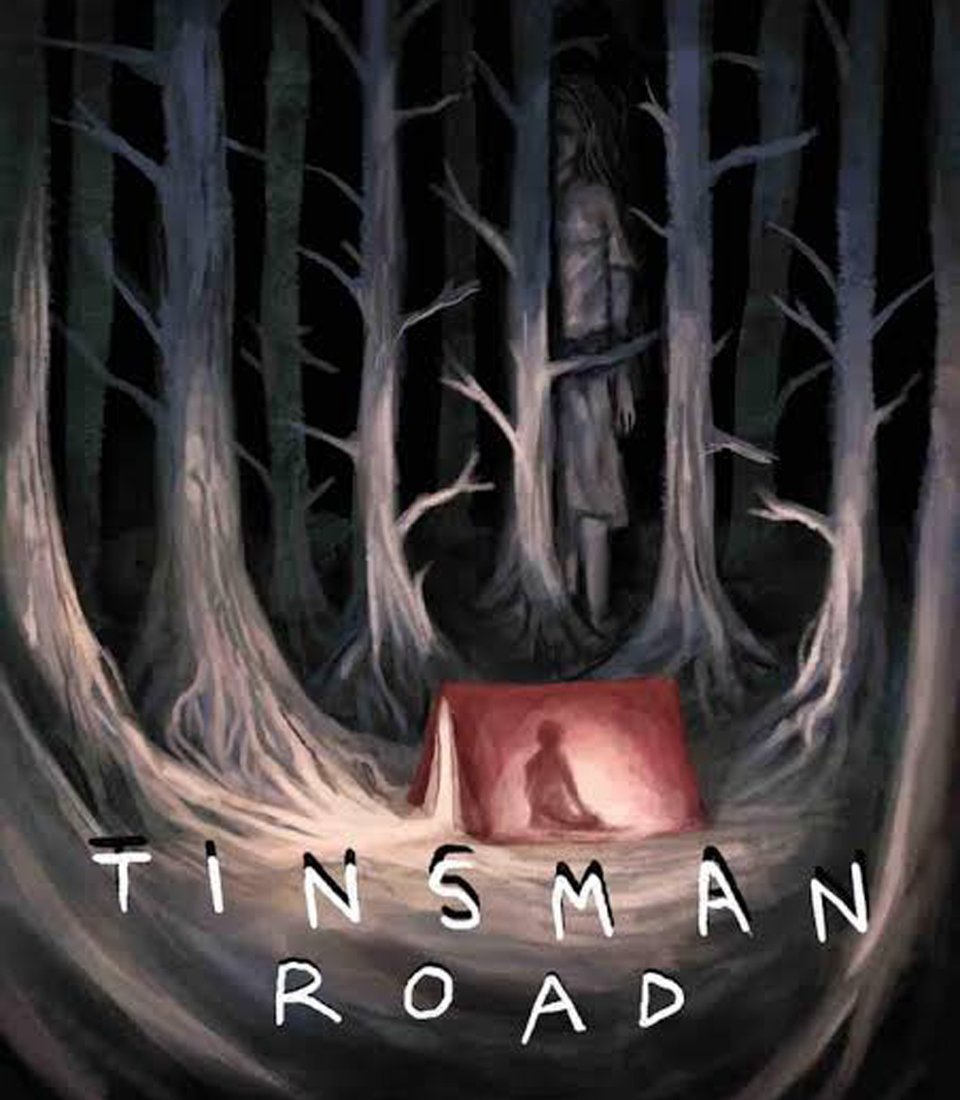
He has other ideas: conflicted and guilt-ridden about his absence during the search for his sister, and in tension with his mother over unresolved issues from before his departure, he wants to record his mother’s increasingly erratic behaviour, to interview the locals who might have some insights into what happened and to conduct his own investigation into Nicole’s disappearance. He looks over her artworks and writings, listens to her songs and recordings. Something seems to have drawn her deep into the woods, beyond where the search parties stopped. This feels at first like a rumination on the classic Australian mockumentary Lake Mungo, as some of Robbie’s own experiences in the house persuade him that perhaps his sister’s spirit is reaching out to them, while others suggest that his mother is staging the evidence consciously or unconsciously. (A particularly unsettling moment has her accusing him of the same thing, as each claims to have seen the other sleepwalking. Is she lying defensively or telling the truth? And if they aren’t seeing each other, who or what are they seeing?) Emotions come to a head as Robbie’s questions discomfort the locals and an attempted seance in his sister’s bedroom with a new friend (Heather Middleton) exposes and disrupts the private nature of his unravelling mother’s grief. He abandons the house and takes his investigation into the woods, and that’s where the real horror begins.
As with The Outwaters, Tinsman Road requires a level of patient engagement that many viewers may find challenging. It employs an unhurried pace and accrual of mundane detail to ground its uncanny narrative in an all-too-plausible reality and to incrementally escalate the unease and dread that grips us as Robbie recreates his sister’s final journey. Banfitch again creates a powerful and evocative soundtrack and audioscape that demands close attention even as it delivers jolts of terror, from the first few images through the closing credits right to the very last second. And special mention must be made of Leslie Ann Banfitch who is utterly believable as a mother who is trying and failing to keep it together in the face of overwhelming grief and uncertainty. Her scenes with her son are raw and real in their rage and anguish and are difficult to sit with.
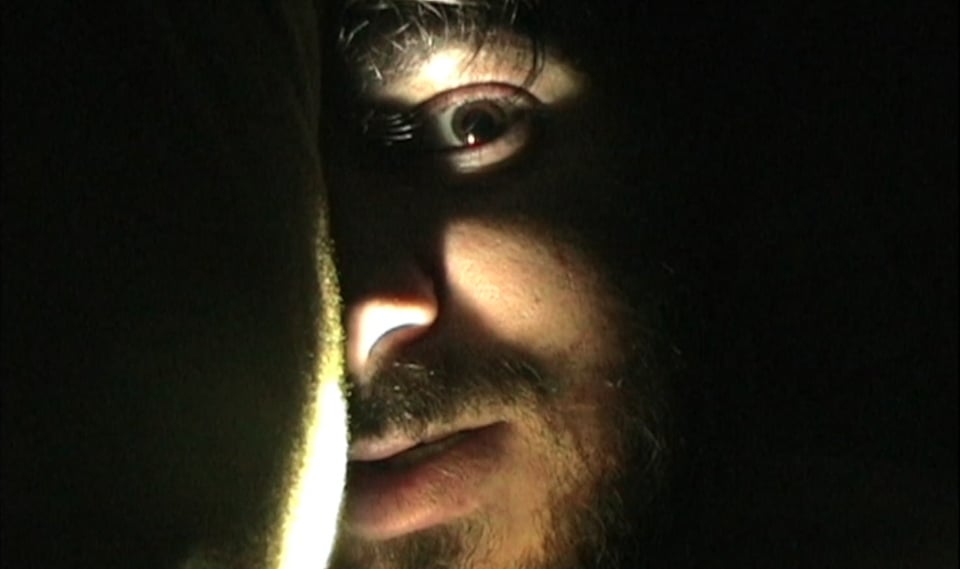
Finally, because few others will note this: Banfitch is engaging a fascinating strategy as a creator of queer horror, one where he is transposing himself and his queerness into his fictional narratives and participating in the troubling of queer narratives and images within the genre. (People who know my work will understand why this captivates me so.) In The Outwaters and its supplementary short films Card Zero and VL-624, whether by instinct or intention, Banfitch’s self-named character is recently out of a gay relationship and seems to be at a point of struggle in his identity as a queer man (one which may have biblical aspects, if you consider the various manifestations in the desert), eventually leading to a shocking—and I do mean shocking—act of self-destruction. In Tinsman Road, Banfitch’s self-named character left his mother’s home to move to Los Angeles to pursue his film career, but our impression is that he did so only after a significant conflict with his mother, one that has left lasting wounds. Years later, they are doing their best to perform the roles of loving mother and son with each other, but the anger and sadness are lurking just below the surface. While queerness is not a topic in Tinsman Road, it is very much a presence. It appears to be the reason for the rift between mother and son, for his unwillingness to come home during the search for his sister, and for the ease with which he makes friends with locals Heather and Nancy as part of his investigation. It also adds a dimension to Robbie’s surrender to his sister’s path into the woods, one that is foreshadowed by the words, songs and images that she created prior to her disappearance, clues to her fate that she leaves behind without even recognizing what they were and where they might lead. Robbie’s queerness in both films, and in creating both films, complicates them in subtle and intriguing ways, making their horror more personal and incisive. Tinsman Road is available for rent on Letterboxd until July 31.
Well! That’s it for this edition. All my regular features will be back next time. For now, stay cool, stay hydrated, and above all stay scary.

