
Pendulums and Repentance
Choosing solidarity by jumping into the fray
Last week I met a couple of friends for happy hour and one of them described a societal dynamic I’d felt but not found the language for. We were talking about some recent gatherings of racially diverse Christians that we’d each observed or participated in. More than surface-level, faux-reconciliation gatherings, these events seemed sincerely aimed at the justice and righteousness of the kingdom of God. The particular event we were reflecting on included very honest public conversations about the history of white flight and disinvestment in certain communities and the call to materially invest in God’s shalom. Really good stuff!
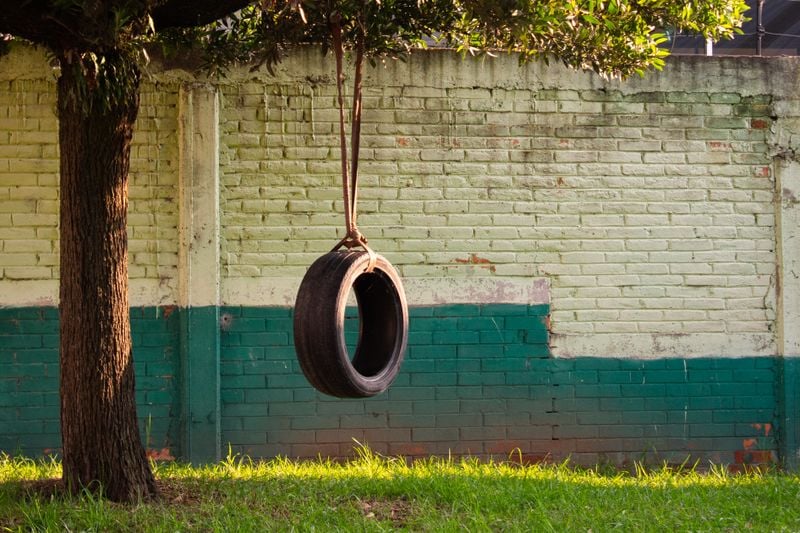
And then, to describe the fact that after a few years of concentrated backlash against racial justice and reconciliation there seems to be a renewed if tentative interest, my friend said something like, “It feels like the pendulum has begun to swing the other way.”
My initial response was to agree. Despite the fact that there have been noticeably fewer people showing up in racial justice spaces, it has felt like the fever whipped up by the anti-woke, anti-CRT fear-mongers has begun to break. If the pendulum hasn’t quite reversed course, perhaps its current trajectory has at least started to stall under its own deceptive hubris. But something about a pendulum, even if accurately describing our reality, struck me as unworthy of celebration.
A pendulum is fundamentally passive. After an initial thrust of energy, the weight oscillates from its pivot point even as gravity slows and eventually stops its back-and-forth momentum. This passivity is the problem with using a pendulum as a metaphor for racial equality.
The ongoing existence of racial injustice in its many forms – anti-Black racism, white supremacy, xenophobia, etc. – is not a passive dynamic, despite the rises and falls in intensity my friend is observing. Reflecting on the years immediately following the Civil War, historian Carol Anderson notes how formerly enslaved Black Americans “took what little they had and built schools, worked the land to establish economic independence, and searched desperately to bring their families, separated by slavery back together.” She goes on to point out how the agency of these women and men was resisted and violently undermined by a white supremacist counter-agency. Their efforts, she writes, were met with “the Black Codes, with army troops throwing them off their forty acres, and then with a slew of Supreme Court decisions eviscerating the Thirteenth, Fourteenth, and Fifteenth Amendments.”
The trend has continued into the present. Following the widespread racial reckoning which followed the murder of George Floyd in Minneapolis, Chris Rufo, a far-right activist and filmmaker, launched a counter-offensive by appropriating Critical Race Theory as a “cudgel with which to beat down these institutions.” Rufo’s overt frankness about his deceptive tactics didn’t hamper the effectiveness. Following that brief moment of honest reflection about the legacy of racism in the U.S., the pendulum didn’t passively swing away; it was purposefully, strategically, and successfully shoved.
This is what is important to notice. The fluctuating nature of racial justice is not the result of the regular rhythms of society. Every movement toward an authentically multiracial democracy has behind it thousands of purposeful and sacrificial decisions. Likewise, each season of backlash – “redemption,” Jim Crow, mass incarceration, anti-CRT hysteria, etc. – has been forced into existence via political will, disinformation campaigns, and strategically directed capital.
While the movements to and from racial justice can look like a naturally occurring pattern, treating them as such lets those of us privileged enough to observe from a distance off the hook. Rather then entering the fray during periods of concentrated societal backlash, we can sit on the sidelines with the expectation that, eventually, things will calm down or cooler heads will prevail or truth will win the day or the anti-woke mob will turn against itself. In other words, when the forces of white supremacy loom powerfully large, we sever solidarity with those who are most likely to suffer its anxious rage and bide our time till the pendulum begins to swing back.
For Christians, this is an especially terrible way to interpret the times. We understand that sin – and whatever else racism is, it is fundamentally sin – is not a detached force of nature, moving unencumbered by willful human participation. No, sin always involves our complicity. Whether by omission or commission, the forces of racial division, antipathy, and dehumanizing exploitation depend on the participation of sinful people like me.
Rather then waiting for the pendulum to swing, the Christian response to the back-and-forth movements for and against racial justice will be active. Especially for those of us with the ability to wait, to pull back until the risks have diminished, the response requires something from us. In my second book I wrote that, in response to the awareness of our sin, “we need the repentant participation of genuine communities, which is to say that we need communities whose members refuse to outsource their vocations to take loving care of each other.”
In the past couple of months I’ve had conversations with two newer friends who told me about their experiences with this sort of repentant participation. Each had lived most of their lives ensconced in the sheltered privilege of racial whiteness. And each, in God’s mercy, has been brought into contact with the painful complexities of racial injustice which they had previously overlooked. Now, rather than looking away or waiting for the moment a racial antagonism to pass, both of these friends have found ways to begin nurturing solidarity with the multiracial Body of Christ. Their experiences involve painful seasons of growing awareness and risky moments of confession and repentance, but each can quickly testify to how good it has been to move away from passivity and into the movement of God’s reconciliation.
We don’t know how the pendulum of racial justice and equity will shift in the days ahead. But those of us who have been baptized into the family of God don’t have to wait on the fickle and treacherous swings of society before we act. Repentance is the way.
(Photo credit: Eric Ortega.)
The View From Here
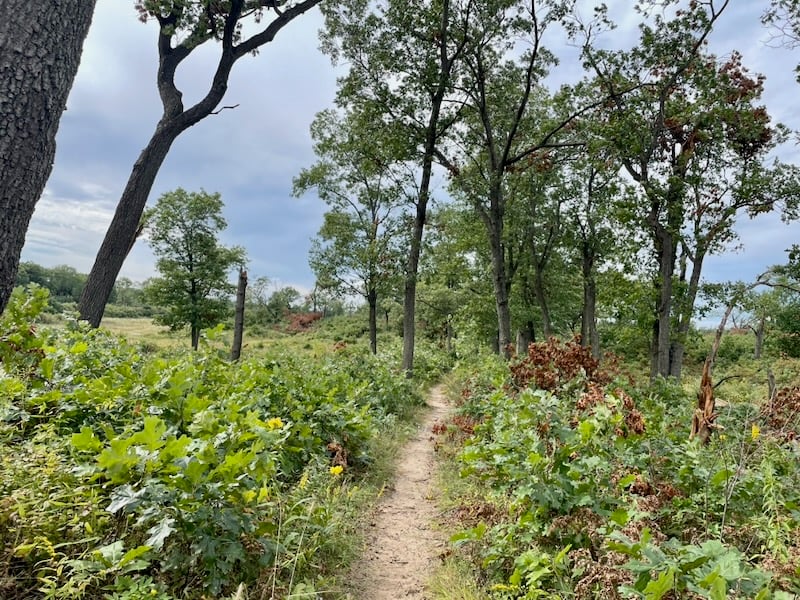
We were out of town when the terrible storms blew through our region this summer but the aftermath was very visible during my hike in Miller Woods in northern Indiana this week. When I first started walking, I figured all of the brown leaves in the distance were the first evidence of fall. In fact, the entire trail was littered with downed limbs and trees. Thankfully, as you can see in the photo, there are many oak saplings ready to grow into their predecessors’ places.


