
The Crowd Has Departed
Re-imagining reconciliation when others have moved on
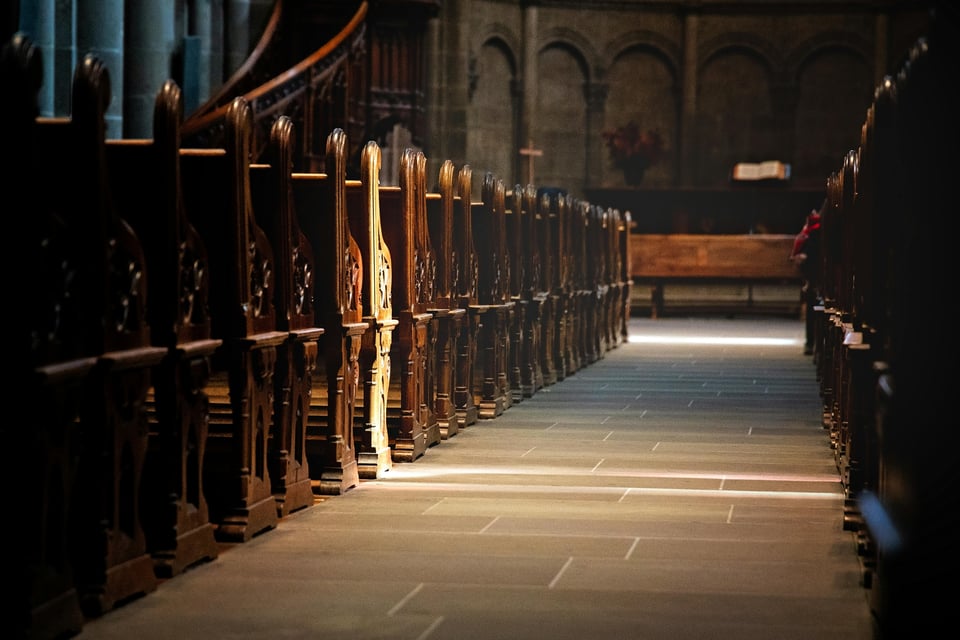
“10 years ago, this sanctuary would have been packed.” I was participating in a conference out of state and had mentioned to one of the organizers how engaged and committed the attendees were. They’d come from around their region to consider how to foster God’s peace in their communities and churches. Hearing my observation, the organizer told me that there had been a time in his city when a gathering like this one would have attracted four times the number of people who’d joined us that weekend. What seemed like hopeful momentum to me was, from his longer-term perspective, a sober reminder of the cultural and political disruptions which had roiled churches in his area during the past decade.
That brief conversation caught me by surprise and I’ve thought about it a few times since. Last week I realized that I’ve had similar conversations, in different places, at least two other times in the past few months. Once was at a pastor’s conference. I’d spoken to this group a few years earlier, before the pandemic, and remembered how the clergy and their families had filled the university chapel where we met. This time, the event was moved to a smaller room and, given the size of the group, the other speakers and I shifted our teaching modes to include more conversation and interaction.
The other time this sort of conversation came up was while speaking for a church’s weekend seminar. While more than ten churches from the region were represented at the event, the host team lamented that many seats remained empty in their sanctuary.
These observations are all anecdotal, of course. There seem to be plenty of Christian conferences still managing to pack venues and sanctuaries. But what these three events had in common was a focus on the church’s role in seeking justice. Other friends who, like me, regularly find themselves in church and justice spaces have made similar observations.
Someone smarter than me will need to interpret this trend, but I think I understand part of the explanation. A while ago I wrote about my understanding of the trajectory of the faith-based racial reconciliation movement. Initially invisible before becoming an idealized ministry method, I believe we’re living through a period of interrogation. In this season, ministries focused on racial justice and reconciliation – including conference, workshops, etc. – are no longer as attractive as they once were. In fact, increasingly people view these sorts of ministries skeptically.
I’ve noticed two starting points for this interrogation. The first is ideological. The skeptics in this camp are doubtful about the possibility of racial reconciliation. Having observed the countless ways that these efforts have served as cover for the racialized status quo, they have decided to expend their limited capacities elsewhere.
The second starting point is experiential. This group is skeptical about the church’s involvement in justice because they were a part of previous attempts at reconciliation which fell apart, sometimes spectacularly. There are many Christians of color who made huge sacrifices to participate in culturally white churches which claimed to desire racial reconciliation only to discover how fragile those claims, and the people making them, actually were. There are also pastors and ministry leaders who took steps toward visions of justice only to be rebuffed and rebuked by those they were called to serve.
Both of these skeptical starting points are provoked and exacerbated by the partisan and cultural tumult which has shaped the past decade. It’s no wonder ministries which prioritize reconciliation and justice are being interrogated. From one vantage point it’s amazing that anyone shows up to our gatherings!
But if we can turn our attention away from the empty seats and dissipated fanfare, it becomes possible to re-imagine these reconciliation and justice ministries. My dear friend and mentor Rev. Dr. Brenda Salter McNeil has been saying for a few years that the era of the single superstar is over. During previous seasons of ministry, people would show up for the impressive preacher or practitioner who could cast a beautiful vision for God’s justice. Those days, according to Dr. Brenda, are over. Living through a season of skepticism means, I think, that the era of attracting a justice-curious crowd has also expired. We should no longer expect the message of God’s commitment to justice or a ministry seeking to embody that commitment to attract a crowd. The skepticism runs too deep.
After redirecting our attention away from those who aren’t showing up, we can begin re-imagining the ministry of reconciliation. What might this look like?
First, While we lament and seek to understand the skepticism of this moment, we will choose to focus on the faithful women and men whose hearts remain open to the possibility of God’s unlikely justice in our midst. Their gifts, experiences, and commitments are precisely the expressions of God’s abundance we need today.
Second, we will remind one another that the kingdom of heaven has always moved quietly and surprisingly as mustard seeds and yeast.
Next, we will embrace the fact that, from those who value efficiency and power, the work we’ve given ourselves to will typically appear foolish and weak. Following the crucified Savior reminds us that such perceptions are a perennial feature of the ministry of reconciliation.
Fourth, the holistic reconciliation accomplished on the cross is, writes Paul, a mystery now revealed so that “through the church the wisdom of God in its rich variety might now be made known.” (Ephesians 3:10) I imagine a vision of God’s shalom which slowly comes in and out of focus as we learn to see the world through “the eternal purpose that [God] has carried out in Christ Jesus.” (3:11) Recognizing this will allow us to sympathize with those who struggle to trust this vision even as our churches step boldly into our call to bear witness to God’s cruciform wisdom.
Finally, re-imagining the ministry of reconciliation and justice means devoting our limited attention to the hyper-local opportunities to join the Spirit as Christ reconciles all things– in our neighborhoods, schools, forest preserves, etc. It’s easy to bemoan shrinking conferences or departing crowds, but those were never the places of God’s real, sustained action. To connect with that divine action, to feel the wind of the Spirit at our backs, we will move to the marginal places which get overlooked by a crowd-obsessed society. Here we will find that, while others have moved on, God is still reconciling all things.
(Photo credit: Robin Godefridi.)
The Race Against Gun Violence
Thanks again to those of you who’ve donated to my fundraiser on behalf of New Community Outreach. If you want to know more about the work our nonprofit does here on the South Side of Chicago, check out this short video.
The View From Here

On Thursday I loaded up my new folding kayak on the bike trailer, rode a few blocks to Lake Michigan, and took it out for an inaugural paddle. I anticipate spending a bunch of hours in this little vessel of joy during my upcoming sabbatical.


