
Sundown Season - #14
The Connecticut Sun is no more, and as I wrote in the Berkshire Eagle it's more than just the loss of a pro sports team.
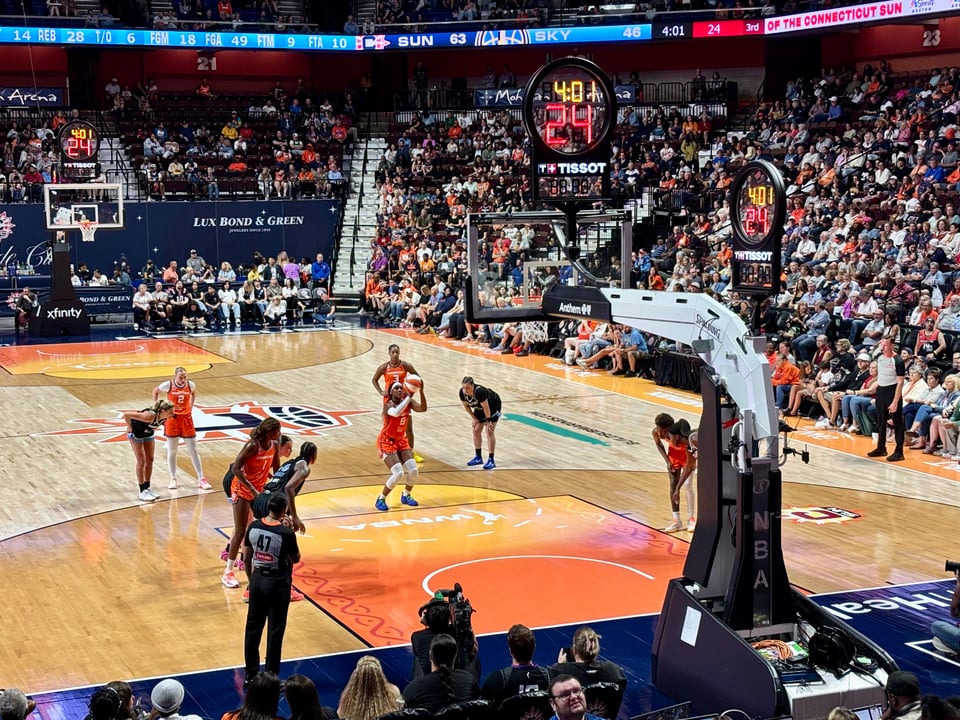
Last weekend I wrote a column for The Berkshire Eagle to touch on some of the issues surrounding the demise of the Connecticut Sun with the end of the WNBA season. I thought it was important to note this is not a happy story, nor an inevitable one — this was a team that endured through the leanest years of the WNBA’s history, was still a viable and profitable operation with deep regional ties, and if its demise wasn’t exactly the sports industry equivalent of a homicide, it was at least manslaughter.
There were some elements of the story I would have liked to explore more, such as what the team meant for Native American fans (covered here in a story in the Guardian). And there is plenty of digging still to be done into why the WNBA was quite so keen to sell-out all of New England in favor of Houston (and its new extremely well-connected Trumpist ownership group).
But what I hoped to express is the feeling of how exhausting American life and its endless petty scams has become. I’d enjoyed my brief time as a fan, but now it is only to me something that’s on t.v. every now and then, like Serie A or Finnish ice hockey.
(I’ve pasted it below because it is behind the Eagle’s paywall. If you have a subscription here’s the link — I believe every little digital notch helps!)
###
Goodnight, Connecticut Sun
The Berkshire Eagle, Oct. 3, 2026
BY CHRISTOPHER MARCISZ
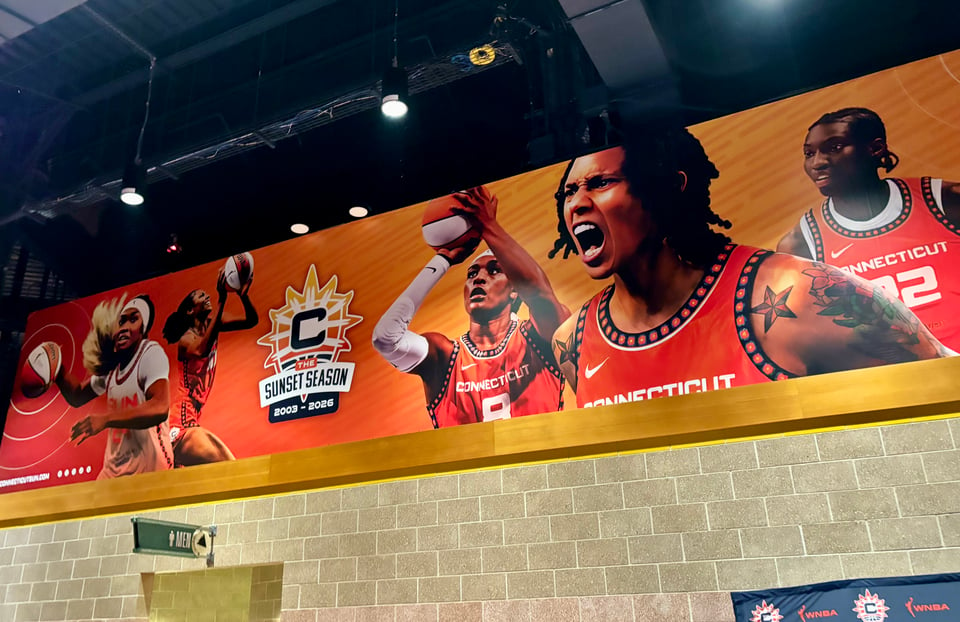
By the time I came to be a Sun fan it was the very end of their time in Connecticut, when rumors of a sale and move were as common as player updates, and the "Sunset Season" was rolling out plenty of nostalgia about the team’s four trips to the WNBA finals and the brief period when Mohegan Sun was the center of the WNBA universe back when no one else was really interested in the job. But for fans this has felt as unfair as it was inevitable. The league is reaching amazing new heights, and casting aside the people and places that got them through the hard times.
My personal, though late, journey to WNBA fandom was thanks to one of the surprising joys of parenthood—when your kid develops interests on their own and wants to share them with you. The appeal of the quality of play and the personalities of the players was foremost, but there were distinct appeals to me, a Boston sports fan who lives far outside the city, i.e. tickets cost a reasonable amount and there was plenty of free parking.
It felt like I had stumbled upon something awesome that word hadn’t gotten out about. But those days were already passing. The Connecticut Sun fan experience was a vestigial one for a league that had been on the runway too long. The painful, protracted, and frustrating process leading to the $300 million sale and leaving its unlikely home at a casino in the middle of nowhere began when the team’s owners, the Mohegan tribe, lost a fortune on a bad investment in South Korea (apparently, investing in gambling might not always pay off!). There were serious efforts to move to Hartford or Boston, which would have preserved and grown the existing fan base, but the league really wanted a team in Houston and whatever backroom shenanigans were involved won the day.
Since then the franchise has run a sort of parallel marketing strategy, half of which is a lot of Connecticut fan service right up to the last game on Sept. 24. It’s a history worth remembering. The tribe had stepped in in 2003 to buy the failing Orlando Miracle franchise for $10 million. Hilariously, the league went to great pains to make sure there would be no sports betting at the casino, in those innocent days before everything became gambling. But since Connecticut is a hotbed of basketball thanks to UConn, especially women’s basketball, they did well. They were the first team owned independent of an NBA team, and were the first to turn a profit in 2010. They made it to the finals four times, and for a while Mohegan Sun was the location for the WNBA draft and All-Star weekends, at a time when no one else wanted to do it.
All along rumors spread about the oddity of having a team there, like the team having shootarounds in a gym while sharing the floor with a kid’s birthday party, or the long bus rides and loneliness of being young and trying to live well outside any city. But as players through the years have pointed out, that built real bonds and real chemistry that is hard to reproduce with big contracts and plenty of things to do after the game.
But the other half of the "Sunset Season" marketing campaign was more grim. No one, not the announcers or staff or players, could seem to hide their excitement about the "next" chapter in Houston. The original Houston Comets (1997 to 2008) claim to be reborn, and are "returning" to their "home." You can go to their website and drop $99 for a "seat license" for the right to eventually buy seats next season. But as much as they assert "the dynasty returns in 2027," that franchise died, ironically because no one would come up with $10 million just a few years after the tribe did. I don’t imagine the iconic "Keesusk" jerseys, honoring their connection to the Mohegan people and culture, will appear on throwback nights the way Hartford Whalers and Quebec Nordiques jerseys occasionally do.
But this is a new WNBA: with big-time money, growing audiences, and enough cultural gravity to attract a ton of bad-faith attention as a front in the Culture Wars. It means players are getting paid, the quality of the game grows every season, and way too much attention is spent on the political musings of role-playing bench players.
As fan free agents, my daughter and I went to check out the New York Liberty earlier this season. The crowds at Mohegan Sun always felt like who you would see at a high school game, in contrast to the cool and stylish Barclay’s Center. I’m still on the fence — hard to see so many happy New York sports fans.
For me, an immediate fan experience has become a distant television product to admire from afar, which is probably better for my blood pressure to be honest. But it was great to remember what it’s like to learn about something like you did when you were a kid, or to feel like you found something valuable and belonged to you. It was never going to last, but is it wrong to hope it would?
Copyright New England Newspapers, Inc., The Berkshire Eagle, 2026. All Rights Reserved.

