
The United States Needs to Keep its Eye on the Ball
In the U.S.? If you think American leadership in science is worth keeping, or if you simply think the U.S. President’s posture is unbecoming of a Peace Prize recipient, tell your senators and your representative that the January visa pause, the ESTA data collection expansion, and unauthorized, unprovoked wars are bad for U.S. competitiveness and scientific innovation.
Filed Under #GlobalDimension
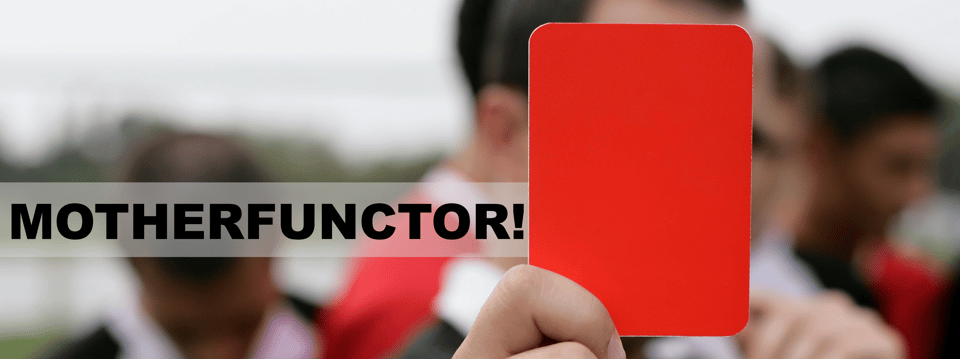
image credit: Courtney Gibbons 2026
Why U.S. Foreign Policy Could Cost Us the World’s Greatest Mathematical Gathering
In July 2026, Philadelphia is scheduled to host the International Congress of Mathematicians (ICM), one of the most prestigious scientific meetings on the planet. Held once every four years, the ICM brings together thousands of leading researchers from more than 100 countries. It is where international collaborations are born and ideas that power breakthroughs in technology, climate science, cryptography, and artificial intelligence are forged.
When future Fields Medalist Mirzakhani graduated from Sharif University of Technology in Tehran in 1999, could she have imagined that U.S. and Israeli forces would bomb it 26 years later?
This historic gathering is scheduled on the heels of the 2026 FIFA World Cup games to be hosted in the U.S., Canada, and Mexico. In soccer, an “own goal” refers to scoring a goal for the opposition, and convergence of restrictive immigration policies, invasive traveler screening, and a U.S.-led conflict in the Middle East is doing exactly that for mathematics, undermining the nation’s own standing in the global competition for technical and scientific progress. The United States is eagerly anticipating its time in the international spotlight as one of the World Cup host nations, but it should be keeping its eye on the ball when it comes to the ICM.
The last time the U.S. hosted the congress was more than four decades ago. Winning the bid for 2026 was a testament to American academic excellence and our longstanding role as a magnet for global talent. But that leadership is now in jeopardy, and erecting barriers at the border undercuts the very strength the U.S. claims to cultivate.
In January, amid the unrestrained brutality of federal agents in immigration crackdowns across the country, the State Department rolled out a new set of policies. They announced an indefinite pause in immigrant visa processing for citizens of 75 countries, citing concerns that applicants might become dependent on public benefits. The policy took effect Jan. 21, 2026, and affects consular processing of green cards for nationals of countries spanning Africa, Latin America, Asia, the Middle East, and Eastern Europe. Though the pause technically does not apply to short-term visitors, its message is unmistakable: the U.S. is tightening its doors, and foreign talent should look elsewhere.
In addition to the State Department’s new visa policies, the Department of Homeland Security also proposed sweeping changes to the Electronic System for Travel Authorization (ESTA)—including mandatory biometric collection, multi-year social media histories, and detailed personal data about travelers and their families. For academic visitors from Visa Waiver Program countries, these intrusive requirements would make a brief trip to the U.S. feel more like a security screening than an invitation to collaborate. One might argue that simply following the rules should guarantee smooth entry and travel in the U.S., but as many high-profile cases have demonstrated, adhering to the rules can be nearly impossible when the rules are in flux and are applied arbitrarily, as with the detention and deportation of immigrant scholars in the U.S. with valid visas. Indeed, several partner societies have already announced that they will not participate in the ICM, with the Societé Mathématique de France citing concerns over sending a delegation to a country where “martial law is regularly invoked,” and the Sociedade Brasileira de Matemática citing an environment that is “incompatible with the spirit of collaboration that governs the global mathematical community.” A petition calling to move the ICM out of the US has been signed by more than 2,300 mathematicians from over 75 countries.
Current U.S. foreign policy sends a clear and chilling signal to scholars everywhere: the U.S. views foreign visitors and academics as threats to national security rather than valuable contributors to our shared intellectual mission.
These are not the only signals being sent. In January 2026, U.S. air strikes during the operation that captured Nicolás Maduro destroyed the center for mathematics at the Venezuelan Institute for Scientific Research. The U.S. Department of Defense declined to comment on this act which the Venezuelan minister for science and technology called “an act of imperial aggression without precedent.” In a further act of global aggression, the U.S. and Israel launched a coordinated strike on Iran, beginning a military conflict that remains active as of this writing. Iranian mathematicians are now being asked to plan summer travel to a country in open military conflict with their own.
This matters for the ICM. For over 100 years, The IMU has relied on safe, accessible entry for mathematicians from every corner of the globe. Many of the world’s most brilliant researchers come from places already feeling the ripple effects of the U.S. shift in foreign policy. At the 2014 ICM, in a moment of tremendous celebration, Maryam Mirzakhani, became the first woman and the first Iranian to win the prestigious Fields Medal. When Mirzakhani graduated from Sharif University of Technology in Tehran in 1999, could she have imagined that U.S. and Israeli forces would bomb it 26 years later? Under current policies, many future Fields Medalists would find that the path Mirzakhani walked–from student visa to American research career to receiving the Fields Medal at an ICM–has become almost impassable. Scholars with deep professional and personal networks in affected countries will hesitate to risk travel. Invitations will go unanswered. Panels will go unfilled. The U.S. will lose standing.
If the mathematical union that oversees the ICM concludes that the U.S. cannot guarantee open, equitable participation, nothing in its rules prevents it from reconsidering the venue—as it did in 2022 when Russia’s invasion of Ukraine made hosting in St. Petersburg untenable.
Security and sovereignty are legitimate concerns for any nation. But security policies must be proportionate, transparent, and mindful of unintended consequences. Intrusive data collection and broad suspensions of legal visa pathways do not make America safer if they deter the very people whose work helps solve global challenges.
If, as President Trump declared in Executive Order 14179, it is the U.S.’ mission to “sustain and enhance America’s global AI dominance in order to promote human flourishing, economic competitiveness, and national security”---indeed, if the U.S. wants to lead in science more broadly, attract global talent, and fulfill the promise of the ICM in Philadelphia, it must reaffirm its commitment to openness. And as a recent recipient of the inaugural FIFA World Peace Prize, U.S. President Donald Trump should reflect on the responsibilities that come with the recognition.
TAKE ACTION:
In the U.S.? If you think American leadership in science is worth keeping, or if you simply think the U.S. President’s posture is unbecoming of a Peace Prize recipient, tell your senators and your representative that the January visa pause, the ESTA data collection expansion, and unauthorized, unprovoked wars are bad for U.S. competitiveness and scientific innovation.
We have been handed two world-class events, the World Cup and the ICM, in a single summer. Why score an own goal when we should be filling the stadiums and the lecture halls?
Like this content? Subscribe for more:
Anna Haensch (extreme friday AI!) and
Courtney Gibbons (MOTHERFUNCTOR!)
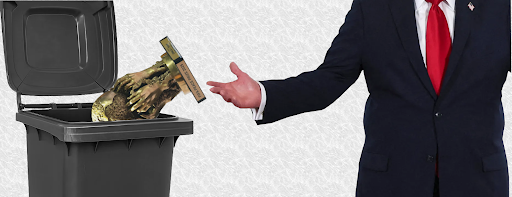
image credit: Anna Haensch 2026