
Finding hope at the repair cafe
Don’t despair about current events. The next time you’re feeling depressed, here’s what I’d suggest: Find something broken in your home, imbue that broken item with all of your negative emotions, and go get it fixed – at a repair cafe.
I’m mostly not joking. Let’s start with the item. I’m guessing that somewhere around the house you have a broken lamp, or a toaster oven that won’t heat up, or some treasured jeans with an unwanted rip in the fabric. Go find that item, brush the dust off of it, and – should you feel so moved – make the decision to get it fixed.
Now find a repair cafe near you. There are groups all over the world, following the lead of the Netherlands-based Repair Cafe organization.
Not familiar with the concept? Repair cafes are community gatherings where volunteers repair the items brought in by guests, for free. Though they’re not exactly cafes, depending on the location you might indeed be able to find some coffee. But the focus is on repair.
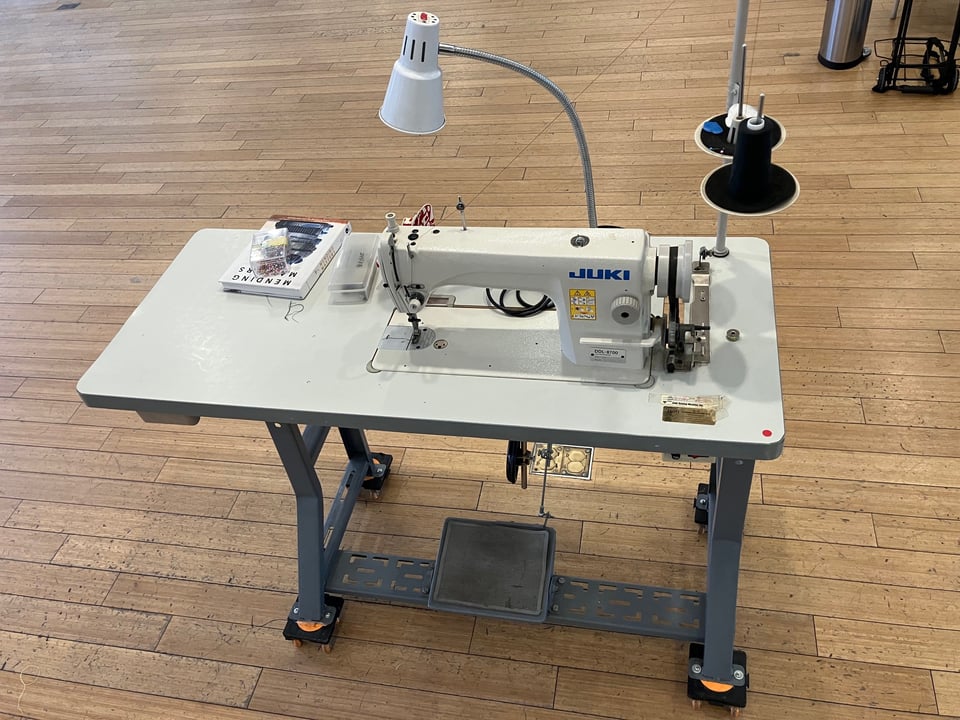
The closest repair cafe to where I live is Repair Cafe El Barrio, which meets monthly in East Harlem in uptown Manhattan. I visited RCEB on a recent weekend, along with audio producer Todd Mazierski, to conduct interviews there and put together a Techtonic segment.
You can listen to the segment which aired on this week’s Techtonic (starting at 4:34; you can also jump to that timestamp with this link). This might be the most highly produced segment on any Techtonic episode, so I hope you enjoy it as much as I did.
The interviews ranged from guests bringing in broken items (a lamp, a drone, a pair of jeans) to volunteer “repair coaches” who specialize in appliances, electronics, and fabric. I was also delighted to speak with Rocío Salceda, founder of RCEB, who described how she started the repair cafe at a low point in her life. She didn’t despair, though. Determined to help others, she brought out her sewing machine and waited for the community to show up.
And they did. The day I visited, there was a palpable energy in the room: alive, positive, and even hopeful. Despite everything else happening in the world – illegal war, rampant surveillance, unethical oligarchs, Big Tech predation – here was a room so full of joyful energy that I began to suspect this wasn’t just about broken toasters and ripped jeans.
I asked Rocío and all the repair coaches some version of this question: What exactly is going on here?
Repair coach Alec Stein put it well.
I don’t really think the repairs are the second or even third most important part about the repair cafe. It’s on the list somewhere, but for me numbers one, two, and three are all community-related. I don’t come here because it’s really important to me that this kettle I found at a thrift store or in the trash is broken and I want to fix it. What matters to me is to feel useful and to apply what I know to help someone else.
I was in software for awhile. I was doing work that was supposed to be helping people, but the people were all somewhere else and so I never really got to see the result of my work. I was being told that I was making people happier, but here I get to take someone’s 50-year-old tape recorder and fix it in front of them and I get to see them have this moment where they’re like, oh, this thing works again! And that makes me really happy.
Earlier in the segment Alec said this, distinguishing between the value of the item and the value of the experience at the repair cafe:
Why do people come in here – is it because they can’t afford to replace their $7 tea strainer? It costs $7 to get here on the train. They come here because it upsets them that they have to throw it away. And what we give them is the relief of being able to keep the thing. We save them from that frustration.
The number one thing that the repair cafe is about, to me, is the good feeling that we get from saving something that really shouldn’t have to be thrown away.
Saving something that shouldn’t be thrown away. That idea resonated with me for days afterward – and really, it’s still with me.
What is it, exactly, that the Big Tech-dominated culture wants to throw away? Sure: consumer goods, household appliances, fast-fashion clothing. The disposable consumer culture is a blight on our landfills, our ecosystems, and everywhere the trash gets shipped.
But it’s more than that. Our communities are being treated the same way: disposable things to be exploited, monetized by the platforms, and then discarded. People – especially the vulnerable – are treated as throwaway. (Again, see my writing on the topic.)
The way we fight back, the way we beat the oligarchs, is not with a cure-all technology. We can use tech for good, but that’s not the key to our survival. Instead, the way we can win – and how we will win over the oligarchs – is through building community. Getting together, and helping each other, always with the goal of repair. How desperately the world needs such a fix.
Here’s the Techtonic episode with Repair Cafe El Barrio:
I also want to invite you to join my own community, Creative Good, where we’re sharing our knowledge about tech’s effects, and healthier alternatives. Join us!
Until next time,
-mark
Mark Hurst, founder, Creative Good
Email: mark@creativegood.com
Podcast/radio show: techtonic.fm
Follow me on Bluesky or Mastodon