A conversation with Gerry McGovern
In the late 1990s, Gerry McGovern’s internet startup was valued at $200 million dollars or more. Nua – the Irish word for “new” – was one of the best-known digital companies in Ireland, catapulting McGovern and his cofounders to vast potential wealth before it all collapsed in the dotcom crash of 2001.
McGovern went on to become a noted user experience consultant, writing books and speaking widely, until he took on a new role as an outspoken critic of Big Tech.
My own career followed a similar path. I founded Creative Good in 1997 and by the peak of dotcom mania, at least one banker told me that my company could command a price in the tens of millions of dollars. After the 2001 bust, I soldiered on – albeit with less inflated prospects – writing, speaking, and consulting on customer experience. (My book Customers Included presents what I learned, and still believe, even though the tech industry has abandoned any real interest in the idea.)
The launch of Techtonic on WFMU in 2017 gave me a platform to denounce the Big Tech giants on live radio every week – and this week it provided the context for Gerry McGovern and me finally to have a conversation.
Gerry and I discussed his past UX career, the tremendous environmental harms of Big Tech, and where we might find some hope. Take a listen:
Episode page with links and embedded audio player
Podcast version of the episode
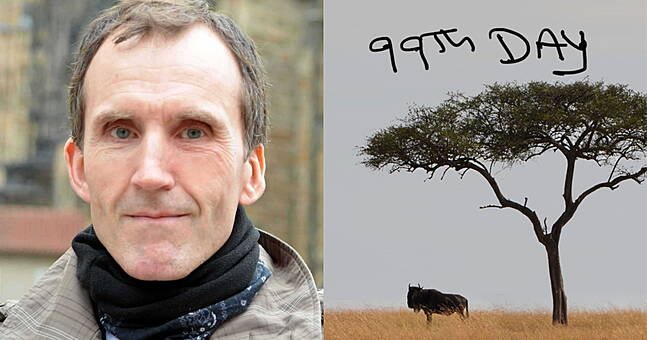
Gerry’s new book, 99th Day: A Warning About Technology, offers a wide-ranging look at Big Tech’s environmental effects. Among the most damaging are mining and ewaste, bookending the beginning and end of the tech lifecycle. Mining extracts natural resources like copper and lithium in surprisingly wasteful processes – Gerry points out that the easy-to-reach sources were stripped decades ago – and ewaste piles up as the phones, laptops, routers, and servers reach the end of usable service.
To distract the public from these externalities, many companies engage in “greenwashing” by boasting that their technology is actually good for the environment. In an excerpt I’ve posted on Bluesky and Mastodon, Gerry describes the mining of lithium for use in electric vehicles:
So what happens to the lithium? They put it out in a type of a slush that dries out, evaporates, in one of the driest places on Earth, taking water from the water table underneath. Then they put it in trucks that go hundreds of kilometers. Then it’s going to go onto a big ship and go thousands of miles – it’s going to go to China. Then they’ll turn that into a battery and ship it to Germany, where it’ll go into a BMW EV that’ll be sold as green. So, how’s that green?
The worst type of ewaste, Gerry says, comes from data centers. In addition to their outsized requirements for water and power, and the surveillance data-mining they engage in, there’s the sheer amount of waste involved in manufacturing – then eventually discarding – thousands of servers. It all adds up to a colossal bill for the environment and any communities living nearby.
Indigenous communities are often hit the hardest, many in hot and dry areas in the global South. It brings to mind “data colonialism,” an idea advanced by Nick Couldry and Ulises Mejias in their book Data Grab. As I wrote in this column, reviewing the book and our interview:
The behavior of the British East India Company, they argue, is being mirrored in the actions of Apple, Google, Facebook, Amazon, and Microsoft. The new territory to be colonized isn’t land but data – all the data that flows from our daily lives, from waking to sleeping, every moment surveilled and harvested to enrich the tech empires.
As the indigenous communities are exploited, so will everyone else be treated – unless we do something about it.
What’s the next step for those of us who want to resist? Community, Gerry said, echoing a number of recent Techtonic guests. Even if you can protest the construction of one local data center, or bring a quarter-acre of soil back to life, it’s worthwhile. And you’ll be in community as you do it.
I appreciate Gerry’s provocative message, and his clear warnings about where we’re headed. But I also find it weirdly reassuring that I’m not the only UX consultant-and-author who has flipped out and declared war against Big Tech.
P.S. As for joining a community: This is a community you can join! Sign up to attend Gel 2026, our in-person gathering (Fri-Sat, Oct 2-3, 2026) in Accord, New York, less than two hours north of New York City.
From the Creative Good Forum
Below, a couple of items I posted to the members-only Creative Good Forum: click here to join, and get full access to all the resources and discussions.
Ribbie allows you to watch baseball games currently being played - all presented in retro 8-bit format.
Pac-Hunt is a quick experimental game, a version of Pac-Man where you play the ghost.
Tiny Wind is a one-player browser game where you sail your pixellated pirate ship around the Caribbean and sink Royal Navy ships.
Hundreds more items available when you join us. You’ll also support my work on this newsletter.
Until next time,
-mark
Mark Hurst, founder, Creative Good
Email: [email protected]
Podcast/radio show: techtonic.fm
Follow me on Bluesky or Mastodon