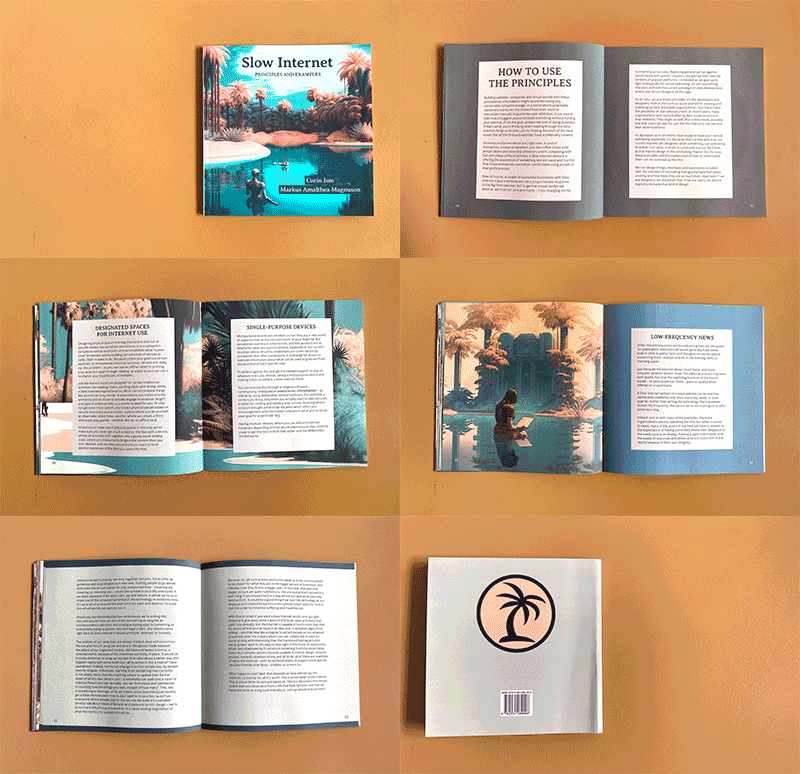
Welcome to the first newsletter from the desk of Ism. Today, the focus will be on the first public-facing release from the Future of Governance Agency: Slow Internet.
Governance – the architecture of power – has long been something deeply associated with territory. Governing has been what you do in relation to physical states and physically bound companies. This is no longer a sufficient outlook to understand influence. The average time people who are connected to the Internet spend in virtual worlds is already seven hours (four if you’re in Japan, nine if you’re in South Africa[1]). If you’re following tech launches, from AR to agentic AI, you know that the current-day level of immersion in virtual terrains is only the beginning. No matter how you slice our online worlds – as surveillance machines, the infrastructure for our relationship, the high- and low-ways of propaganda, or as the core of global intelligence – the Internet today is a space where our wars are fought and minds are shaped. With the last third of humanity predicted to come online in the next decades[2], the digital worlds are rapidly becoming our only worlds. This being the case, governance – both in and of – our virtual landscapes are rapidly gaining relevance.