Democracy of the Daleks
In a fortnight’s time, the United States of America goes to the polls. There are, of course, democratic elections in many countries across the world all the time, but the US as the (fading) world hegemon demands an outsize amount of attention from people in other countries, and even when the US’ own hegemon isn’t flapping around stupidly like a wasp in October.
This naturally what makes this the perfect time to ask the really important questions about governmental systems, such as -
“How does Dalek government work, then?”
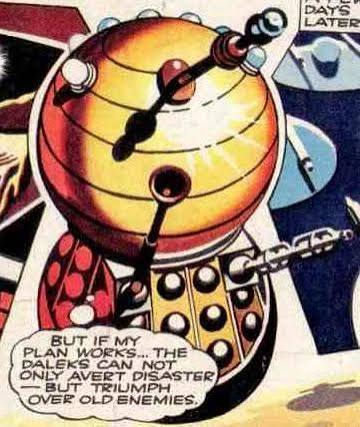
The Daleks have a “Golden Emperor”, we’ve known that since The Dalek Book (1964), where it initiated the Daleks’ invasion of the Earth’s solar system. In the New Year readers of the comic TV Century 21 discovered this Emperor owed its position to it being the first Dalek created. It was the test Dalek built by Yarvelling in the time before a neutron bomb ended the war between the Dals and the Thals. On acceding to the throne he had a new casing made from Flidor gold and Arkelis flower sap.
Upgrade nowThat means that that Emperor was the first. An Augustus Caesar of the Daleks. But we also know from other stories there have been other Emperors at different points in Dalek history. The Emperor who survived the Last Great Time War became increasingly grandiloquent, finally declaring himself not a monarch, but a deity, and christened himself The God of All Daleks. Thin skinned, smug and furious, this Emperor seemed very different to the confident dictator with the golden head, and I do mean in terms of personality, not appearance. Neither seem all that much like the stationary and sedate Emperor who oversaw the scheme with the Human Factor in The Evil of the Daleks (1967)
But if the Emperors are varied, that’s also true of their subjects. It’s not like the popular caricature of a Queen Bee surrounded by otherwise indistinguishable drones. Even in that first appearance, the Emperor issues orders from a Council Chamber - and what’s the point in a Council if other Daleks have no individuality? Most fans have vague notions of Supreme Daleks, and other ones involving colour schemes indicating social status, while Asylum of the Daleks (2012) introduces to television the concept of the Parliament of the Daleks.
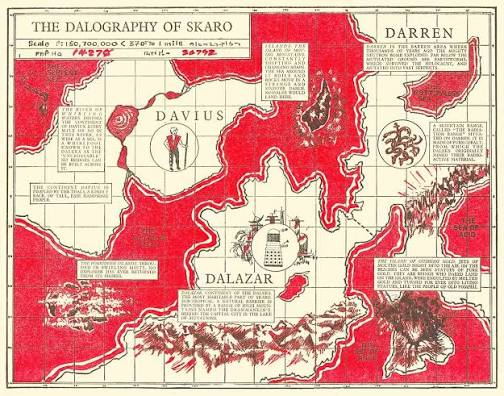
That “parliament” sounds marginally more democratic than the Supreme Council mentioned in Planet of the Daleks (1973) which itself presumably sits in the Council Chamber from The Dalek Book and is perhaps more like the cabinet of a prime minister or president, with the Parliament of Daleks being more akin to an actual legislature. Although it’s hard to imagine then actually spending time passing bills dealing with pollution on the continent of Darren.
That Council probably takes its name, in fact if not necessarily in fiction, from the term “Dalek Supreme” which debuted in The Dalek Invasion of Earth (1964). There it was used by captive humans to describe the commander of the Daleks’ giant mine in Bedfordshire. It’s The Chase (1965) before one Dalek describes another as “Dalek Supreme” after which the term turns up pretty regularly, if not consistently. Maybe the Supreme is the head of the Council, which is drawn from the Parliament, with the Supreme appointed by the Emperor?
Because, as with the multiple Emperors, there have been different Dalek supremes at different times and they do seem to have different personalities. The red Dalek Supreme who commanded the Crucible in Journey’s End (2010) was calm, measured and brooding, with an unusually oleaginous voice. That’s a far cry from the panic stricken and impulsive golden Supreme who ruled the Earth in the twenty second century in Day of the Daleks (1972) or the paranoid and verbose black and silver Supreme who was in charge of The Daleks’ Master Plan on Kembel.
Perhaps across their history Daleks developed different personality types to better suit particular missions? If that’s the case, maybe that’s why they need, if not democracy, then a discussion forum like the Parliament / Supreme Council and maybe that’s why they’ve ended up with different rulers at different times.
Perhaps different Emperors selected different Supremes, and even, as we seem to see on multiple occasions, a Supreme ruling in the absence of an Emperor. That sounds distinctly unconstitutional. According to The Secret of the Emperor in The Dalek Outer Space Book (1966) a Dalek Emperor must be elected or re-elected every year. In this story, one Dalek Commander demands a new Emperor, because the current one did not arrive in time to help the Daleks’ invade Earth. The Commander is killed for its suggestion, so perhaps the Emperor is less keen on democracy than it wants other Daleks to think. An investigation reveals that the Emperor got waylaid on its journey to Earth and instead fought in the Battle of Agincourt in 1415, thanks to a crack in its armour caused by sonic waves during the Dalek invasion of Uranus.
No, I did not just make that up. I promise.